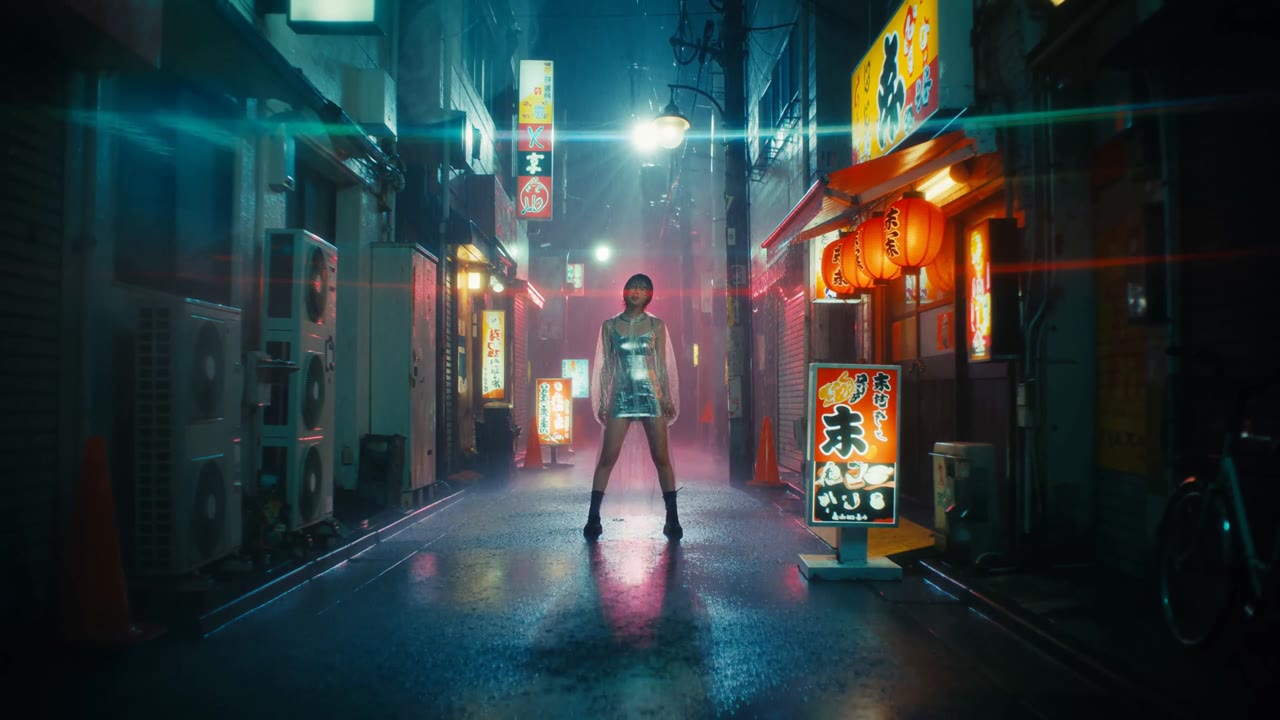
nanobanana2Nano Banana 2 is a fast image generation and editing model built on Google's Gemini 3.1 Flash, tuned for quick output at a low unit price. It supports text-to-image and reference-image editing across 1K / 2K / 4K, making it a strong default for high-volume, cost-sensitive generation — social visuals, rapid iteration, and batched creative. When you need maximum quality and the steadiest success rate, step up to Nano Banana Pro (Gemini 3 Pro Image); both share the same unified endpoint so you can switch freely. Priced at $0.05 for 1K/2K and $0.08 for 4K.
Multiple resolution options
Edit with natural language
Quick response times
$0.05 at 1K/2K, $0.08 at 4K
Generated image will appear here
Enter a prompt and click Generate
Nano Banana 2 is the community name for Google's Gemini 3.1 Flash Image model — API id gemini-3.1-flash-image-preview. It is the fast, high-throughput tier of Google's image family: text-to-image and reference-image editing at 1K, 2K and 4K, tuned for speed and unit cost rather than for maximum fidelity. On apimodels.app, Nano Banana 2 costs $0.05 per image at 1K and 2K, and $0.08 at 4K.
The short answer for anyone comparing tiers: if you are producing hundreds or thousands of images a week — product shots, social cards, video thumbnails, ad variants, localized banners — Nano Banana 2 is the tier that fits, because the cost of a mistake is five cents and a few seconds. If a single hero image has to be perfect on the first try, step up to Nano Banana Pro (Gemini 3 Pro Image) at $0.06 for 1K/2K. Both models answer on the same endpoint with the same parameters, so switching between Nano Banana 2 and Nano Banana Pro is a one-string change.
What makes Nano Banana 2 interesting is not that it is cheap in isolation — it is that the quality gap to the premium tier narrowed far more than the price gap did. Gemini 3.1 Flash Image renders legible in-image text, follows multi-clause prompts, and accepts reference images for editing, which a year ago were premium-tier features. That is why Nano Banana 2 has become the default workhorse for batch image pipelines rather than a budget fallback.
Google bills Gemini 3.1 Flash Image by image tokens — $60 per million — which works out to $0.067 for a 1K image, $0.101 for 2K and $0.151 for 4K on the standard tier. We charge one flat $0.05 for both 1K and 2K, and $0.08 for 4K. That is where the headline number comes from, and it is worth stating precisely rather than rounding: Nano Banana 2 is 25% cheaper than official at 1K, 50% cheaper at 2K, and 47% cheaper at 4K.
The 2K row is the one to look at. Google's own discounted batch tier — where you submit jobs and wait for asynchronous turnaround — lands at $0.050 for a 2K image. Our real-time price for Nano Banana 2 at 2K is the same $0.05, with no batch queue: you post a request and get the image back in seconds. Anyone quoting a single blended discount for Nano Banana 2 is rounding away the part that actually matters, which is that the savings grow with resolution.
Two more things that change the real bill. Failed generations are never charged — you pay for images you actually receive, not for attempts. And there is no minimum, no monthly platform fee and no seat licence: an account that spends $3 this month pays the same per-image price for Nano Banana 2 as one spending $3,000.
| Resolution | Google official | Google batch tier | Nano Banana 2 here | You save |
|---|---|---|---|---|
| 1K | $0.067 | $0.034 | $0.05 | 25% |
| 2K | $0.101 | $0.050 | $0.05 | 50% |
| 4K | $0.151 | $0.076 | $0.08 | 47% |
One detail first, because it is the most common 400: the model string for Nano Banana 2 is gemini-3.1-flash-image-preview. The word nanobanana2 is this page's slug and our internal channel name, not an accepted model id. Send the Gemini id and you are calling Nano Banana 2.
There are three entry points, all authenticated with a single bearer key. POST /api/v1/images/generations creates a task and returns a taskId immediately, which you poll with GET /api/v1/images/generations?task_id=… or receive on a callback_url — this is the shape you want for batch work. POST /api/v1/images/generations-sync blocks and hands the finished image back in the same response, which is simpler for interactive UIs. POST /api/v1/images/edit takes reference images for editing. The request body is the same across all three: model, prompt, optional image_urls for reference-image editing, aspect_ratio (1:1, 4:5, 3:2, 16:9, 9:16, 2:3, 21:9 and more), and resolution set to 1k, 2k or 4k.
The Nano Banana 2 response hands back a hosted URL rather than base64 by default, so you can drop it straight into a CMS or a Slack message. Those result files live for 7 days — long enough for a pipeline to pick them up, not a permanent CDN. Copy anything you intend to keep into your own storage as part of the same job. If you want to see the exact request before writing code, the playground at the top of this page issues the real call with your key and shows the payload.
Nano Banana 2 is strong on short in-image text — a headline, a price tag, a label, a two-line caption — which is the capability that used to force people onto premium models. It follows compositional instructions (place the product left of frame, keep the background matte white, shoot slightly above eye level), it holds a consistent palette across a batch, and it accepts reference images so you can restyle or extend an existing asset instead of describing it from scratch.
Where it gives ground to the premium tier: dense paragraphs of small text, complex charts with many labels, precise brand-mark reproduction, and scenes where one specific object must stay pixel-consistent across a dozen variants. Those are Nano Banana Pro jobs. A pragmatic split that works well in production is to draft with Nano Banana 2 and finish the few images that ship at full size with Nano Banana Pro — the drafting stage is where the volume is, and that is where the $0.05 price does the work.
Worth knowing before you design around it: 4K is a real render at $0.08, not an upscale of a 1K image; every request is independent, so identical prompts do not return identical images unless you feed reference images; and content moderation is Google's, applied upstream, so a refused prompt is refused for reasons we do not control and do not bill you for.
The four jobs below are where Nano Banana 2 volume actually comes from on this platform. The reference images are pulled from our open prompt library, which is written for GPT Image 2 — every prompt in it runs on Nano Banana 2 unchanged by swapping the model string, which is the fastest way to see how the two models differ on your own subject matter.
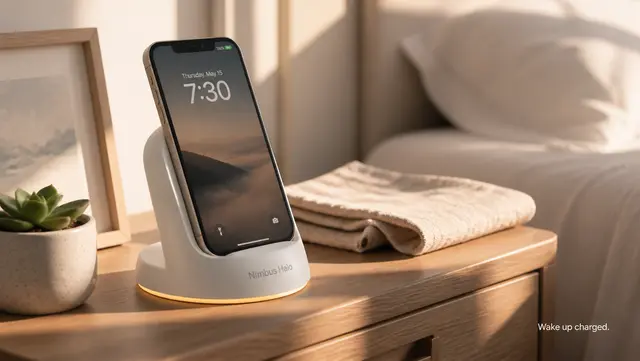
A catalogue refresh means one product photographed against six backgrounds, in three aspect ratios, for four marketplaces. At $0.05 a frame, Nano Banana 2 turns that from a photo-shoot budget line into a script that runs overnight. Feed the existing pack shot through image_urls and the model keeps the product while replacing the surface, the light and the props.

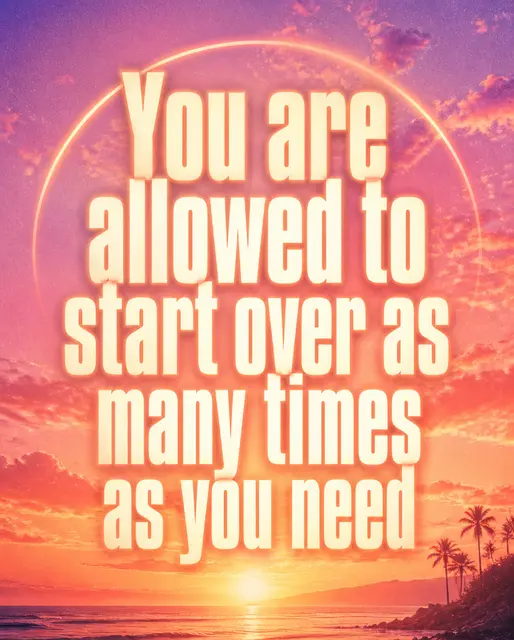
Social is a volume game: one message, twenty visual treatments, tested and discarded weekly. Nano Banana 2 handles the short headline inside the frame, so the copy and the art arrive together instead of going through a layout step. Twenty variants cost a dollar, which is cheap enough that testing beats deliberating.

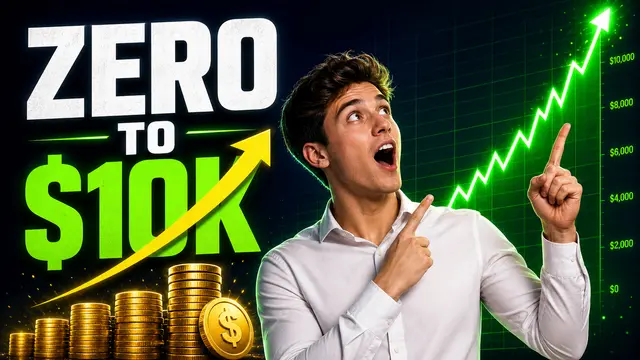
Thumbnails are the clearest test of in-image text: three or four huge words, high contrast, 16:9, and a face or object that reads at 200 pixels wide. Publishing daily means a fresh set every day, and A/B testing means several per video. Nano Banana 2 at $0.05 makes per-video thumbnail testing routine rather than a luxury.

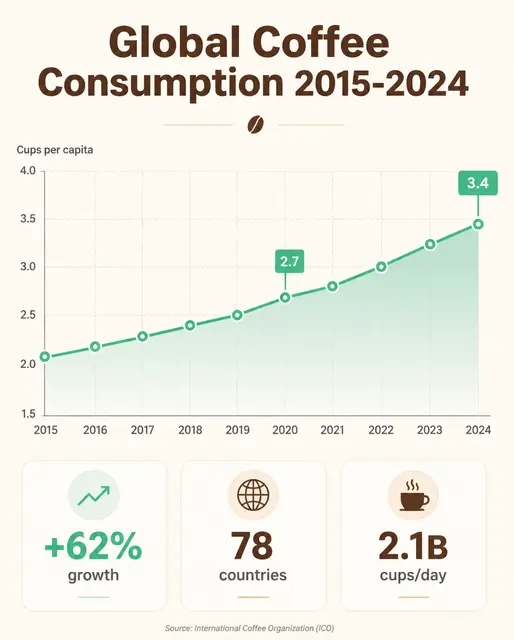
Infographics are where you should test Nano Banana 2 against your own standard rather than trust a claim. It handles a title, axis labels and a short legend well; it starts to slip when a chart carries twenty small labels that all have to be correct. Generate at 2K — same $0.05 as 1K — and the extra pixels buy you legibility for free, which is the single cheapest quality upgrade available on this model.

Price is the visible reason; access is usually the real one. Calling Nano Banana 2 here needs no Google Cloud project, no billing account, no quota request and no organisation verification — you sign up, top up, and the same key that runs Nano Banana 2 also runs Claude, GPT, Gemini text models, Seedance video and the rest of the catalogue. The endpoint is reachable from mainland China directly, which is the reason a large share of our Nano Banana 2 traffic is here at all.
Operationally: failed generations are never billed, spending is pay-as-you-go with no monthly floor, and every call is recorded with its prompt and result in the console so a cost question has an answer. Where a model has more than one upstream channel we fail over automatically rather than returning an error, which matters more for image endpoints than people expect.
If unit price is the only thing you are optimising, there is a cheaper sibling worth knowing: the same Gemini 3.1 Flash engine is also served on a budget channel at $0.025 per image, capped at 1K. Nano Banana 2 at $0.05 buys the 2K option and the primary channel's stability; for large batches where 1K is enough, the budget channel is the better deal and we would rather you knew that.
Coming from Google directly, the migration is a base URL, a key and a parameter rename: aspect ratio and resolution become aspect_ratio and resolution (1k / 2k / 4k), reference images go in image_urls, and the response carries a hosted URL. Prompts do not need rewriting — it is the same Gemini 3.1 Flash Image model underneath, so Nano Banana 2 output matches what you were already getting, at a lower line item.
Coming from another aggregator, the questions worth asking are the ones that decide whether a low headline price is real: does it bill failed generations, does it silently downgrade 2K requests to 1K, does it keep your result files longer than a few days, and does it publish which upstream serves the model. We bill only successful images, never downgrade a resolution you asked for, keep results for 7 days, and say plainly that Nano Banana 2 is Google's Gemini 3.1 Flash Image.
The lowest-risk way to move is to run both for a day: same prompts, same aspect ratios, both at 2K, and compare the two sets on your own subject matter rather than on a benchmark grid. Nano Banana 2 is cheap enough that this comparison costs a few dollars, and it settles the question better than any table on a landing page — including this one.
They are different tiers of the same family, not competitors: Nano Banana 2 is Gemini 3.1 Flash Image, Nano Banana Pro is Gemini 3 Pro Image. The practical rule is volume versus finality. Drafts, tests, feeds and catalogues go to Nano Banana 2 at $0.05; the image that ships at full size, carries dense text or must reproduce a brand exactly goes to Nano Banana Pro at $0.06.
| Nano Banana 2 | Nano Banana Pro | |
|---|---|---|
| Google model | Gemini 3.1 Flash Image | Gemini 3 Pro Image |
| API model string | gemini-3.1-flash-image-preview | gemini-3-pro-image-preview |
| Price 1K / 2K | $0.05 | $0.06 |
| Price 4K | $0.08 | $0.12 |
| Best for | Volume, drafts, feeds, catalogues | Final art, dense text, brand accuracy |
| Observed success rate | High | ~99% |
Nanobanana2 is a Image Generation API provided by nanobanana2. Nano Banana 2 is a fast image generation and editing model built on Google's Gemini 3.1 Flash, tuned for quick output at a low unit price. It supports text-to-image and reference-image editing across 1K / 2K / 4K, making it a strong default for high-volume, cost-sensitive generation — social visuals, rapid iteration, and batched creative. When you need maximum quality and the steadiest success rate, step up to Nano Banana Pro (Gemini 3 Pro Image); both share the same unified endpoint so you can switch freely. Priced at $0.05 for 1K/2K and $0.08 for 4K. Through APIMODELS platform, you can access this model via a unified API with transparent pay-as-you-go pricing. Current pricing: 1K: $0.05, 2K: $0.05, 4K: $0.08.
Generate high-quality product visuals for online stores, ads, and marketing materials.
Create eye-catching visual content for social platforms to boost engagement and brand visibility.
Produce concept art for characters, scenes, and props to accelerate game development.
Design posters, banners, and promotional graphics at a fraction of traditional design costs.
Nanobanana2 is available through APIMODELS at: 1K: $0.05, 2K: $0.05, 4K: $0.08. Billing is pay-as-you-go — you only pay for what you generate.
Sign up at APIMODELS, get your API key, and call our unified API endpoint. We provide detailed API documentation with code examples in cURL, Python, and Node.js.
APIMODELS offers the same Nanobanana2 model through our aggregation platform. We provide a unified API interface so you do not need separate accounts for each provider - one API key to access all models.
Nano Banana 2 is a fast image generation and editing model built on Google's Gemini 3.1 Flash, tuned for quick output at a low unit price. It supports text-to-image and reference-image editing across 1K / 2K / 4K — a fit for high-volume, cost-sensitive generation.
Nano Banana 2 runs on Gemini 3.1 Flash — faster and cheaper (1K/2K $0.05, 4K $0.08), great for batch, iteration and social visuals. Nano Banana Pro runs on Gemini 3 Pro with higher quality and a ~99% success rate for production and demanding work. Same endpoint, switch on demand.
$0.05/image at 1K/2K and $0.08/image at 4K, with text-to-image and image editing. Call it through APIMODELS with one API key; failed tasks are not billed, only successful results are charged, and outputs are hosted on R2 for direct use.
On APIMODELS, Nanobanana2 runs alongside 60+ models on one API key and one balance, so choosing is about fit, not lock-in. It supports Text to Image, Image Editing, 1K/2K/4K Quality, $0.05+/image, and you can weigh it on price and capability against other Image Generation models, then switch by changing a single model-name string — no new account or integration. Browse every Image Generation option with live pricing at apimodels.app/models.
Nanobanana2 supports: Text to Image, Image Editing, 1K/2K/4K Quality, $0.05+/image. See the APIMODELS docs for full parameters and call examples.
Yes. APIMODELS exposes Nanobanana2 through a single unified API and one key — no separate provider accounts, and no need to handle each provider's regional network access yourself.
We support Stripe (Visa, Mastercard, and other international cards) and Alipay. Credits are available instantly after payment.
Prompts shared by their authors — copy and adapt them. Each one credits its author and links back to the original post.
Condor Heroes characters teach English word dream
神雕侠侣主角趣味讲单词 dream 教程
by @nicekate8888
Pizza night UGC Domino’s vlog
VIDEO PROMPT — "Pizza Night Vlog" (UGC iPhone Style) Duration: 15 seconds | Aspect Ratio: 16:9 | Style: Authentic UGC / iPhone selfie-vlog, handheld, natural light, slight motion blur, TikTok/Reels energy — NOT cinematic, NOT overly polished. Feels like a real creator filmed this on their phone. Product Reference: Use the uploaded Domino's Pepperoni Pizza image as the only product reference. Keep crust thickness, cheese texture, bake color, pepperoni placement, and proportions identical in every cut — no redesigning the pizza. Camera: iPhone 15 Pro front + back camera switching, handheld, natural wobble, autofocus hunting slightly (realistic), vertical-style framing cropped to 16:9, occasional finger near lens edge, natural room lighting + phone flash reflections on the pizza box. Character Description Name (for reference): Mia Awoman in her mid-20s, naturally attractive and beautiful with an approachable, girl-next-door charm — not overly done up. Wavy sandy-blonde hair pulled back loosely, light natural makeup, wearing a cozy oversized cream sweater. Warm, genuine smile, expressive eyes, casual energetic personality like a real lifestyle vlogger. Sits in a softly lit modern kitchen/living room. Shot Breakdown SHOT 1 (0–2s) — The Grab Selfie-angle, she's mid-laugh holding up the Domino's box to camera. Quick jump cut. Dialogue: "Okay so it's officially pizza night—" SHOT 2 (2–4s) — The Open Cut to overhead handheld shot, box flips open, steam rising off the pizza, slight camera shake as she leans in. SHOT 3 (4–6s) — The Zoom Quick zoom-punch into the pizza, phone camera autofocus adjusts naturally, cheese and pepperoni in focus, ambient kitchen sounds. SHOT 4 (6–8s) — The Pull Cut to her hands lifting a slice, natural cheese pull, filmed from a slightly low candid angle like a friend filming across the table. SHOT 5 (8–10s) — The Reaction Cut back to selfie-cam, she takes a bite, eyes widen, quick genuine reaction. Dialogue: "Oh my god, that's so good." SHOT 6 (10–12s) — The Candid Cutaway Jump cut to a close, slightly shaky shot of the pizza box on the counter, her hand grabbing another slice off-frame, casual b-roll energy. SHOT 7 (12–14s) — The Wrap-Up Back to selfie angle, she grins at camera, holding slice up like a toast. Dialogue: "Dominos, y'all know what to do." SHOT 8 (14–15s) — End Tag Quick freeze/cut to the box logo close-up, natural handheld wobble, soft text overlay in casual font: "pizza night = solved 🍕" — cut to black. Look & Feel Warm indoor lighting, slightly grainy natural phone sensor look, imperfect framing, real reactions, minimal dialogue (3 short lines total), authentic pacing with hard jump cuts instead of smooth transitions. Negative Prompt cinematic grade, overly smooth camera moves, studio lighting, professional voiceover, staged acting, CGI look, plastic cheese, distorted pepperoni, extra fingers, warped hands, text glitches, logo distortion, overly polished commercial feel.
by @ShamiWeb3
The World's Unluckiest Superhero
A documentary about a superhero who has extremely bad luck and ends up saving people by accident through the destruction caused by his own misfortune. Dialogue in English. Scene direction with unique composition. Every cut, every camera angle, and every movement is of exceptionally high quality; the composition is guided by an experienced film director. The comedy is genuinely interesting, and throughout the 15 seconds everything unfolds in a perfectly crafted way, with a comedic payoff that can make anyone laugh.
by @NACHOS2D_
We curate copy-ready prompt libraries — every entry shows its full text and a sample result, ready to adapt.
How to get access, regional availability, and how this model compares with its alternatives.