

Kling Image 4.0 API — single images, image sets and named subjects at 2K, 4K or 8K
kling-image-4.0Kling Image 4.0 is Kuaishou's Kling image model for text-to-image or up to 10 reference images and named subjects, returning 1–9 single images or a coherent set of 2–10 at 2K, 4K or 8K. Call kling-image-4.0 from $0.0628 per 2K image (Kling's own API price, plus $0.00314 per reference image); failed requests are not charged.
Generate Image
Named subjects (elements, @name, to keep a person or product the same in every image) are available through the API — see the Kling Image 4.0 docs.
This request: 1 × $0.0628 = $0.0628
Result
Generated image will appear here
Enter a prompt and click Generate
Single Images or a Coherent Set
n 1–9 independent images per request, or mode "series" for a set of 2–10 that belong together: one character from morning to night, one product across a campaign
Named Subjects with @name
An element is a name plus 2–4 photos of the same subject; call it @name in the prompt to keep a person, product or prop consistent. Up to 10 reference images and elements per request
2K, 4K or 8K
Auto plus eight aspect ratios from 21:9 to 9:16. 2K and 4K return PNG, 8K returns JPEG. There is no 1K
Text Inside the Image
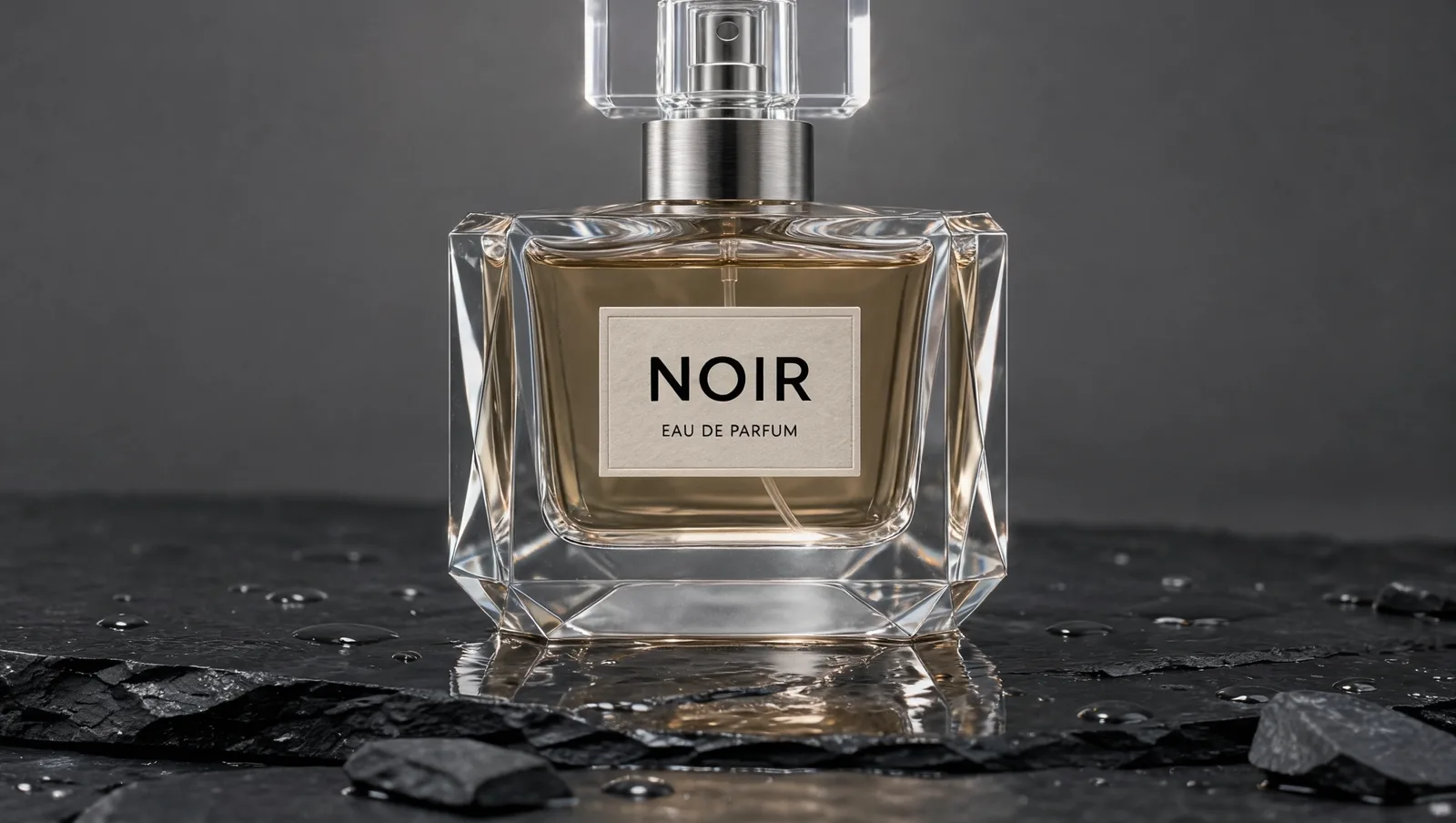
Put on-image text in quotes. In our 2K test the label "NOIR" came out spelled exactly, at 2720×1536 in 51 seconds
Kling's Own API Price
$0.0628 per 2K image, $0.0942 at 4K, $0.157 at 8K, plus $0.00314 per reference image or element
Not 100%, Failures Free
Content review can refuse a prompt or an image and temporary errors happen; failed requests are not charged
Kling Image 4.0 API: single images, image sets and named subjects at 2K, 4K or 8K
Kling Image 4.0 is version 4.0 of the image model in Kuaishou's Kling family. Send a prompt for text-to-image, or add up to 10 reference images and named subjects (elements) that you call by @name to keep a person or product the same. Ask for 1–9 independent images, or a coherent set of 2–10 with mode "series", at 2K, 4K or 8K in nine aspect ratios.
On APIMODELS it is one model id, kling-image-4.0, on POST /v1/images/generations: $0.0628 per 2K image, $0.0942 at 4K and $0.157 at 8K, plus $0.00314 per reference image or element, the same as Kling's own API price list. There is no 1K, no exact pixel size and no transparent background, and not every request succeeds; the limits are listed below.
- Model ID
kling-image-4.0- Input
- Prompt, plus up to 10 reference images and named subjects (optional)
- Output
- 1–9 images, or a set of 2–10; 2K / 4K PNG, 8K JPEG
- Aspect ratio
- auto, 1:1, 16:9, 9:16, 4:3, 3:4, 3:2, 2:3, 21:9
- Price
- $0.0628 per 2K image; +$0.00314 per input
Kling Image 4.0 API limits at a glance
What the model accepts and what it does not, before you build on it.
| Supported | Not supported | |
|---|---|---|
| Input | A text prompt of up to 20,000 characters, alone or with up to 10 reference images (image_urls, mentioned as @image_1, @image_2…) and named subjects (elements, mentioned as @name) | More than 10 reference images and elements combined; masks (inpainting) |
| Named subjects (elements) | A name of 1–20 letters, digits, underscores or Chinese characters, 2–4 photos of the same subject from different angles, an optional tag (character, animal, prop, costume, scene, effect, others) and an optional description of up to 100 characters | Names such as image_1 or object_1, the same name twice, fewer than 2 or more than 4 photos (400) |
| Images per request | Single images: n from 1 to 9. Image set: mode "series" with n from 2 to 10 | More than 9 without series; a series of fewer than 2 (400) |
| Resolution | 2K (default), 4K or 8K | 1K; exact pixel sizes such as 1200x628 |
| Aspect ratio | auto (default), 1:1, 16:9, 9:16, 4:3, 3:4, 3:2, 2:3, 21:9 | Other ratios such as 5:4 or 9:21 (400) |
| Output format | 2K and 4K return PNG; 8K returns JPEG | Transparent backgrounds; choosing the format yourself |
| Text on the image | Write it in quotes in the prompt | A guarantee that long copy comes out word for word — proofread it |
| Other fields | seed and negative prompts are not supported; skill, length, style_image and subject_image belong to kling-image-4.0-long and return a 400 here; @image_3 with only 2 images returns a 400 |
Not every Kling Image 4.0 request succeeds
You pay only for requests that deliver images. We publish what we measured, and say when it was a single request.
A request can fail after it is accepted: content review can refuse the prompt or an input image, an input image can be unreadable or outside the allowed shape, and a generation can hit a temporary error. A failed request returns the reason and costs nothing. Requests the model cannot take — a 1K resolution on kling-image-4.0, a series of one image, the fields of the wrong long-image skill, @image_3 with two images — are refused with a 400 before a task is created.
Our test on 19 November 2026: a 2K 16:9 text-to-image of a perfume bottle came back as a 2720×1536 PNG in 51 seconds, and the label text we asked for ("NOIR") was spelled exactly. One request is an example, not a success rate or a speed guarantee, so we publish neither. Plan for close to a minute per 2K image and longer at 8K or for sets; poll the task or use a callback_url instead of holding a connection open.
Kling Image 4.0 API pricing
Per image, the same as Kling's own API price list, plus a small charge per input since Kling bills inputs from 4.0 on.
| Price | |
|---|---|
| 2K image | $0.0628 |
| 4K image | $0.0942 |
| 8K image (JPEG) | $0.157 |
| Each reference image or element | +$0.00314 |
| A request | images × output price + inputs × $0.00314 |
| Failed request | Not charged |
One 2K product shot from text
$0.0628
1 × $0.0628, no inputs
A set of 4 at 2K with 2 reference images
$0.25748
4 × $0.0628 + 2 × $0.00314
Nine 4K variations of one idea
$0.8478
9 × $0.0942, no inputs
One 8K poster with a character element
$0.16014
$0.157 + 1 × $0.00314
What Kling Image 4.0 is good for, and when to use something else
Sets that have to match
mode "series" with n 2–10 returns pictures that belong together, and an element keeps one person or product the same across them: campaign shots, storyboards, picture-book spreads.
Large prints at 8K
8K output (JPEG) for posters, packaging and displays seen up close, at $0.157 per image.
Short text on products
Write the label in quotes. In our 2K test the word "NOIR" on a perfume bottle came out spelled exactly.
1K drafts or exact pixel sizes
There is no 1K and no WIDTHxHEIGHT size. For quick 1K drafts or an asset that must be exactly 1200×628, use a model with a 1K tier and exact sizes, such as MiniMax H3 Image or MAI Image 2.7.
Transparent cut-outs and masks
There is no transparent background and no mask. For cut-outs use MAI Image 2.7, Seedream 5.5 or GPT Image 2.6; for masked edits, GPT Image 2.6.
A whole scrolling page in one image
For a product detail page or a landing-page design as one tall image, use kling-image-4.0-long.
Call it in one request
POST /v1/images/generations with your apimodels.app API key. Leave out image_urls for text-to-image; add "mode": "series" for a set; add elements to keep a subject consistent. You get a taskId back: poll GET /v1/images/generations?task_id= (or pass a callback_url) and read every image from resultUrls. Every field is in the docs.
# A set of 4 at 2K: one character, morning to night (4 × $0.0628 + 1 element × $0.00314)
curl -X POST https://api.apimodels.app/v1/images/generations \
  -H "Authorization: Bearer YOUR_API_KEY" \
  -H "Content-Type: application/json" \
  -d '{
    "model": "kling-image-4.0",
    "prompt": "A day in the life of @Mia in Lisbon: morning coffee, a tram ride, sunset on a rooftop, a late dinner",
    "mode": "series",
    "n": 4,
    "resolution": "2K",
    "aspect_ratio": "3:2",
    "elements": [{ "name": "Mia", "image_urls": ["https://example.com/mia-front.jpg", "https://example.com/mia-side.jpg"], "tag": "character" }]
  }'
# → { "code": 200, "data": { "taskId": "...", "state": "pending", "model": "kling-image-4.0" } }
Kling Image 4.0 vs other image models on apimodels.app
Three image models with the same API key and endpoint. Every row is that model's request limits and price on apimodels.app.
| Kling Image 4.0 | Kling V3 Omni | MiniMax H3 Image | |
|---|---|---|---|
| Resolution | 2K, 4K, 8K | 1K, 2K, 4K | 1K, 2K, 4K |
| Price per image | $0.0628 / $0.0942 / $0.157 | $0.05 at 1K / 2K, $0.10 at 4K | $0.03 at 1K / 2K, $0.10 at 4K |
| Per reference image | +$0.00314 (elements too) | Included | +$0.01 |
| Images per request | 1–9, or a series of 2–10 | Single or series | 1–10 |
| Reference images | Up to 10 incl. named subjects (@name) | Multi-image reference and element consistency | Up to 16 |
| Exact pixel size | No | No | Yes |
Kling Image 4.0 costs more per image than the other two. Choose it when you need 8K, a set of up to 10 that belongs together, or named subjects; for plain 1K or 2K single images, the other two are worth a look first.
Sources
Where the price comparison on this page comes from (checked 19 November 2026). Limits and test results are apimodels.app's own.
- Kling AI: API pricing (Image API tab) ↗
Kling Image 4.0 is priced in units: single image / image set 16, 24 or 40 units per 2K, 4K or 8K image, 0.8 per reference image or element; long image webpage 140 / 152 units, e-commerce 60 / 72, 120 / 140 and 200 / 220 (1K / 2K). One unit is $0.003925 in Kling's prepaid packages.
About Kling Image 4.0
Kling Image 4.0 is an Image Generation API provided by Kling. Kling Image 4.0 is version 4.0 of the image model in Kuaishou's Kling family. On apimodels.app it is one model id, kling-image-4.0, on POST /v1/images/generations, so the Kling AI image API sits behind the same key as every other model here. It covers the two jobs Kling prices as single images and image sets: n from 1 to 9 independent images per request, or mode "series" with n from 2 to 10 pictures that belong together — the same character from morning to night, one product across a campaign, the panels of a storyboard. Its sibling kling-image-4.0-long makes one ultra-tall webpage or product detail page instead. A prompt alone gives text-to-image. The prompt can run to 20,000 characters, and text you want printed on the image goes in quotes. Add up to 10 reference images in image_urls and point at them as @image_1, @image_2 and so on. For a person, product or prop that has to look the same in every picture, define an element: a name plus 2–4 photos of that subject from different angles, optionally tagged character, animal, prop, costume, scene, effect or others and described in up to 100 characters; the prompt then calls it by @name. Reference images and elements share one limit of 10 per request. Output is 2K, 4K or 8K — there is no 1K — in auto, 1:1, 16:9, 9:16, 4:3, 3:4, 3:2, 2:3 or 21:9. 2K and 4K come back as PNG, 8K as JPEG. In our test on 19 November 2026, a 2K 16:9 text-to-image came back at 2720×1536 in 51 seconds, with the label text from the prompt ("NOIR") spelled exactly. That is one request, not a typical timing. Pricing follows Kling's own API pricing for images unchanged: $0.0628 per 2K image, $0.0942 per 4K image and $0.157 per 8K image, plus $0.00314 for each reference image or element, since Kling bills inputs from 4.0 on. A request costs images × the output price + inputs × $0.00314, so a set of 4 at 2K with 2 reference images is 4 × $0.0628 + 2 × $0.00314 = $0.25748. Failed requests are not charged. Know the limits before you build on it. There is no 1K tier and no exact pixel size, so it is the wrong pick for quick low-resolution drafts or assets that must be exactly 1200×628. There are no masks, transparent backgrounds, seeds or negative prompts. A 2K image took close to a minute in our test, too slow for previews that must come back in seconds. Not every request succeeds: content review can refuse a prompt or an image, and temporary errors happen; a failed request costs nothing. Through APIMODELS platform, you can access this model via a unified API with transparent pay-as-you-go pricing. Current pricing: 2K · per image: $0.0628, 4K · per image: $0.0942, 8K · per image (JPEG): $0.157, + Each reference image or element: $0.00314, Example · set of 4 at 2K + 2 reference images: $0.25748.
Related model: Kling Image 4.0 Long Image — one ultra-tall webpage design or e-commerce detail page per request, from $0.2355 per page
Related model: Kling V3 Omni — the previous Kling generation: series output and multi-image references at 1K, 2K or 4K
Related model: MiniMax H3 Image — when you need a 1K tier, exact pixel sizes, up to 16 reference images or 1–10 images per request
Related model: MAI Image 2.7 — when you need transparent backgrounds for product cut-outs and logos
Key Features
- Single Images or a Coherent Set -- n 1–9 independent images per request, or mode "series" for a set of 2–10 that belong together: one character from morning to night, one product across a campaign
- Named Subjects with @name -- An element is a name plus 2–4 photos of the same subject; call it @name in the prompt to keep a person, product or prop consistent. Up to 10 reference images and elements per request
- 2K, 4K or 8K -- Auto plus eight aspect ratios from 21:9 to 9:16. 2K and 4K return PNG, 8K returns JPEG. There is no 1K
- Text Inside the Image -- Put on-image text in quotes. In our 2K test the label "NOIR" came out spelled exactly, at 2720×1536 in 51 seconds
- Kling's Own API Price -- $0.0628 per 2K image, $0.0942 at 4K, $0.157 at 8K, plus $0.00314 per reference image or element
- Not 100%, Failures Free -- Content review can refuse a prompt or an image and temporary errors happen; failed requests are not charged
Examples by scenario
Use Cases
Campaign Sets for One Product
mode "series" returns 2–10 pictures that belong together: the same bottle on a beach, in a bathroom and on a desk, ready for one launch. Add the product as an element so it looks the same in every shot.
Characters Across a Story
Define a character as an element from 2–4 photos and call it by @name in each prompt for storyboards, comics and picture-book spreads where the face and outfit must not drift.
Product Shots with Readable Labels
Put the label text in quotes. In our 2K test the word "NOIR" on a perfume bottle came out spelled exactly; still proofread longer copy.
Print and Large-Format Art at 8K
8K output (JPEG) for posters, packaging and displays that people see up close, at $0.157 per image.
Variations from Reference Images
Send up to 10 reference images and point at them as @image_1, @image_2 to combine a room, a palette and a product, or to restyle one picture.
Wide Banners and Vertical Stories
21:9 hero banners and 9:16 story frames from the same prompt. For a whole scrolling page in one image, use kling-image-4.0-long.
Why APIMODELS
- Unified API -- One API key to access all models, no need to register on multiple platforms
- Transparent Pricing -- Pay-as-you-go with per-call pricing published on every model page, ideal for indie developers and startups
- Instant Access -- Start right after signup; pay by card, PayPal, Alipay or USDT
- Full Documentation -- Detailed API docs with code examples in cURL, Python, and Node.js
Frequently Asked Questions
What is the difference between APIMODELS and the official Kling API?
APIMODELS offers the same Kling Image 4.0 model through our aggregation platform. We provide a unified API interface so you do not need separate accounts for each provider - one API key to access all models.
Does Kling AI offer an API for Kling Image 4.0?
Yes. Kling sells API access to its image models on its own developer platform, priced in prepaid unit packages. On apimodels.app the same model is one id, kling-image-4.0, on POST /v1/images/generations: one API key, billed per image, with no package to buy and no separate Kling account. It makes images from a prompt, or from a prompt plus up to 10 reference images and named subjects, and returns 1–9 independent images or a coherent set of 2–10 (mode "series") at 2K, 4K or 8K. A second id, kling-image-4.0-long, makes one ultra-tall webpage design or e-commerce detail page per request.
How much does the Kling Image 4.0 API cost?
Per image: $0.0628 at 2K, $0.0942 at 4K and $0.157 at 8K, the same as Kling's own API price list. Kling bills inputs from 4.0 on, so each reference image or element adds $0.00314. A request costs images × the output price + inputs × $0.00314: one 2K image from text alone is $0.0628, and a set of 4 at 2K with 2 reference images is 4 × $0.0628 + 2 × $0.00314 = $0.25748. Failed requests are not charged.
Kling AI: API pricing (Image API), checked 19 Nov 2026 ↗Kling Image 4.0 API example: how do I call it?
A minimal request: POST https://api.apimodels.app/v1/images/generations with your API key and the body {"model": "kling-image-4.0", "prompt": "A faceted glass perfume bottle on wet black slate, the label reads 'NOIR'", "resolution": "2K", "aspect_ratio": "16:9", "n": 1}. It returns a taskId; poll GET /v1/images/generations?task_id= or pass a callback_url, and read the images from resultUrls. For a set, add "mode": "series" with n from 2 to 10. Reference images go in image_urls and are called @image_1, @image_2; to keep a subject consistent, add elements such as [{"name": "Mia", "image_urls": [2–4 photos of her], "tag": "character"}] and write @Mia in the prompt. Python and Node versions are in the docs.
Is there a free Kling image generation API?
Not here: on apimodels.app Kling Image 4.0 is billed per image, and Kling sells its own API in prepaid packages. New APIMODELS accounts get $0.10 of trial credit (one new account per IP address every 48 hours), enough for one 2K image ($0.0628) to confirm your integration works. After that you top up from $10 and pay only for what you use; there is no subscription.
Can I download Kling Image 4.0 and run it locally?
No. Kling has not released the Kling Image 4.0 weights; it is offered only as a cloud service, so there is no model file to download or self-host. You call it over the API, and what you download is the images it returns: each one is a URL in resultUrls (PNG at 2K and 4K, JPEG at 8K), kept for 30 days, so save the files you need.
What are the limits of Kling Image 4.0, and what happens when a request fails?
Resolution is 2K, 4K or 8K only, with no 1K, and there is no exact pixel size, only the aspect ratios auto, 1:1, 16:9, 9:16, 4:3, 3:4, 3:2, 2:3 and 21:9. 8K comes back as JPEG, 2K and 4K as PNG. Reference images and elements together are capped at 10, and each element needs 2–4 photos; the prompt can be up to 20,000 characters. There are no masks, transparent backgrounds, seeds or negative prompts. Our 2K test took 51 seconds, so if you need 1K drafts in a few seconds, pick a model with a 1K tier. Not every request succeeds: content review can refuse a prompt or an image, and temporary errors happen; a failed request returns the reason and is not charged.
How does Kling Image 4.0 compare with other image models on apimodels.app?
Choose Kling Image 4.0 for 8K, coherent sets of 2–10 images and named subjects that keep a person or product consistent. Kling V3 Omni, the previous Kling generation, also does series output and multi-image references at 1K, 2K or 4K, for $0.05 per image at 1K / 2K and $0.10 at 4K, with no 8K. MiniMax H3 Image takes up to 16 reference images and returns 1–10 images per request at 1K, 2K or 4K: $0.03 per image at 1K / 2K and $0.10 at 4K, plus $0.01 per reference image. Seedream 5.5 adds layer splitting and transparent output at 1K, 1.5K or 2K, $0.03 or $0.05 per image plus $0.01 per reference image. All three cost less per image than Kling Image 4.0, so for plain single images at 1K or 2K, look at them first.
What can Kling Image 4.0 do?
Kling Image 4.0 supports: Text to Image & References, Image Sets of 2–10, Named Subjects (@name), 2K / 4K / 8K, From $0.0628 per 2K image. See the APIMODELS docs for full parameters and call examples.
Can I use the Kling Image 4.0 API from any country, including mainland China?
Yes. APIMODELS does not restrict access by country: the site and the API answer requests from anywhere, and apimodels.app and api.apimodels.app are reachable directly from mainland China without a proxy. You call Kling Image 4.0 with one APIMODELS key, so you do not need a separate account with the model's developer.
What payment methods are supported? Can I pay with PayPal or crypto?
Yes to both. You can top up with a card (Visa, Mastercard and others, through Stripe), PayPal, Alipay, or USDT on TRON (TRC20) or BNB Smart Chain (BEP20). Card, PayPal and Alipay top-ups are credited immediately; USDT is credited once the transfer confirms on-chain. Auto top-up is optional, and a $50 top-up adds a $1 bonus ($3 on a $100 top-up). The balance is in USD and billed per use, with no subscription.