
gpt-image-2GPT Image 2 API from OpenAI — text-to-image and image editing with up to 16 reference images, native 1K / 2K / 4K. This is the simple channel: it always runs the medium quality tier (a quality field in the request has no effect), so price depends on resolution alone — $0.025 / $0.03 / $0.05 per image at 1K / 2K / 4K — and there is one less parameter to decide. The same applies to the cheaper, API-only gpt-image-2-lite (from $0.008 at 1K): it also ignores the quality parameter and prices by resolution only. If you do want to choose the quality tier yourself, use gpt-image-2-all: the same underlying model, exposing the full resolution x quality matrix (low / medium / high / auto) from $0.01 at 1K low, and OpenAI-SDK compatible so Codex and Cursor can call it by changing base_url alone. Measured 96.5% success across 3,357 recent calls. One API key, far cheaper than going direct, no OpenAI org verification, instant access from anywhere.
Auto follows your reference image when editing. With text-to-image there is nothing to follow, so it renders square (1:1) — pick a ratio here if you want a shape. Widest available is 21:9; asking for a ratio in the prompt has no effect.
Generated image will appear here
Enter a prompt and click Generate
Measured over the last 30 days, 0.93% of requests here were refused by the upstream safety system, against 8.0% on gpt-image-2-all — the same underlying model, but this channel reviews more leniently. If prompts keep getting refused there, try this one. Refused requests are not charged
Call GPT Image 2 with a single API key — no OpenAI organization or ID verification, no waitlist, reachable from anywhere including mainland China
OpenAI's newest image model with best-in-class prompt adherence
Up to 16 reference images per request
1:1, 2:3, 3:2, 4:5, 5:4, 4:3, 3:4, 16:9, 9:16, 21:9 (5:4 & 4:5 at 1K only)
$0.025 / $0.03 / $0.05 at 1K / 2K / 4K (medium); low & high quality tiers also available
Automatic failover across multiple upstream channels for reliability
Poll the task endpoint for the result — usually 40-90s
GPT Image 2 is a Image Generation API provided by OpenAI. GPT Image 2 API from OpenAI — text-to-image and image editing with up to 16 reference images, native 1K / 2K / 4K. This is the simple channel: it always runs the medium quality tier (a quality field in the request has no effect), so price depends on resolution alone — $0.025 / $0.03 / $0.05 per image at 1K / 2K / 4K — and there is one less parameter to decide. The same applies to the cheaper, API-only gpt-image-2-lite (from $0.008 at 1K): it also ignores the quality parameter and prices by resolution only. If you do want to choose the quality tier yourself, use gpt-image-2-all: the same underlying model, exposing the full resolution x quality matrix (low / medium / high / auto) from $0.01 at 1K low, and OpenAI-SDK compatible so Codex and Cursor can call it by changing base_url alone. Measured 96.5% success across 3,357 recent calls. One API key, far cheaper than going direct, no OpenAI org verification, instant access from anywhere. Through APIMODELS platform, you can access this model via a unified API with transparent pay-as-you-go pricing. Current pricing: 1K: $0.025, 2K: $0.03, 4K: $0.05.
Related model: gpt-image-2-all — same model, but you pick the quality tier — low / medium / high × 1K/2K/4K, and OpenAI-SDK compatible (images.generate / images.edit) so Codex and Cursor can call it directly
Posters, ad creatives, covers and packaging where the words are part of the artwork — this is the most reliable in-image text renderer we carry, so headlines come out set, not smeared.
Pass up to 16 reference images to hold a character, product or style steady across a whole batch, instead of re-rolling until two frames happen to match.
Change a background, recolor, swap an element — the rest of the frame stays where it was. Editing is a first-class path here, not a prompt trick.
1K, 2K and 4K come out of the model at that resolution — nothing is upscaled after the fact, so fine detail and small type survive at $0.05 for 4K.
Price depends on resolution alone ($0.025 / $0.03 / $0.05); quality never moves it. Multiply images by tier and you have the exact spend before the first call.
GPT Image 2 is available through APIMODELS at: 1K: $0.025, 2K: $0.03, 4K: $0.05. Billing is pay-as-you-go — you only pay for what you generate.
Sign up at APIMODELS, get your API key, and call our unified API endpoint. We provide detailed API documentation with code examples in cURL, Python, and Node.js.
APIMODELS offers the same GPT Image 2 model through our aggregation platform. We provide a unified API interface so you do not need separate accounts for each provider - one API key to access all models.
OpenAI's next-generation image model with sharper in-image typography, more stable pixel-level edits, stronger world knowledge, fast generation, and high prompt fidelity.
No — it always runs the medium tier, and sending a quality field has no effect. That is deliberate: one model name, one resolution parameter, one less decision to make, and pricing that depends on resolution alone ($0.025 / $0.03 / $0.05 for 1K / 2K / 4K). If you need to pick the quality yourself, use gpt-image-2-all — the same underlying model with the full resolution x quality matrix exposed (1K/2K/4K x low/medium/high, plus auto). Low at 1K costs $0.01, and the high tier is reachable when you want maximum detail. It is also the OpenAI-SDK-compatible sync channel, so Codex and Cursor can call it by changing base_url alone. There is a link to it under "Related models" at the bottom of this page.
Yes. Sign up at apimodels.app, grab an API Key, and immediately call gpt-image-2 (from $0.025/image, tiered 1K/2K/4K: $0.025/$0.03/$0.05, up to 16 reference images per request).
Both, through a single endpoint that auto-routes by presence of a reference image. Aspect ratio drives output composition; up to 16 reference images can be fused in one request.
E-commerce product edits, batched marketing visuals, AI Image Generator / Editor SaaS, production layers for design systems, multilingual localized visuals, educational illustrations, and any workflow that turns text plus images into visual output.
Yes. Multilingual text rendering is a key focus, and together with stronger instruction-following for multi-subject prompts and layered scenes, complex layouts and in-image text come out noticeably cleaner.
Yes. gpt-image-2 supports up to 16 reference images per request — suited for lookbook generation, on-model try-on, packaging fusion, and other multi-reference scenarios.
One key for every model, full API docs with cURL / Python / Node.js examples, failed tasks are free, results hosted on our R2, plus automatic failover across multiple upstream channels for reliability.
On apimodels.app, gpt-image-2 is tiered by resolution — $0.025 / $0.03 / $0.05 at 1K / 2K / 4K — with no minimum spend, no monthly fee, and failed tasks not billed. That makes it one of the cheapest ways to call the GPT Image 2 API.
POST to https://api.apimodels.app/v1/images/generations with header Authorization: Bearer <your API key>. In the JSON body set model to "gpt-image-2" and provide a prompt; for editing, add image_url (single) or image_urls (up to 16). Copy-paste curl and Python (requests / OpenAI-SDK-compatible) examples are on the model page docs.
It is the same OpenAI gpt-image-2 model, so image quality is identical. The difference is access: via apimodels.app you use one API key from $0.025/image (tiered by resolution), with no OpenAI org verification required, reachable from anywhere — cheaper and simpler than wiring up OpenAI directly.
Yes. Sign up at apimodels.app for one API key — no OpenAI account or org verification needed, and the endpoint is reachable from China and anywhere else. Generated images are hosted on our R2 for direct download.
gpt-image-2 accepts up to 16 reference images per request for multi-image fusion and editing, outputs at 1K / 2K / 4K in low / medium / high quality (medium by default), and lets you control framing via aspect ratio (1:1, 2:3, 3:2, 4:5, 16:9, 9:16, and more; 5:4 & 4:5 are 1K-only — unsupported at 2K/4K) — priced by resolution × quality; the medium tier is $0.025 / $0.03 / $0.05 at 1K / 2K / 4K.
Over the last 30 days of external production traffic — 24,208 calls — the **infrastructure success rate is 98.9%**. That counts only failures that are ours to fix: 119 timeouts, 66 upstream-busy and 15 where upstream returned no image, 200 in total. It excludes OpenAI content-policy rejections and malformed input, because those clear once you adjust the prompt or the parameters, and neither is ever billed. Put simply: if your prompt passes OpenAI's content policy, delivery is reliable. Worth saying out loud: **almost nobody in this industry publishes a success rate at all.** Other API pages offer "stable" and "highly available" — adjectives you cannot verify. We publish the real 30-day production numbers together with how they are computed, and you can ask any provider the same question.
Measured in production over 30 days: median 60 seconds, p95 157 seconds. Half of all requests return within a minute and 95% within two and a half minutes. The synchronous path (pass `size`, omit `callback_url`) holds the connection until the image is ready; use the task path with polling or a `callback_url` if you would rather not hold one. Set client timeouts above 180 seconds.
Failures are never billed — timeouts, upstream congestion and content-policy rejections all cost nothing, and you only pay for images actually delivered. gpt-image-2 and gpt-image-2-all run through different upstream adapters, so trouble on one does not take the other down and you can retry by changing the model name. Credits are reserved up front and released automatically when a job fails.
No subscription, no monthly fee, no minimum spend — you pay per image. The smallest top-up is $10, and one API key covers every model on the platform (image, video, audio and LLMs share a single USD balance), so you are not opening an account with each model vendor. New accounts on consumer email domains get $0.10 in free credit, enough for four default-quality 1K images, so you can check output quality before paying anything. No OpenAI account or organization verification is required, and the API is reachable from mainland China.
Stripe (card), PayPal and Alipay. **Paying by Stripe lets you enter a business tax ID (EU VAT and equivalents) at checkout; a formal invoice PDF carrying both parties' tax details is generated automatically after payment and emailed to you**, and the tax ID is stored so every later invoice carries it. PayPal does not collect tax IDs, so invoices there are issued manually — email support@apimodels.app with your company name, address and tax ID. The selling entity is UK-based, so sales to EU businesses fall under reverse charge.
The account runs on prepaid balance: when it is empty, calls return 402 rather than continuing to bill, so the ceiling is hard and overspend is not possible. You can also set a low-balance webhook (your service gets notified below a threshold) and auto top-up (with failure counting and a lock to prevent runaway retries). Every call's actual charge, input parameters and result are itemised in the console, so you are not reconciling at month end.
There are three realistic doors: the official OpenAI API (and Azure OpenAI at the same list price), independent gateways like APIMODELS, and general-purpose aggregators. Judge them on four things rather than headline price: (1) **the real success rate and how it is computed** — ask whether content-policy rejections sit in the denominator, because the two definitions are not comparable; (2) whether failures are billed; (3) whether pricing is predictable — the official API bills images as output tokens, so per-image cost is a range, not a number; (4) whether you can get access at all, since OpenAI gates its image models behind organization verification. Our own figures, including the unflattering ones, are on this page; ask any provider the same four questions.
On this model, yes — because the low price does not come from downgrading anything. Output comes from the genuine OpenAI image pipeline; we simply price it flat per image ($0.025 / $0.03 / $0.05 for 1K / 2K / 4K) where the official API bills output tokens and works out to roughly $0.053 for a default-quality 1024x1024. Infrastructure success rate is 98.9% and failures are never billed. The real trade-off lies elsewhere: go official if your pipeline needs an exact pixel-dimension guarantee, or if you need compliance paperwork such as DPAs and SOC 2 chains that only a direct relationship provides.
The rejection comes from OpenAI's content policy, not from us, and it is common in practice: 6,007 of 24,208 calls over the last 30 days hit it — **roughly one request in four**. The usual triggers are real people by name or likeness, brands and copyrighted characters, violent or adult content, and layout requests that read as forged documents. The fix is normally to replace a person's name with a description of their appearance, swap a brand name for a product category, and avoid words like passport, ID card or licence. Rejected requests are not charged.
You are not charged. It is recorded as a CONTENT_MODERATION failure in your call log and the reserved credit is released automatically. We also keep these out of the "infrastructure success rate": the 98.9% counts only timeouts, upstream congestion and missing-image responses, because those are the failures a different prompt would not have fixed.
Under our terms you retain your rights in the inputs you submit and the outputs you generate, and commercial use is permitted. Two caveats worth knowing: end use is still subject to OpenAI's content policy (hence the rejection question above), and jurisdictions differ on whether AI-generated images attract copyright at all — take your own legal advice before building brand assets on them or asserting exclusive rights.
Result files are kept in our object storage for **7 days** and then deleted, so download or re-host anything you need. Prompts and call records stay in the console long-term, so you can always look up the parameters. One distinction worth noting: the presigned upload URL is valid for 10 minutes — that is for uploading source material and is unrelated to the 7-day retention of results.
On APIMODELS, GPT Image 2 runs alongside 60+ models on one API key and one balance, so choosing is about fit, not lock-in. It supports Text to Image, Image Editing, Multi-Image, 1K/2K/4K, Async, and you can weigh it on price and capability against other Image Generation models, then switch by changing a single model-name string — no new account or integration. Browse every Image Generation option with live pricing at apimodels.app/models.
GPT Image 2 supports: Text to Image, Image Editing, Multi-Image, 1K/2K/4K, Async. See the APIMODELS docs for full parameters and call examples.
Yes. APIMODELS exposes GPT Image 2 through a single unified API and one key — no separate provider accounts, and no need to handle each provider's regional network access yourself.
We support Stripe (Visa, Mastercard, and other international cards) and Alipay. Credits are available instantly after payment.
APIMODELS makes the GPT Image 2 API easier to access for image generation, image editing, text-rich visuals, and higher-quality commercial image workflows.
GPT Image-2 API turns written prompts into polished visual output for marketing creatives, product concepts, social media visuals, ad images, illustrations, and branded design assets. The prompt-based workflow gives developers a flexible way to build AI Image Generator experiences for fast visual ideation and refined output.
GPT-Image-2 API also works from existing images, fitting style changes, background replacement, product recoloring, subject enhancement, and composition cleanup — controlled edits that preserve important parts of the original image. For AI Image Editor products, it delivers cleaner transformations with stronger visual control.
Long phrases, multi-word labels, clearer punctuation, and casing consistency — valuable for storefront mockups, posters, UI concepts, infographics, packaging, and branded marketing assets. Typography is no longer the weakest part of the image.
Change one part of an image without disrupting the rest: product recoloring, object replacement, background updates, local scene refinements. Original lighting, shadows, textures, and surrounding style stay coherent — cleaner than broad full-image regeneration.
Better for tasks where visual credibility matters — maps, anatomy diagrams, historical reconstructions, architectural scenes, educational visuals. Complex scenes and object relationships are interpreted more faithfully, making results more believable.
High-quality output at a ~3s generation pace (end-to-end 10-40s async). Stronger instruction following for multi-subject prompts, layered scene detail, and tighter layout control — practical for complex visual creation at scale.
Localized ads, international packaging, interface mockups, educational graphics, branded campaign assets — text inside images is part of the design, not a placeholder. Language accuracy and visual polish delivered together.
Create or log into your APIMODELS account and generate your API Key in the console. This key authenticates all requests and connects GPT Image 2 API to your application or internal workflow.
Use the Playground to evaluate before integrating. Test prompt behavior, compare text-to-image vs image-to-image, review output quality, and validate fit before moving into code.
Connect to your backend service with authenticated requests. Set request parameters, define prompt handling, validate image inputs, and parse returned outputs so the model runs reliably in your application.
Process generated assets, store output files, manage returned URLs or object storage, and define how results flow back to users or downstream services. A clean pipeline turns the API into a usable production component.
Prepare stable production operation: concurrency planning, retry logic, timeout handling, moderation flow, logging, cost control, plus product-specific rules. With these in place, the API can reliably power AI Image Generator and AI Image Editor products.
For teams that need steady volumes of polished campaign visuals across channels: ad images, paid social creatives, promotional banners, launch graphics, seasonal assets. Faster from concept to usable output, closer to real campaign-ready creative from the start.
Fits e-commerce and merchandising where updates are controlled (not one-off concept art): change backgrounds, recolor, refine listing images, test packaging, swap hero visuals — without rebuilding the scene each time. Directly affects conversion and content velocity.
Works as a production layer inside a broader content pipeline rather than a standalone feature: presentation graphics, editorial visuals, UI mockups, blog assets, infographics, concept frames, branded support images — aligned with a larger communication system.
Highly relevant across regions, languages, and audience segments: localized campaigns, multilingual packaging, region-specific promos, educational graphics, interface assets. Visual adaptation, language accuracy, and creative consistency advance together.
Affordable pricing for teams that want to build with a stronger OpenAI image model without pushing costs too high too early. Frequent generation, prompt testing, batch visual creation, and large-scale editing workflows all depend on price — now under tighter control.
Complete documentation covers setup, testing, and deployment. Request structure, input handling, output delivery, authentication, and integration logic — all spelled out for both first-time implementation and long-term iteration.
GPT Image 2, Gemini, Claude, Kling, SparkPix and more are all callable through one unified API and one key — no need to register on separate platforms. Transparent pay-as-you-go pricing, ideal for indie devs and startups.
state=failed tasks are not billed, so retries are safe. Successful results are hosted on our R2 and URLs are directly consumable — still recommended to persist to your own storage within 24h as defense-in-depth.
Prompts shared by their authors — copy and adapt them. Each one credits its author and links back to the original post.
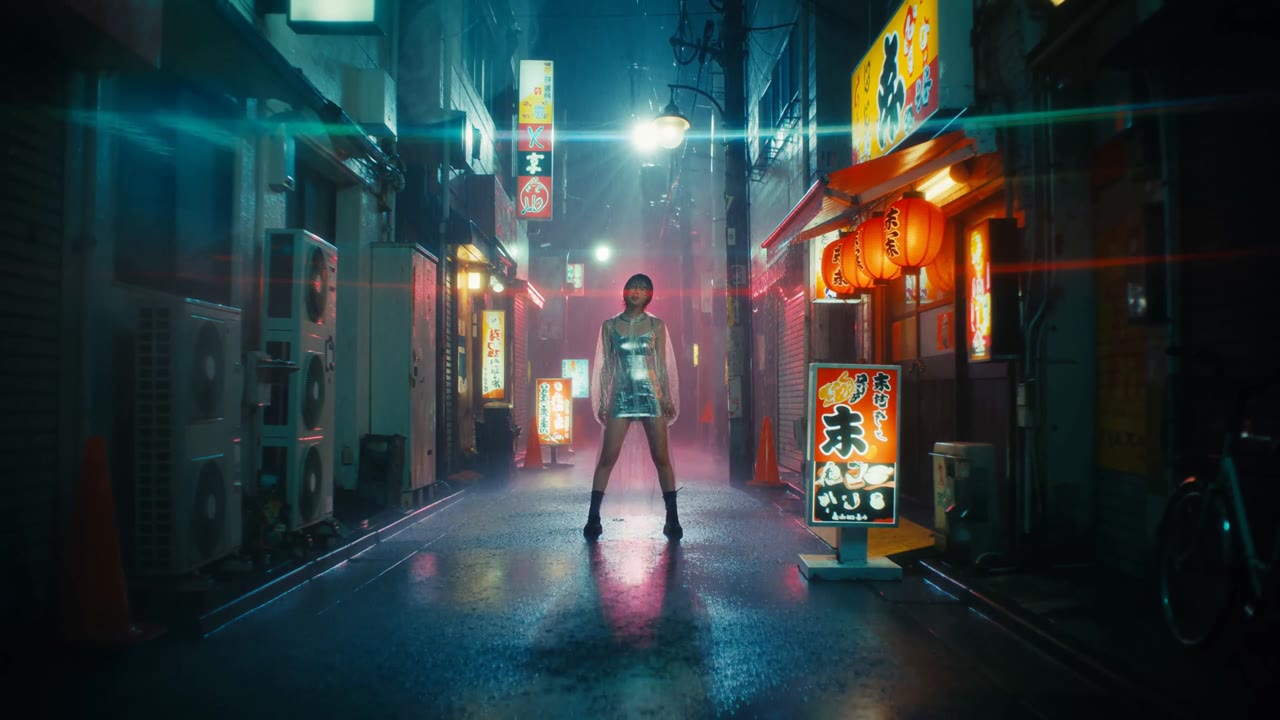
Neon Tokyo Music Video (native stereo audio)
Music video. The soundtrack is a high-energy city-pop / synthwave track with a driving bassline, punchy live drums and a bright analog synth hook, playing continuously from the first frame. Neon-lit Tokyo backstreet at night in the rain. A young female singer in an oversized translucent raincoat performs straight to camera under a red izakaya lantern, singing the hook in sync with the music. Fast cuts landing on the beat: wide shot down the alley with neon reflected in puddles; tight close-up of her face with magenta rim light and rain on her cheek; low-angle push as she walks toward camera when the bass drops; quick insert of rain hitting a buzzing neon sign; back to a wide performance shot as the hook repeats. Anamorphic lens flares, shallow depth of field, 35mm film grain, teal and magenta palette, cinematic colour grade. No on-screen text.
by APIMODELS

Living Wallpaper: Aurora Lake (locked camera)
Locked-off static camera. No zoom, no pan, no dolly, no parallax. Only ambient atmosphere moves: the aurora ribbons drift and undulate slowly across the night sky, thin low mist creeps gently across the lake, the water surface breathes with extremely subtle ripples while keeping the mirror reflection intact, faint stars shimmer. Calm, continuous, seamless ambient loop. Nothing enters or leaves the frame, no new objects, no people, no text.
by APIMODELS

Condor Heroes characters teach English word dream
神雕侠侣主角趣味讲单词 dream 教程
by @nicekate8888
We curate copy-ready prompt libraries — every entry shows its full text and a sample result, ready to adapt.
How to get access, regional availability, and how this model compares with its alternatives.
