
claude-opus-5-5Claude Opus 5.5 é o primeiro modelo da família Claude 5.5 da Anthropic, lançado em 22 de setembro de 2026. No APIMODELS custa $2.40 por 1M de tokens de entrada e $12.00 por 1M de saída, 40% abaixo da lista oficial de $4 / $20, com leituras de cache a $0.12 e gravações a $3.00. Segundo a Anthropic, ele rende no nível do Claude Fable 5.1 na maior parte do trabalho e custa 40% menos que o Opus 5 em cargas típicas; foi feito para sessões longas de programação agêntica e trabalho de conhecimento. As especificações batem com o Fable 5.1: contexto de 1M de tokens, 128K de saída máxima, entrada de texto e imagens e corte de conhecimento confiável em junho de 2026. O pensamento adaptativo fica sempre ligado e não pode ser desativado; a profundidade é controlada pelo parâmetro effort (medium por padrão). Quatro mudanças incompatíveis vêm do Fable 5.1: uso forçado de ferramenta devolve erro, blocos thinking ficam presos ao modelo que os gerou, a ferramenta antiga computer_20251124 não é mais aceita e o texto entre chamadas de ferramenta volta dentro de blocos thinking. Chame por /v1/messages ou pelo /v1/chat/completions compatível com OpenAI com uma única chave; requisições com falha não são cobradas.
View complete API reference with all parameters and examples.
Enable real-time streaming responses with Server-Sent Events.
{
  "model": "claude-opus-5-5",
  "stream": true,
  "max_tokens": 1024,
  "messages": [...]
}Enable Claude to use tools and call functions.
{
  "model": "claude-opus-5-5",
  "max_tokens": 1024,
  "tools": [{
    "name": "get_weather",
    "description": "Get current weather for a location",
    "input_schema": {
      "type": "object",
      "properties": {
        "location": {"type": "string", "description": "City name"}
      },
      "required": ["location"]
    }
  }],
  "tool_choice": {"type": "auto"},
  "messages": [{"role": "user", "content": "What's the weather in Tokyo?"}]
}Analyze PDF documents by sending them as base64 encoded content.
{
  "model": "claude-opus-5-5",
  "max_tokens": 1024,
  "messages": [{
    "role": "user",
    "content": [{
      "type": "document",
      "source": {
        "type": "base64",
        "media_type": "application/pdf",
        "data": "<base64_encoded_pdf>"
      }
    }, {
      "type": "text",
      "text": "Summarize this document."
    }]
  }]
}Get structured JSON responses that match your schema.
{
  "model": "claude-opus-5-5",
  "max_tokens": 1024,
  "output_format": {
    "type": "json_schema",
    "schema": {
      "type": "object",
      "properties": {
        "name": {"type": "string"},
        "age": {"type": "integer"}
      },
      "required": ["name", "age"]
    }
  },
  "messages": [{"role": "user", "content": "Extract info: John is 30 years old"}]
}Enable Claude to search the web for up-to-date information.
{
  "model": "claude-opus-5-5",
  "max_tokens": 1024,
  "tools": [{
    "type": "web_search_20250305",
    "name": "web_search",
    "max_uses": 5
  }],
  "messages": [{"role": "user", "content": "What's the latest news about AI?"}]
}| Parameter | Type | Required | Description |
|---|---|---|---|
| model | string | Yes | Model identifier (e.g., claude-opus-5-5) |
| messages | array | Yes | Array of message objects with role and content |
| max_tokens | integer | Yes | Maximum tokens in the response (1 - 128000) |
| system | string | No | System prompt to set context |
| stream | boolean | No | Enable streaming responses (SSE) |
| temperature | number | No | Sampling temperature (0.0 - 1.0) |
| top_p | number | No | Nucleus sampling threshold (0.0 - 1.0) |
| top_k | integer | No | Top-k sampling (0 - infinity) |
| stop_sequences | array | No | Sequences that stop generation |
| tools | array | No | Function calling tools definition |
| tool_choice | object | No | Tool selection strategy (auto/any/tool) |
| thinking | object | No | Enable extended thinking mode |
| output_format | object | No | Structured output with JSON schema |
View complete API reference with streaming, thinking, and more.
Billing: Cost = (input_tokens * input_price + output_tokens * output_price) / 1,000,000
$2.40 / $12.00 por 1M de tokens contra os $4 / $20 de lista; leituras de cache a $0.12
Anthropic: resultados nível Fable 5.1 na maior parte do trabalho, 40% mais econômico de rodar que o Opus 5
Mesmas especificações do Fable 5.1; entrada de texto e imagens; conhecimento até junho de 2026
Não pode ser desativado: a profundidade é controlada por effort (medium por padrão); uso forçado de ferramenta dá erro
Escreve código canvas, SVG ou Remotion que vira MP4; nosso vídeo de teste de 12 s custou $0.368
Claude Opus 5.5 é uma API de modelo de linguagem da Anthropic. Claude Opus 5.5 é o primeiro modelo da família Claude 5.5 da Anthropic, lançado em 22 de setembro de 2026. No APIMODELS custa $2.40 por 1M de tokens de entrada e $12.00 por 1M de saída, 40% abaixo da lista oficial de $4 / $20, com leituras de cache a $0.12 e gravações a $3.00. Segundo a Anthropic, ele rende no nível do Claude Fable 5.1 na maior parte do trabalho e custa 40% menos que o Opus 5 em cargas típicas; foi feito para sessões longas de programação agêntica e trabalho de conhecimento. As especificações batem com o Fable 5.1: contexto de 1M de tokens, 128K de saída máxima, entrada de texto e imagens e corte de conhecimento confiável em junho de 2026. O pensamento adaptativo fica sempre ligado e não pode ser desativado; a profundidade é controlada pelo parâmetro effort (medium por padrão). Quatro mudanças incompatíveis vêm do Fable 5.1: uso forçado de ferramenta devolve erro, blocos thinking ficam presos ao modelo que os gerou, a ferramenta antiga computer_20251124 não é mais aceita e o texto entre chamadas de ferramenta volta dentro de blocos thinking. Chame por /v1/messages ou pelo /v1/chat/completions compatível com OpenAI com uma única chave; requisições com falha não são cobradas. Pela plataforma APIMODELS, você acessa este modelo por uma API unificada com preços transparentes de pagamento por uso. Preço atual: Input: $2.40, Output: $12.00 per 1M tokens.
Crie sistemas de conversa inteligentes que respondem automaticamente e melhoram a eficiência do atendimento.
Escreva automaticamente artigos, e-mails, textos publicitários e mais para aumentar a produtividade.
Auxilie na escrita, depuração e revisão de código para acelerar o desenvolvimento.
Entenda e analise dados não estruturados, extraia insights e gere resumos.
O Claude Opus 5.5 está disponível pela APIMODELS a: Input: $2.40, Output: $12.00 per 1M tokens. A cobrança é por uso — você paga apenas pelo que gera.
Cadastre-se na APIMODELS, obtenha sua chave de API e chame nosso endpoint unificado. Oferecemos documentação detalhada com exemplos em cURL, Python e Node.js.
A APIMODELS oferece o mesmo modelo Claude Opus 5.5 pela nossa plataforma de agregação. Fornecemos uma interface de API unificada, então você não precisa de contas separadas por provedor: uma única chave para acessar todos os modelos.
$2.40 por 1M de tokens de entrada e $12.00 por 1M de saída, com leituras de cache a $0.12 e gravações a $3.00. A Anthropic lista $4 / $20 com leituras de cache a $0.20, então estamos 40% abaixo. A cobrança é por token real, requisições com falha são grátis e não há mínimo mensal.
O posicionamento da própria Anthropic: o Opus 5.5 rende no nível do Fable 5.1 na maior parte do trabalho e custa 40% menos que o Opus 5 em cargas típicas. Aqui o Opus 5.5 custa $2.40 / $12.00, o Opus 5 $3 / $15 e o Fable 5.1 $5 / $25; a menos que você já tenha verificado que uma tarefa só sai certa no Fable 5.1, começar pelo Opus 5.5 é o padrão mais vantajoso. Os três têm as mesmas especificações: contexto de 1M, saída de 128K.
Troque o nome do modelo para claude-opus-5-5 e fique atento a quatro mudanças incompatíveis: o pensamento adaptativo fica sempre ligado e não pode mais ser desativado (a profundidade é controlada por effort, medium por padrão); uso forçado de ferramenta — tool_choice apontando uma ferramenta específica — devolve erro; blocos thinking ficam presos ao modelo que os gerou, então uma conversa não pode carregar blocos thinking antigos entre modelos; e a ferramenta antiga computer_20251124 não é mais aceita. O texto entre chamadas de ferramenta também volta dentro de blocos thinking, então apps que o exibem como progresso precisam definir display.
Os dois funcionam: o nativo da Anthropic POST https://api.apimodels.app/v1/messages ou o /v1/chat/completions compatível com OpenAI, com model claude-opus-5-5 e Authorization: Bearer sua chave do apimodels. Streaming, chamadas de ferramenta e entrada de imagem são suportados; o cache de prompt segue o uso de cache_control da Anthropic e os acertos são cobrados a $0.12.
Faz, por meio de código. O Opus 5.5 gera texto, não vídeo, então para motion design ele escreve um programa que desenha cada quadro: uma página HTML com canvas ou SVG que expõe renderFrame(t) ou seek(t), ou uma composição do Remotion. Um navegador headless renderiza cada quadro e o ffmpeg codifica o MP4. Ele vai bem em tipografia cinética, demonstrações de interface, gráficos animados, revelações de logo e animações explicativas. Cenas fotorrealistas, pessoas reais e movimento natural de câmera ficam para um modelo de vídeo como o Seedance 2.5 ou o Veo 3.1. Nosso passo a passo completo e testado está nesta página e em https://apimodels.app/access/claude-opus-5-5-video.
O que quase todo mundo usa para começar foi publicado por @stephanlivera em 25 de setembro de 2026 e passou de 2 milhões de visualizações: "make a dynamic 15-second motion graphics video that shows what an incredible motion designer you are, like it's your showreel for a résumé. go all out." Ele é bom para testar se o ambiente funciona, mas gera resultados parecidos para todos. Os prompts que se sustentam são briefs longos: quais materiais ele deve pedir, um único estilo e uma cor de destaque, uma lista de efeitos padrão proibidos, cada cena numa grade de batidas e um contrato de renderização com seek(t). Sete deles, na íntegra e com crédito, junto com os vídeos que geraram, estão em https://apimodels.app/claude-opus-5-5-video-prompts/motion-graphics.
Nosso teste no apimodels.app foi uma única chamada em streaming: 31,786 tokens de saída, 6 minutos e 37 segundos e $0.368 cobrados por um promo de 12 segundos em 1280x720; a renderização foi local e não custou nada. A $2.40 / $12 por milhão de tokens, cada 10,000 tokens de saída custam $0.12, então um clipe que consome de 30,000 a 80,000 tokens de raciocínio e código sai por cerca de $0.36 a $0.96 por tentativa, mais alguns centavos de entrada. Sessões longas de agente com muitas revisões custam mais: criadores relatam de $2 a $400 por peça finalizada. Chamadas com falha não são cobradas.
Na APIMODELS, o Claude Opus 5.5 roda junto com mais de 60 modelos usando uma única chave de API e um único saldo, então escolher é questão de adequação, não de dependência. Ele suporta 40% Below Official, 1M Context, Agentic Coding, Adaptive Thinking e você pode avaliá-lo em preço e capacidade frente a outros modelos de modelo de linguagem, trocando ao alterar uma única string com o nome do modelo — sem nova conta ou integração. Veja todas as opções de modelo de linguagem com preços ao vivo em apimodels.app/models.
O Claude Opus 5.5 suporta: 40% Below Official, 1M Context, Agentic Coding, Adaptive Thinking. Consulte a documentação da APIMODELS para todos os parâmetros e exemplos de chamada.
Sim. A APIMODELS expõe o Claude Opus 5.5 por uma única API unificada e uma só chave, sem contas separadas por provedor e sem precisar lidar com o acesso de rede regional de cada provedor.
Aceitamos Stripe (Visa, Mastercard e outros cartões internacionais) e Alipay. O saldo fica disponível imediatamente após o pagamento.
Motion design with Claude Opus 5.5 means code, not generated pixels. The model outputs text, so it writes a program that draws every frame (an HTML canvas page with a renderFrame(t) or seek(t) function, or a Remotion composition), and a headless browser plus ffmpeg turns those frames into an MP4. We ran the whole pipeline once through apimodels.app on 30 September 2026: one API call, a 12-second 1280x720 promo, 360 frames rendered with headless Chrome, encoded with ffmpeg. This is exactly what we did and what it cost.
Opus 5.5 motion design prompts: 8 cases, 7 full creator briefs, with the videos →
Anything that has to look filmed: photoreal people, natural camera motion, physics, skin and fabric. Code draws shapes and type; it does not shoot footage. For those shots use a video model and let Opus 5.5 write the shot list and prompts, or add titles and graphics on top in code. On apimodels.app these run on the same key:
This one-liner, posted by @stephanlivera on 25 September 2026, passed 2 million views and has been re-run thousands of times. It is a good way to check your setup works; because so many people use it, the results tend to look alike, and the longer briefs in our case library hold up better.
make a dynamic 15-second motion graphics video that shows what an incredible motion designer you are, like it's your showreel for a résumé. go all out.Prompt by @stephanlivera, verbatim from the original post · x.com/stephanlivera
What a run like this costs: our own 12-second test billed $0.368 for 31,786 output tokens. At $2.40 / $12 per million tokens every 10,000 output tokens is $0.12, so a clip that takes 30,000 to 80,000 tokens of thinking and code costs roughly $0.36 to $0.96 per attempt, plus a few cents of input. Rendering happens on your machine and costs nothing.
The one rule that makes everything else work: the page must expose window.renderFrame(t) and draw frame t from scratch, with no clock, no randomness and no state carried between calls. Then a script can ask for frame 0, frame 1 … frame 359 in any order and get the same picture every time, which is what a video encoder needs. A page that animates itself with requestAnimationFrame looks fine in a browser but cannot be exported frame-accurately. We also fixed the rhythm in the prompt (120 BPM, a beat every 0.5 s) and asked the model to list its beat plan as a comment; it did, 24 beats, and every cut landed on one.
Describe what happens in each time window (problem, turn, payoff) before any visual detail. Name the labels you want on screen and say what must not appear (we asked for plain rounded labels instead of real company logos). Style comes last and stays short: one accent colour, which easing functions, and an explicit "no clutter in the last 3 seconds". The full prompt we sent is below, unedited.
The prompt we sent (verbatim)
You are writing a program that renders a video. Output one complete, self-contained HTML file and nothing else.

Rules for the program (these make it renderable frame by frame):
1. A single <canvas> of exactly 1280x720, no CSS scaling, black page background.
2. Expose a global function window.renderFrame(t) that draws the frame at time t (seconds, 0 <= t < 12) from scratch. Everything on screen must be a pure function of t: no Date.now, no performance.now, no Math.random (use a seeded PRNG if you need noise), no accumulated state between calls, no requestAnimationFrame loop.
3. Also expose window.DURATION = 12 and window.FPS = 30. When the page is opened normally, play it once in a loop with requestAnimationFrame by calling renderFrame, so a human can preview it.
4. No external assets, fonts, images or libraries. Use system-ui for text.
5. The rhythm is 120 BPM: a beat every 0.5 s. Put every major cut, text entrance and impact on a beat time (a multiple of 0.5). List the beat plan as a comment at the top of the script.

The story (tell this, then decide the visuals):
A 12-second promo for "APIMODELS", an API gateway. Problem, then turn, then payoff:
- 0-3 s: a developer's screen is cluttered with many different API keys and SDK logos flying in from every side, overlapping, getting chaotic (draw them as simple rounded labels such as "image", "video", "LLM", "audio", "key_1", "key_2", "sdk", not real company logos).
- 3-4.5 s: everything snaps together on a beat and collapses into one glowing key.
- 4.5-9 s: from that one key, lines fan out to a grid of model cards that light up one per beat (label them "145 models", "image", "video", "LLM", "audio", "one endpoint").
- 9-12 s: clean end card: the word APIMODELS, the line "One key. Every model.", and "apimodels.app" small underneath; hold still for the last second.

Style: dark background, one accent colour (electric violet #7c5cff) plus white, motion with easing (easeOutCubic / easeInOutQuad written by you), subtle depth (scale and blur fall-off), no clutter in the final 3 seconds.

Before the code, do not explain. Return only the HTML.Opus 5.5 thinks before it writes, and the thinking counts as output. On this prompt the first character of the answer arrived after 110 seconds and the whole reply took 6 minutes 37 seconds: 31,786 output tokens for about 16,000 characters of HTML. Stream the request so the connection stays alive, and do not send a small max_tokens; the gateway forwards none when you omit it, so the model uses its own limit. The call cost $0.368 at $2.40 / $12 per million tokens, and the exact amount is returned by GET /v1/records/{id}.
curl https://api.apimodels.app/v1/chat/completions \
  -H "Authorization: Bearer $APIMODELS_API_KEY" \
  -H "Content-Type: application/json" \
  -d "$(jq -n --rawfile p prompt.md \
        '{model:"claude-opus-5-5", stream:true, messages:[{role:"user", content:$p}]}')" \
  --no-buffer > stream.txt
# no max_tokens on purpose: this run used 31,786 output tokens, mostly thinkingOpen the page, stop its preview loop, then call renderFrame(i / 30) for every frame and read the canvas back as a PNG. 360 frames took 14 seconds on a laptop and the page threw no errors. Encoding to H.264 with faststart gave a 1.8 MB file that plays everywhere.
// render.mjs — pnpm add puppeteer-core; uses the Chrome you already have
import puppeteer from 'puppeteer-core'
import { mkdirSync, writeFileSync } from 'node:fs'

mkdirSync('frames', { recursive: true })
const browser = await puppeteer.launch({
  executablePath: '/Applications/Google Chrome.app/Contents/MacOS/Google Chrome',
})
const page = await browser.newPage()
await page.setViewport({ width: 1280, height: 720 })
await page.goto('file://' + process.cwd() + '/promo.html')
await page.evaluate(() => { window.requestAnimationFrame = () => 0 }) // stop the preview loop
const { DURATION, FPS } = await page.evaluate(() => ({ DURATION, FPS }))
for (let i = 0; i < DURATION * FPS; i++) {
  const png = await page.evaluate((t) => {
    window.renderFrame(t)
    return document.querySelector('canvas').toDataURL('image/png')
  }, i / FPS)
  writeFileSync(`frames/f${String(i).padStart(4, '0')}.png`, Buffer.from(png.split(',')[1], 'base64'))
}
await browser.close()
ffmpeg -framerate 30 -i frames/f%04d.png -c:v libx264 -pix_fmt yuv420p -crf 20 -movflags +faststart promo.mp4
# add a soundtrack afterwards if you have one:
# ffmpeg -i promo.mp4 -i beat.mp3 -c:v copy -shortest promo-with-audio.mp4Pull a few frames at the story beats into one contact sheet and compare them with the brief: here 2.3 s (the clutter), 3.5 s (one key), 7.2 s (cards lighting up) and 11.3 s (end card). All four matched on the first try. To change something, ask for it by timecode and beat ("at 7.5 s the sixth card should light up with a pulse"), and ask for the whole file back so the frame contract stays intact.
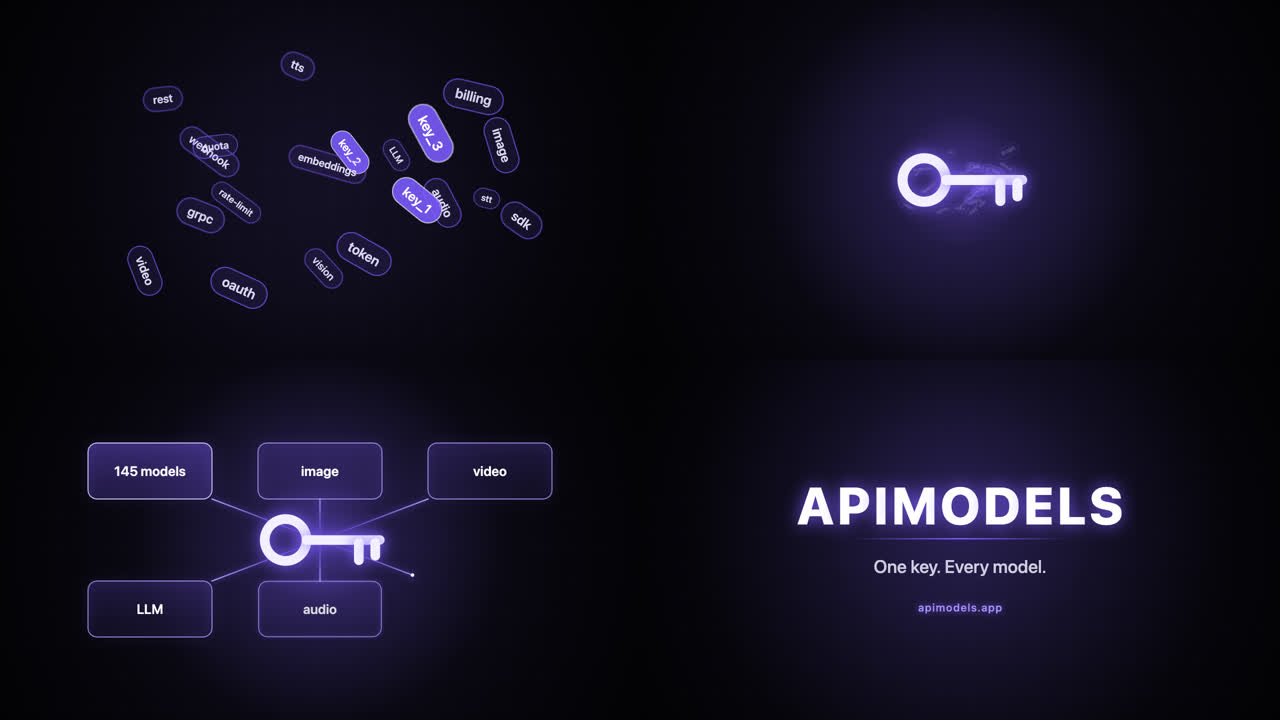
Idea credit: the workflow was inspired by EianLu’s article on making motion videos with Opus 5.5 on X. Everything on this page (prompt, code, video, numbers) comes from our own run. Read the original article on X
Prompts shared by their authors — copy and adapt them. Each one credits its author and links back to the original post.

The 15-second motion-designer showreel
make a dynamic 15-second motion graphics video that shows what an incredible motion designer you are, like it's your showreel for a résumé. go all out.
by @stephanlivera

Showreel brief that lists the techniques
Create a bold, dynamic 15-second motion graphics showreel that feels like the ultimate portfolio piece of an exceptionally talented motion designer. Showcase a wide range of advanced techniques: kinetic typography, smooth transitions, 2D and 3D animation, abstract geometry, fluid simulations, particles, distortion, creative masking, compositing, lighting, depth, and seamless camera movement. Keep the pacing fast, confident, and visually surprising, with every shot transitioning naturally into the next. Make it feel meticulously art-directed rather than like a random collection of effects. Push the creativity, polish, timing, and visual impact as far as possible. This should feel like the opening reel that gets a motion designer hired.
by @lukasersil

One shape morphs through a dozen UI states on the beat
<inputs> Ask me for: 8 to 12 UI states I want the shape to become (e.g. button, loader, player, slider, toggle, tabs, chart, command palette, toast), pure black and white or one accent color, and a royalty-free song around 120 BPM (e.g. Mixkit, free for commercial use). </inputs> <direction> Dribbble-level UI motion. One shape, never cut: every state is the same element morphing its size, radius and color while its content swaps with a short blur. A cursor drives every change with real clicks and drags. Light warm-gray canvas, black and white components, one clean UI font (Geist). Springs everywhere, a tiny overshoot at most. The camera zooms so each state fills the frame. The last frame is the first frame, so it loops. Banned: bouncy easing, particle bursts, glows, gradients on UI chrome, mismatched icon strokes, dead time, anything that looks like a template. </direction> <structure> 120 BPM, 7 bars, something happens on every beat. Button → loader → check → dynamic island → music player with a play/pause morph → scrub the progress bar → it becomes a volume slider that stretches when dragged past max → a toggle flips on the beat → the knob becomes a liquid tab indicator → the tabs open into a chart that draws itself, with a tooltip on hover → it collapses into ⌘K → type to filter → enter → toast → back to the button. </structure> <build> 1. One HTML file, square 1440x1440. Every style is computed from time inside seek(t): no CSS transitions, no timers, no state carried between frames. 2. Springs are closed-form step responses. A value that changes target many times is the sum of one spring per change, so it stays a pure function of time. 3. The tab indicator's two edges ride different springs, so the leading edge stretches ahead of the trailing one. Same trick for the toggle knob. 4. Drags are direct manipulation: while the cursor is held, the value is computed from its position. On release it springs back from wherever it was. 5. Analyze the song with numpy for the beat grid and start on a downbeat. Place every UI sound by its measured peak. 6. Render with Playwright: 4 subframes per frame, blended with ffmpeg tmix for motion blur at 60fps. 7. Render one frame per beat before the full render. Fix anything off the grid, cramped or hard to read. </build> <gotchas> Never put will-change on anything the camera scales or the text renders blurry. Text that swaps inside a morphing container needs its own enter and exit timing or it overlaps. Make the last frame identical to the first, cursor position and speed included, or the loop stutters. </gotchas> <start> Ask me for the inputs, then show me the state list on the beat grid before you write any code. </start>
by @twoclipping
We curate copy-ready prompt libraries — every entry shows its full text and a sample result, ready to adapt.
How to get access, regional availability, and how this model compares with its alternatives.
