
muse-videoO Muse Video é o modelo de vídeo da Meta Superintelligence Labs. No APIMODELS ele é um único id de modelo, muse-video, no endpoint unificado de vídeo: envie só um prompt para texto para vídeo, acrescente uma imagem de primeiro quadro e o clipe começa a partir dessa imagem, ou acrescente até quatro imagens de referência e o modelo mantém a mesma pessoa ou o mesmo objeto sem começar por elas. A requisição é enxuta. prompt é obrigatório (até 4000 caracteres, em qualquer idioma). duration define a duração em segundos inteiros de 4 a 30 (o campo seconds no estilo OpenAI também funciona); sem ele, você recebe 5 segundos. aspect_ratio escolhe 16:9 horizontal (o padrão, 1280×720) ou 9:16 vertical (720×1280); size 1280x720 ou 720x1280 faz o mesmo. A saída é sempre 720p: não há opção 1080p nem quadrada, e pedir uma delas retorna 400 antes de qualquer tarefa ser criada. Para imagem para vídeo, envie o primeiro quadro em image_url (first_frame_url, image e input_reference também funcionam), de preferência na mesma orientação do clipe; para imagens de referência, envie até quatro em images (image_urls e reference_image_urls também funcionam). Cada imagem é uma URL pública ou um data URI em base64, em PNG, JPEG ou WebP. É um ou outro: primeiro quadro junto com imagens de referência, mais de quatro imagens de referência, último quadro, vídeo ou áudio de referência, negative_prompt, seed e desligar o som são recusados com 400. As durações vêm em degraus. Pedidos de 5, 6, 8, 10, 15, 20, 25 ou 30 segundos voltam exatamente com essa duração; qualquer outro número inteiro é arredondado para cima até o próximo degrau (4 → 5 s, 7 → 8 s, 11 → 15 s), então um clipe nunca é mais curto do que o que você pagou. O vídeo é um MP4 H.264 a 24 fps, e a Meta descreve o Muse Video como um modelo que gera o som junto com a imagem. No nosso teste com imagens de referência, quatro fotos de uma mesma mulher geraram um clipe de 5 segundos na praia em que ela manteve o rosto e o cabelo; o modelo não começou por nenhuma das fotos. Ele roda como tarefa assíncrona: crie a tarefa e depois consulte o status ou receba um callback. Clipes de até 10 segundos costumam levar de um a dois minutos; de 15 a 30 segundos, de três a sete. Nem toda requisição dá certo: o modelo pode recusar o conteúdo, uma geração pode esbarrar em um erro temporário e um clipe com orientação ou duração erradas é descartado; uma tarefa com falha não é cobrada. O preço é $0.037 por segundo solicitado: 5 s $0.185, 10 s $0.37, 30 s $1.11.
The API also takes any other whole number from 4 to 30; it rounds up to the next length here (7 s comes out as 8 s) and is billed on the seconds you request.
Generated video will appear here
Provide URLs and click Generate
Um único id de modelo: só o prompt, um primeiro quadro para o clipe começar da sua imagem, ou até quatro imagens de referência para manter a mesma pessoa de um clipe para outro
Segundos inteiros; 5, 6, 8, 10, 15, 20, 25 e 30 s saem exatos, as outras durações arredondam para cima, então um clipe nunca é mais curto do que você paga
1280×720 (16:9, padrão) ou 720×1280 (9:16), MP4 H.264 a 24 fps; sem 1080p, sem formato quadrado nem outras proporções
A Meta descreve o Muse Video como um modelo que gera o áudio junto com o vídeo
Nem toda requisição dá certo, e uma tarefa com falha não é cobrada; durações, tamanhos ou entradas não suportados são recusados com 400 antes de a tarefa ser criada
Cobrado pelos segundos solicitados: 5 s $0.185, 10 s $0.37, 30 s $1.11
Muse Video é o modelo de vídeo da Meta. Envie só um prompt, acrescente uma imagem de primeiro quadro para o clipe começar a partir dela, ou até quatro imagens de referência para manter a mesma pessoa ou o mesmo elemento, e receba um MP4 em 720p de 4 a 30 segundos, na horizontal 16:9 ou na vertical 9:16.
No APIMODELS ele é um único id de modelo, muse-video, em POST /v1/video/generations, cobrado a $0.037 por segundo solicitado. Antes de construir em cima dele, confira os limites abaixo: só 720p, só horizontal ou vertical, um primeiro quadro ou até quatro imagens de referência (não os dois), e nem toda requisição tem sucesso.
muse-videoTexto para vídeo, sem primeiro quadro, 9:16, 10 segundos. Uma única geração, mostrada como saiu.
Um único pedido com o prompt abaixo, duration 10 e aspect_ratio 9:16. O Muse Video devolveu em cerca de 75 segundos um clipe de 10,0 segundos em 720×1280 com trilha musical e seguiu a lista de ações na ordem, num único plano: olhos fechados no travesseiro, olhos se abrindo para a câmera, um sorriso tímido, o cobertor puxado até cobrir metade do rosto, um V com os dedos quase encostado na lente, a mão na boca enquanto ela ri contra o travesseiro e o celular tombando em direção ao teto.
É o tipo de clipe em que o Muse Video vai bem: uma pessoa, enquadramento vertical de selfie com o celular na mão, uma sequência curta de gestos pequenos e um clima feito de luz quente e baixa e música. Gerar o mesmo prompt de novo dá outro resultado. Texto para vídeo não mantém o mesmo rosto de um clipe para o outro; para um personagem recorrente, envie até quatro imagens de referência dele (images): o modelo mantém o rosto sem começar a partir da imagem.
主体:人物是明月(我的固定角色),穿奶白低领细肩吊带;头发被枕头压乱,多缕发丝横过脸部。从闭眼侧躺开始,再睁眼互动。全程同一张脸、同一套衣服。

场景:夜间卧室床上,白被子白枕头,暖色床头灯。她自己拿手机前置超近距自拍,头到上胸几乎占满竖屏,腰腹和下半身不入画。手腕轻轻晃,构图略歪;一镜到底,不切镜。

音乐:轻甜 bedroom pop 器乐,约 90 BPM。无台词、无说话口型。配乐里不要人声和笑声。

动作:侧脸贴枕闭眼浅笑 → 慢慢睁眼锁定镜头 → 下巴抵肩害羞抿嘴笑 → 拉起白被子挡住半张脸再拉开 → 空着手从上胸前伸向镜头,V 手势几乎贴住镜头再收成夹捏/小爱心 → 握拳挡嘴害羞偷笑,把脸埋进枕头 → 手机一歪甩向天花板。实时速度。

画质:故意拍糊,手持动态模糊和局部失焦,暖色低照度,10 秒竖屏。18 clipes, cada um um pedido de 10 segundos com duas imagens de referência. Do jeito que saíram; abra qualquer card para ver o prompt exato.
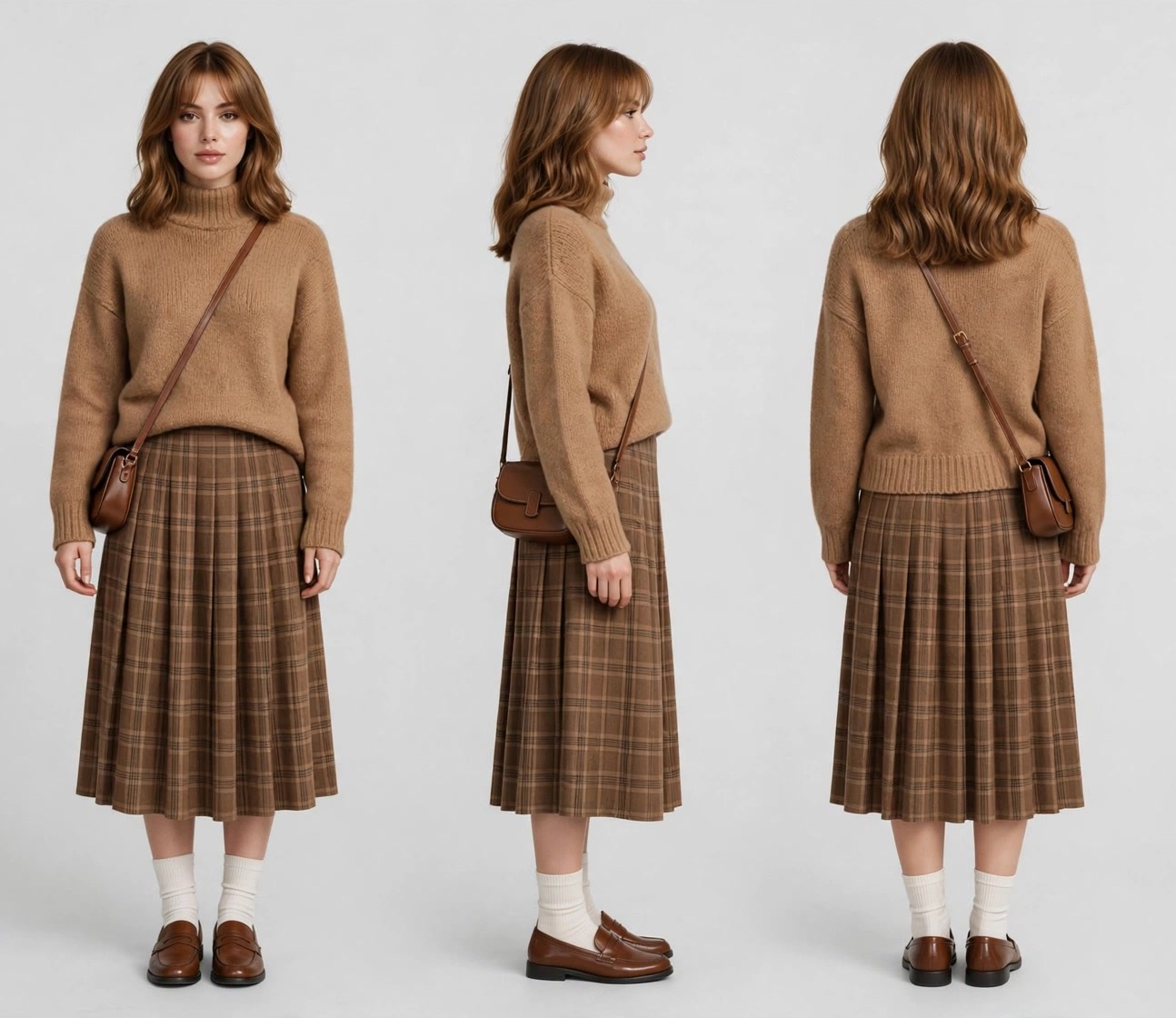
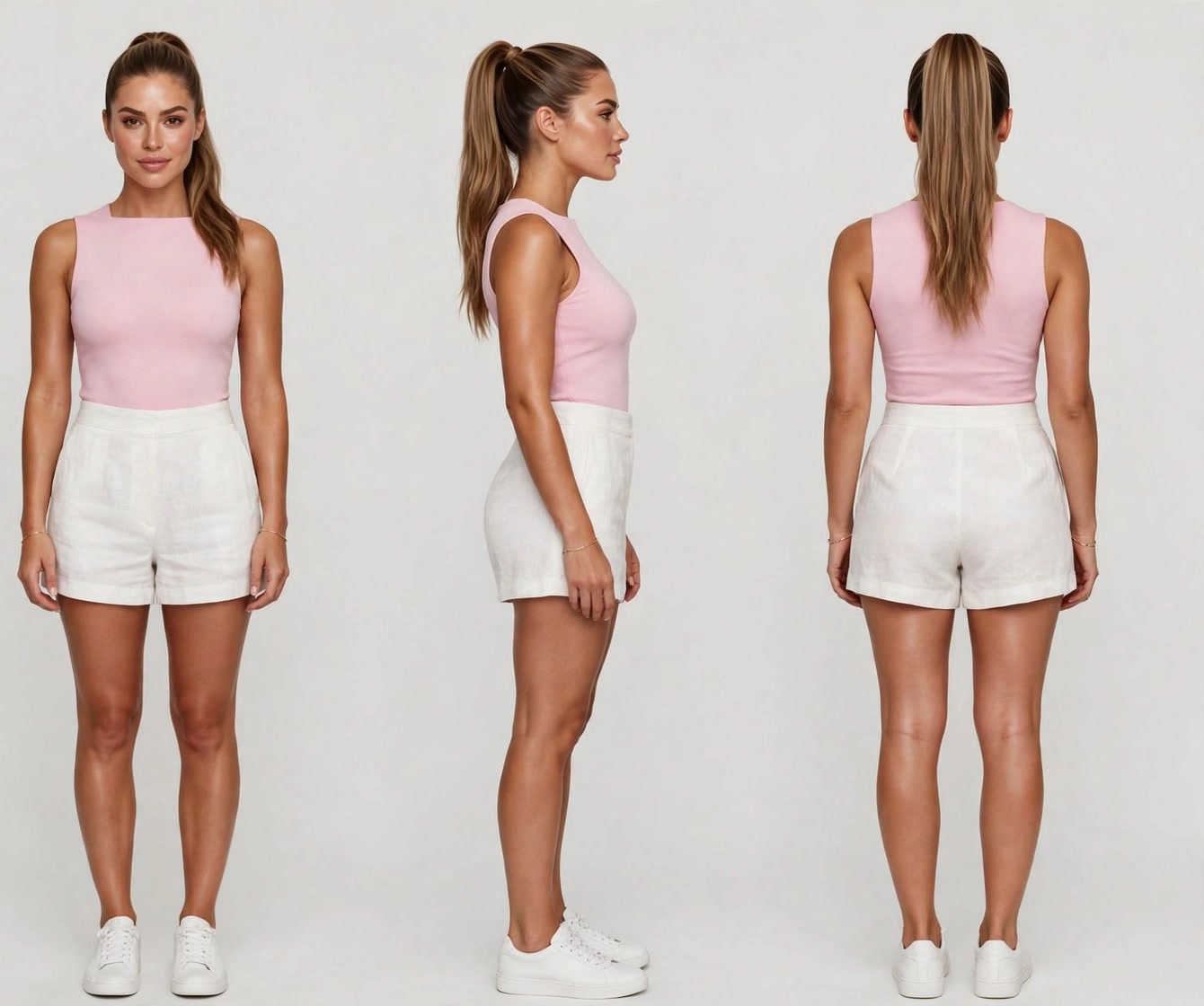
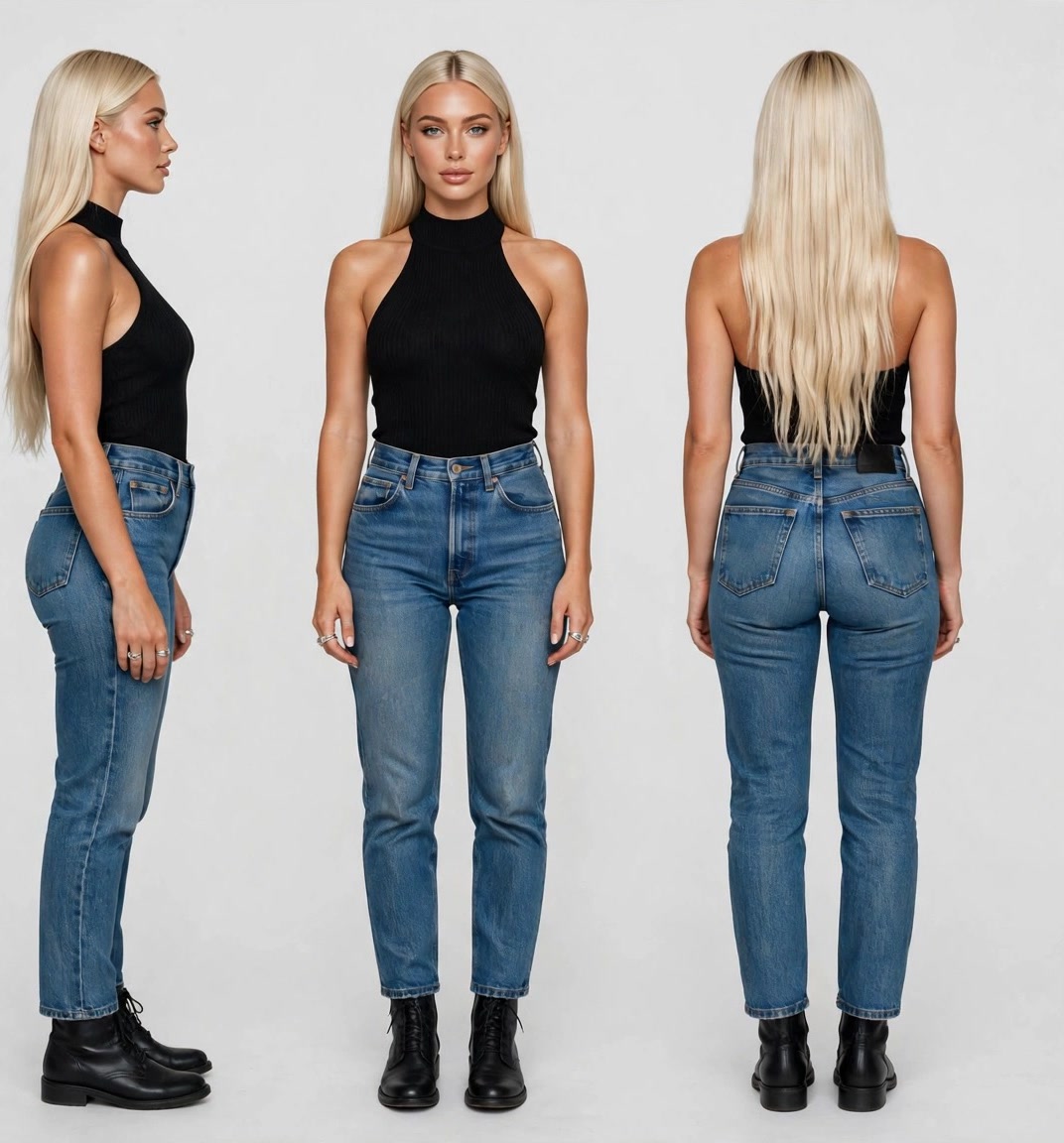
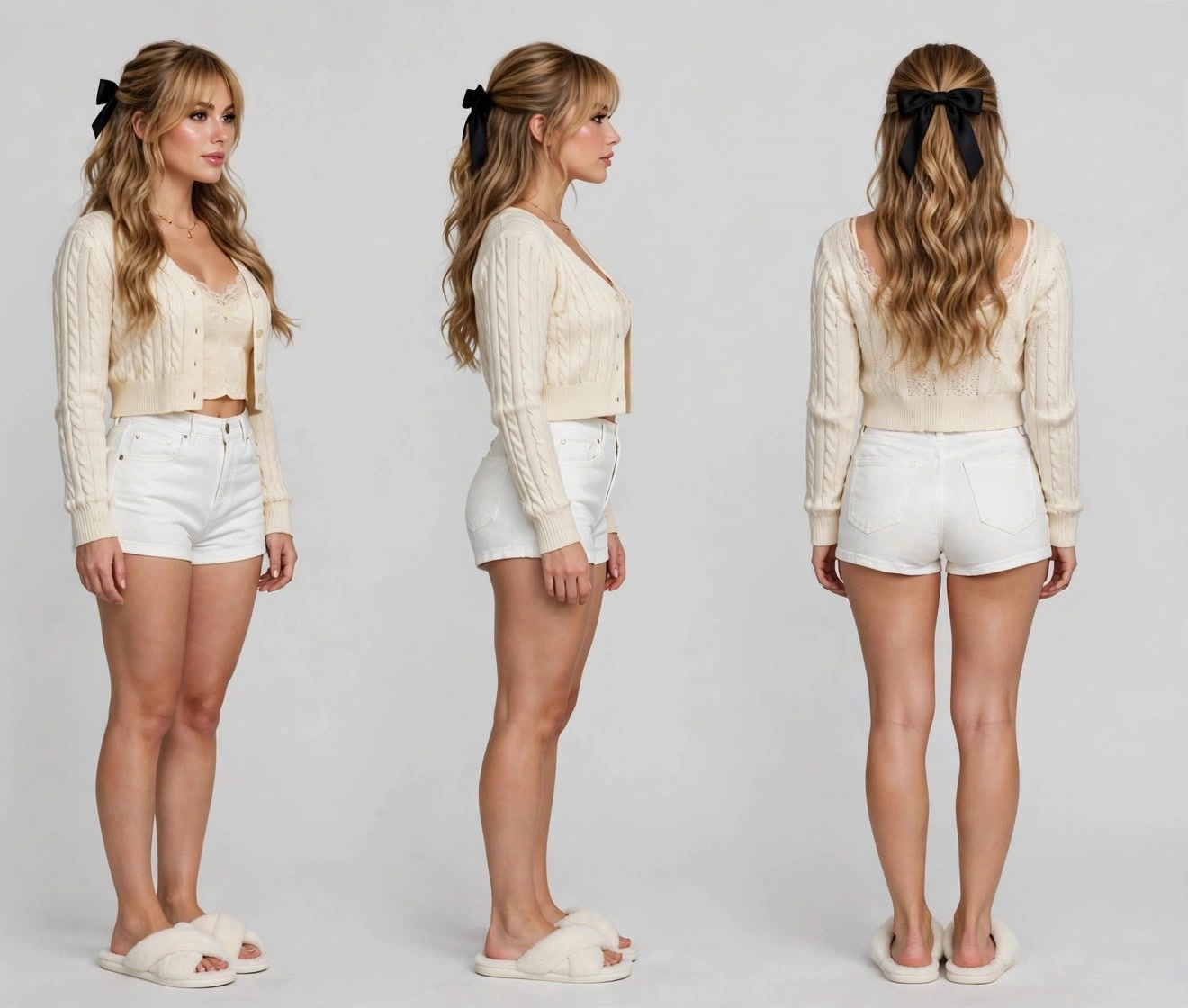
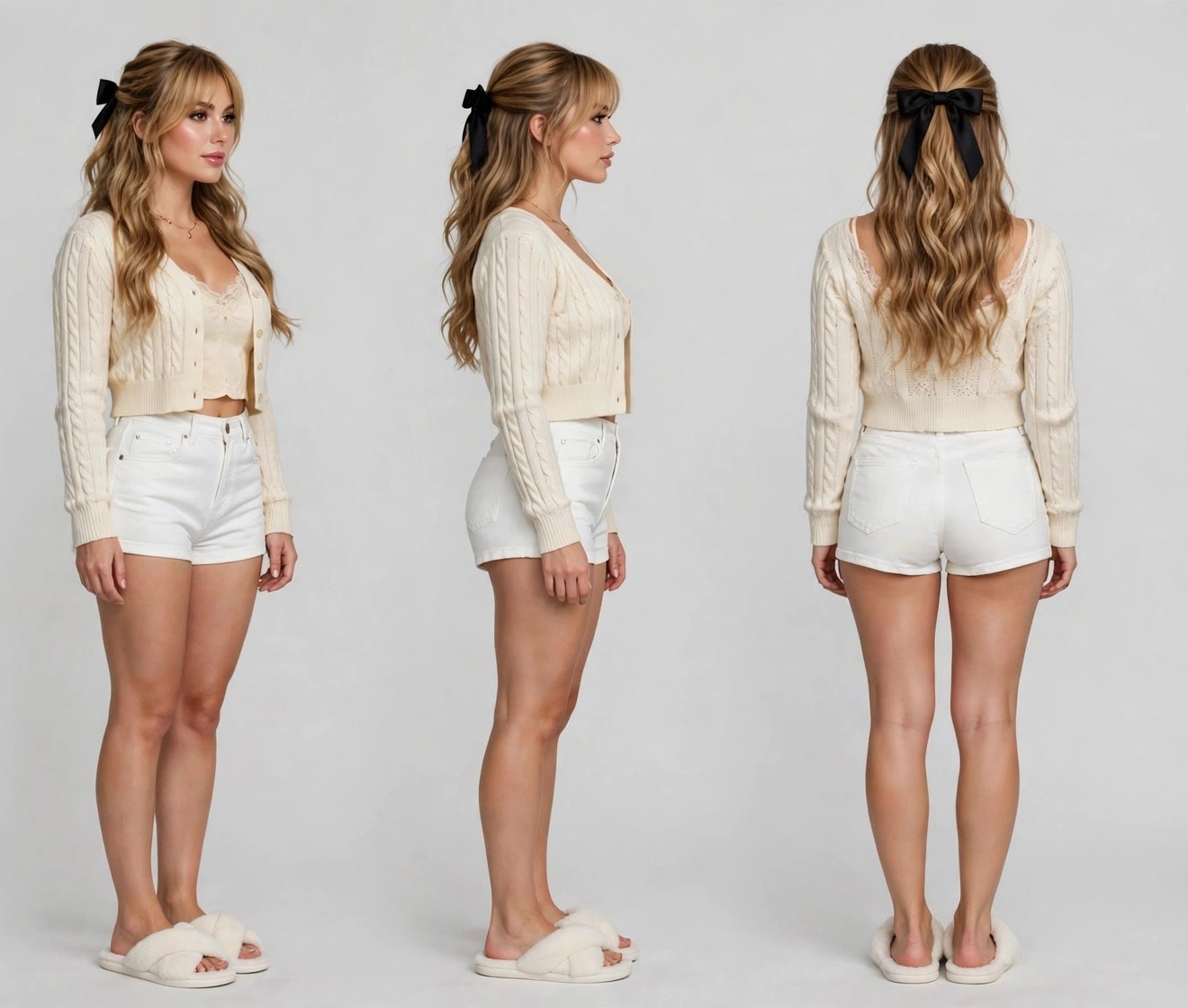
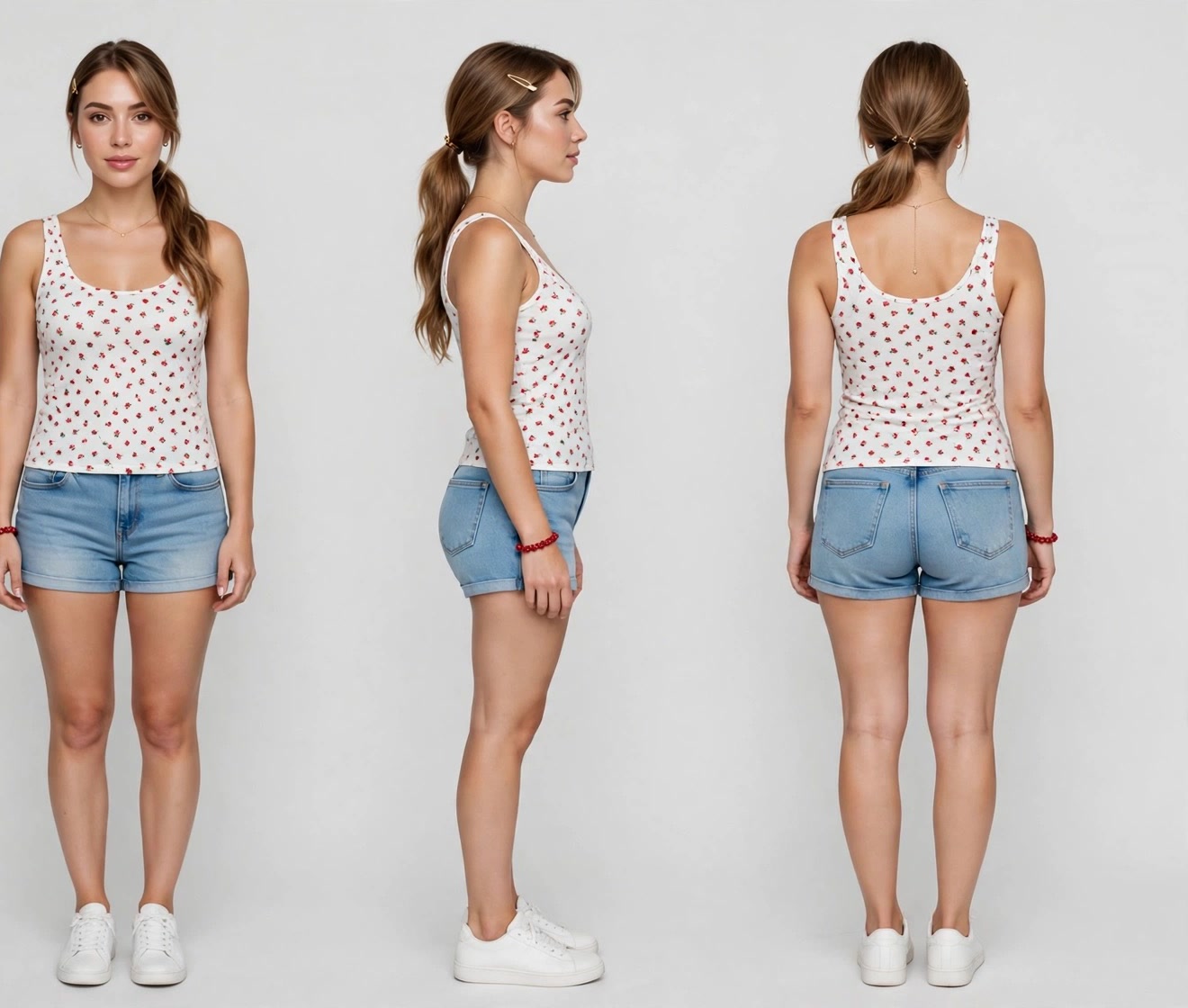
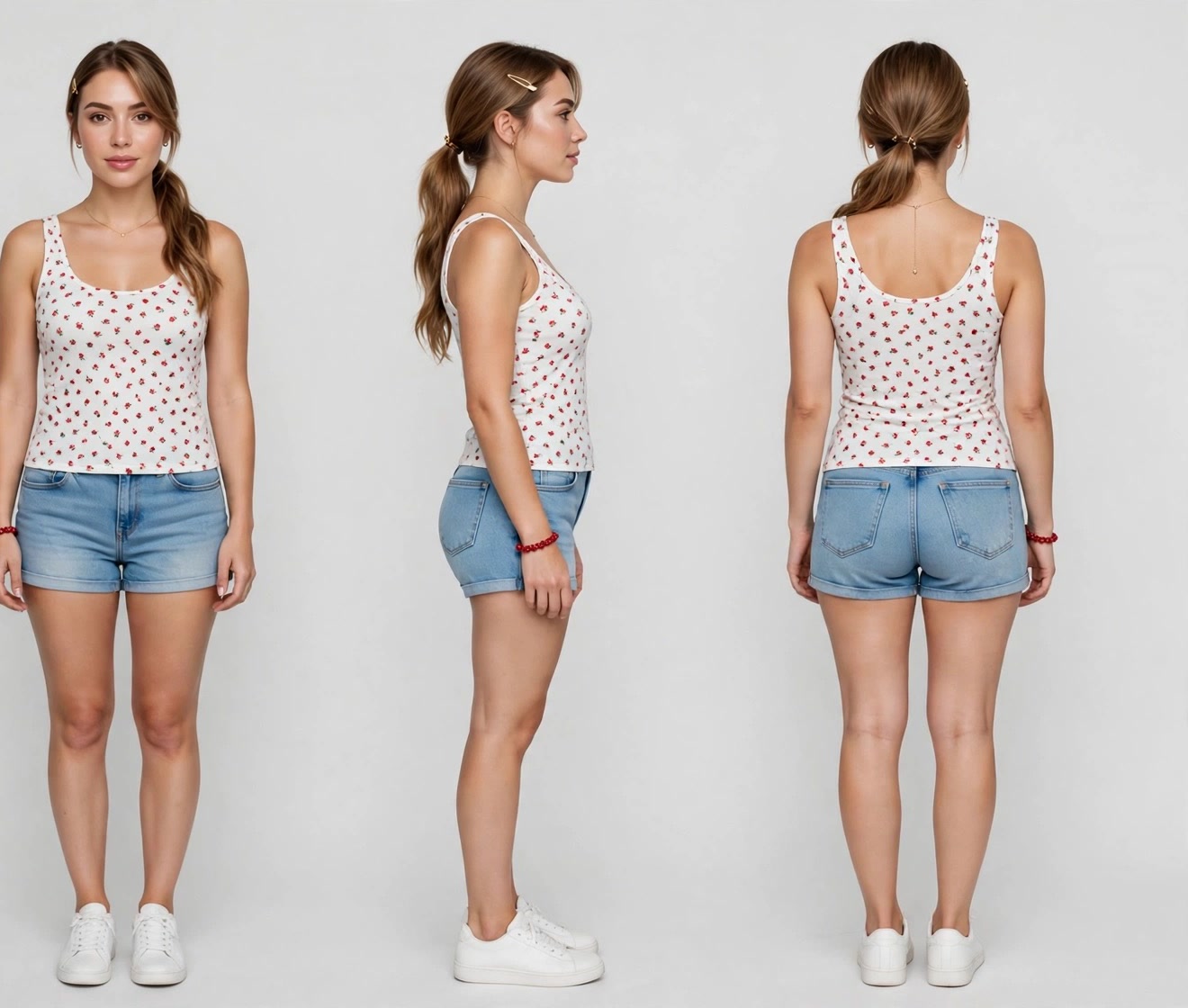
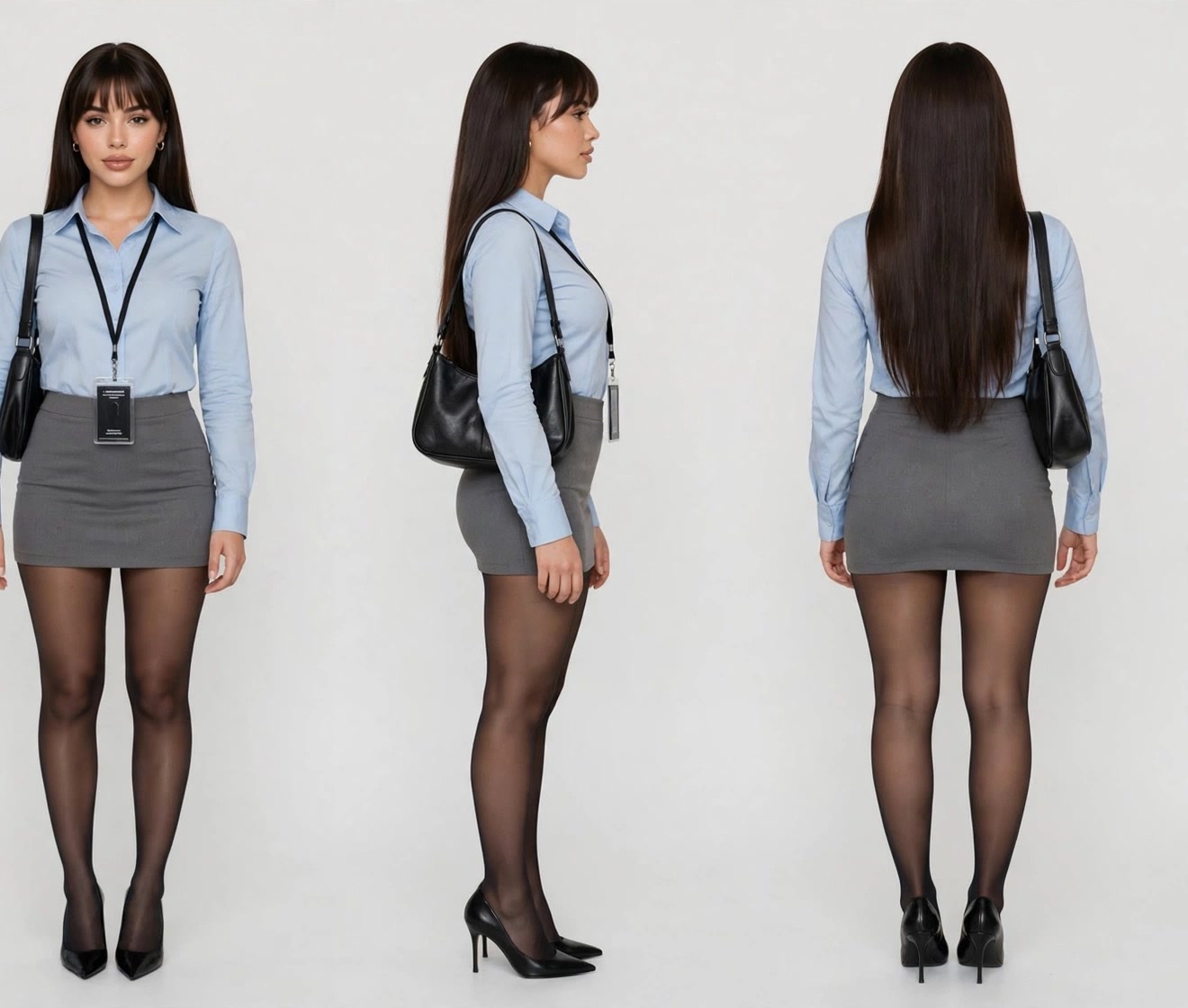
Como foram feitos: para cada personagem geramos com o Muse Image uma folha de personagem (um retrato ao lado de vistas de frente, perfil e costas), recortamos em duas imagens e enviamos as duas como imagens de referência (images) com um prompt de 10 segundos em 9:16; o vlog de cozinha é 16:9. Os prompts descrevem a ação segundo a segundo, com roupas sem exageros, e dão a ela uma fala curta em inglês. O rosto e a roupa se mantêm de um plano para outro, e uma segunda tomada do mesmo prompt (os pares A / B) mostra quanto cada geração varia. Três dos prompts foram adaptados de prompts compartilhados no X, com o crédito no card.
Took you long enough. I already ordered yours.Imagens de referência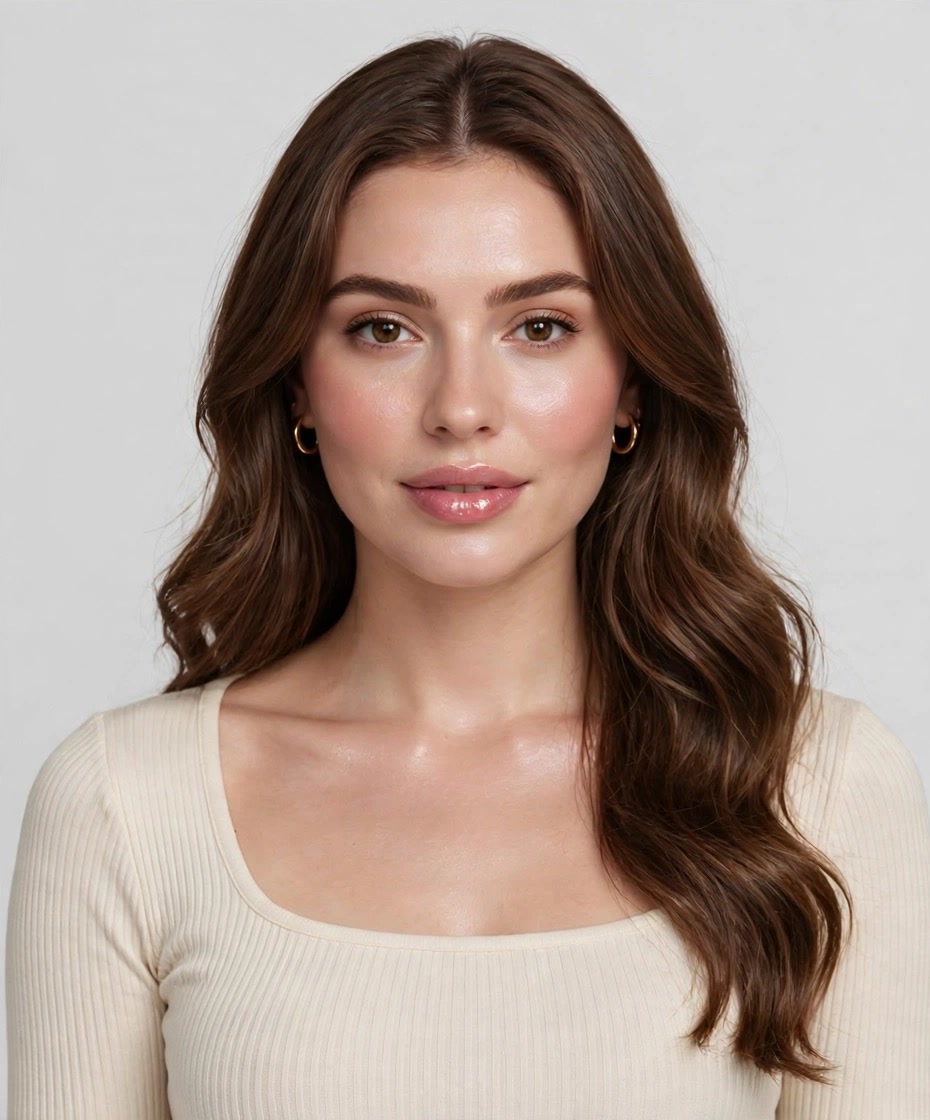
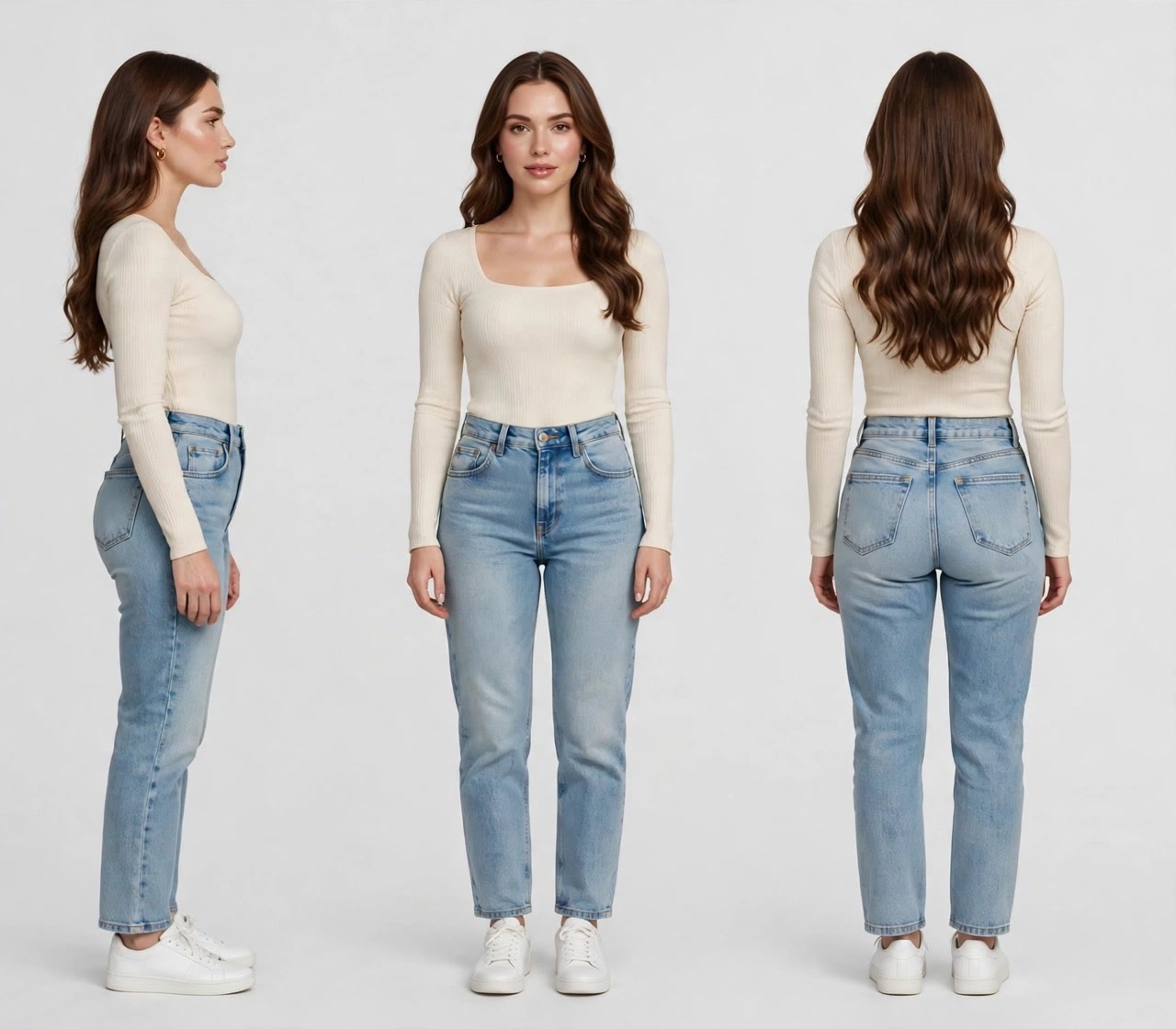
Reference images: image 1 is her headshot (face, features, hair, makeup); image 2 is a front / side / back three-view of the same woman (outfit, accessories, shoes, body). Keep exactly this face, hair and outfit in every frame. She is a 25-year-old woman with a polished Instagram look.

Coffee date. Scene: a sunny corner café, window seat, a small wooden table with two iced oat lattes, soft morning light through the window, the street blurred outside, a few customers far in the background.
Camera: the viewer's point of view, sitting across the table from her, eye level, one continuous take, no cuts.
0.0–1.5 s: she rests her chin on one hand and stirs her latte with the straw, looking down with a small smile.
1.5–3.0 s: she looks up into the lens, raises one eyebrow and her smile widens.
3.0–5.0 s: she says, warm and teasing: "Took you long enough. I already ordered yours." and slides the second latte toward the camera with two fingers.
5.0–7.0 s: she tucks a strand of hair behind her ear and leans forward a little on her elbows, holding eye contact, with a soft laugh.
7.0–8.5 s: she taps the table twice and tilts her head toward the empty chair, inviting the viewer to sit.
8.5–10.0 s: she sips her latte and keeps looking into the lens over the straw, eyes smiling, until the end.
Mood: warm, playful, confident, friendly; natural eye contact, nothing exaggerated.
Lighting: soft warm daylight, gentle highlights in her hair, realistic skin texture.

Audio: soft acoustic café music and light café ambience; her line is clear, natural American English; no other voices, no laugh track.
Style: realistic Instagram Reel shot on an iPhone, vertical 9:16, natural colors, crisp focus on her face, gentle handheld motion.
Avoid: changing her face or outfit, revealing or low-cut clothing, see-through fabric, extra fingers, warped hands, strangers staring at the camera, on-screen text, subtitles, watermark.Come on, the sun's going down!Imagens de referência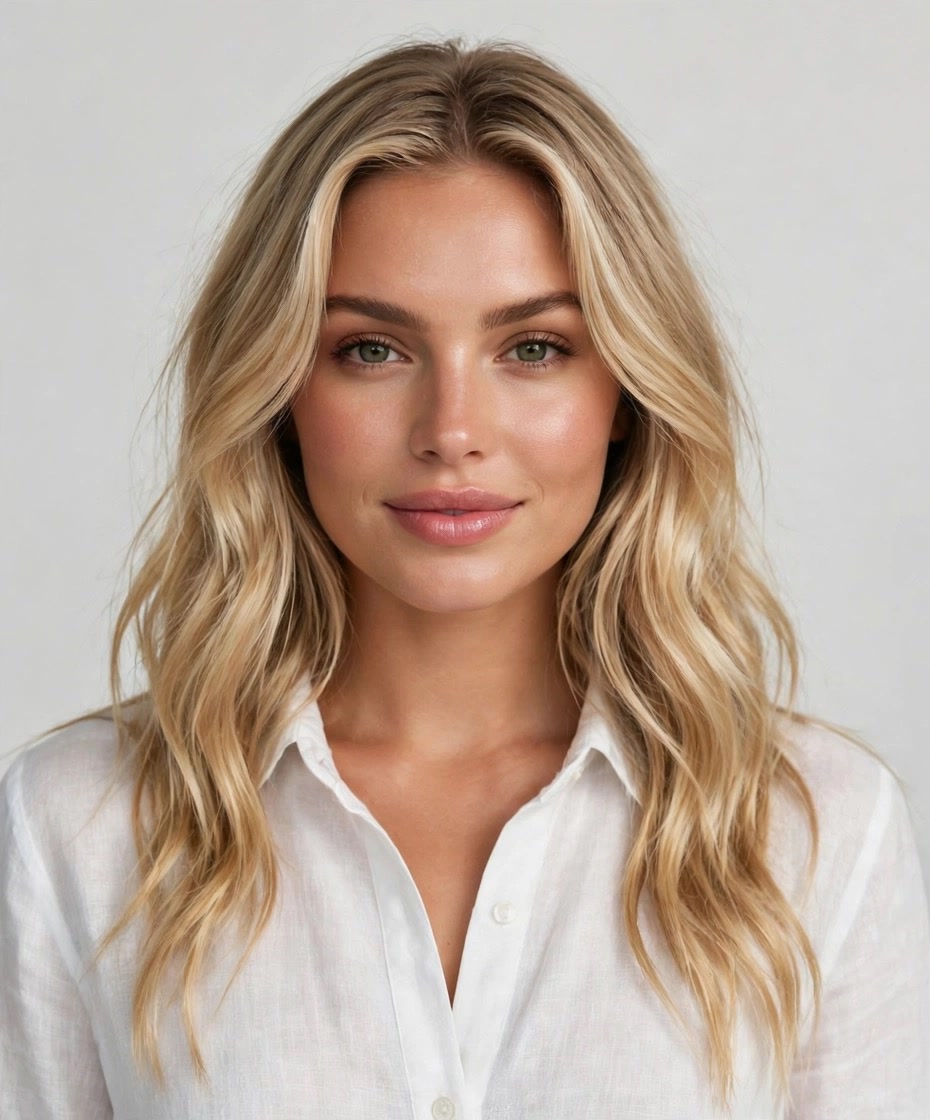
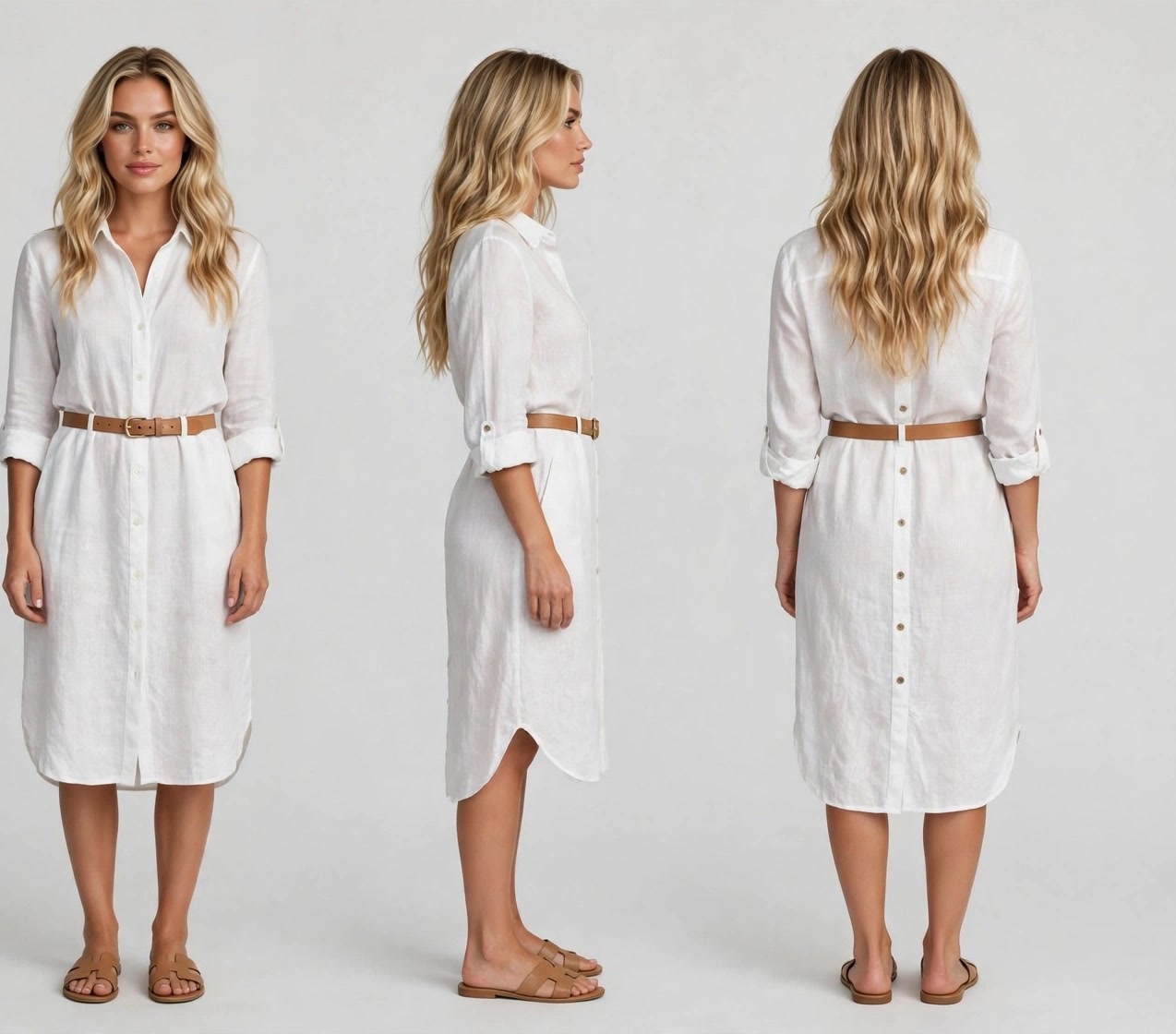
Reference images: image 1 is her headshot (face, features, hair, makeup); image 2 is a front / side / back three-view of the same woman (outfit, accessories, shoes, body). Keep exactly this face, hair and outfit in every frame. She is a 25-year-old woman with a polished Instagram look.

Golden hour beach. Scene: a wide sandy beach at sunset, gentle waves, the sun low over the ocean, footprints in wet sand, a light sea breeze.
Camera: the viewer walking a few steps behind her, one continuous take, smooth natural movement.
0.0–2.0 s: she walks barefoot along the waterline away from the camera, sandals hanging from one hand, the breeze moving her hair and the hem of her shirt dress.
2.0–3.5 s: she slows down and looks back over her shoulder at the lens with a bright smile.
3.5–5.5 s: she turns around, walks backwards for a few steps and reaches one hand toward the camera, palm up, saying: "Come on, the sun's going down!"
5.5–7.5 s: the camera moves closer; she laughs and pushes her windblown hair off her face, eyes on the lens.
7.5–9.0 s: she takes a little splash step in the shallow water and glances back with a playful grin.
9.0–10.0 s: she stops and faces the camera with the sunset behind her, tilts her head and smiles softly, holding eye contact.
Mood: carefree, warm, inviting, romantic but natural.
Lighting: golden backlight, soft lens flare, warm skin tones, rim light on her hair.

Audio: dreamy indie pop music with soft waves and wind; her line is clear, natural American English; no other voices, no laugh track.
Style: realistic Instagram Reel shot on an iPhone, vertical 9:16, natural colors, crisp focus on her face, gentle handheld motion.
Avoid: changing her face or outfit, revealing or low-cut clothing, see-through fabric, extra fingers, warped hands, strangers staring at the camera, on-screen text, subtitles, watermark.Have you read this one?Imagens de referência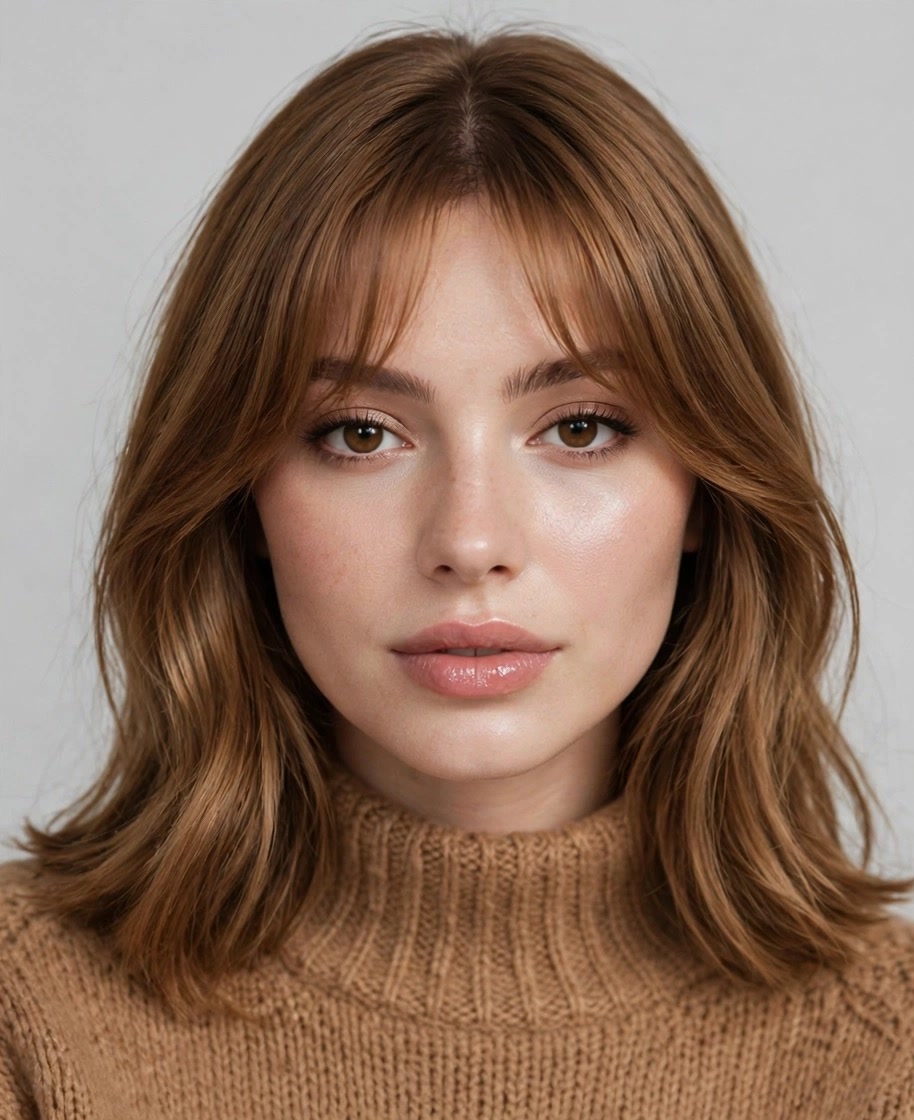
Reference images: image 1 is her headshot (face, features, hair, makeup); image 2 is a front / side / back three-view of the same woman (outfit, accessories, shoes, body). Keep exactly this face, hair and outfit in every frame. She is a 25-year-old woman with a polished Instagram look.

Bookstore. Scene: a cozy independent bookstore, tall wooden shelves, warm reading lamps, a rolling ladder, soft afternoon light, a few customers far in the background.
Camera: the viewer standing in the aisle facing her, one continuous take, a slow push-in.
0.0–1.5 s: she peeks out from behind the end of a bookshelf, only half her face visible, eyes on the lens.
1.5–3.0 s: she steps out holding a book up so it covers her nose and mouth, her eyes smiling above it.
3.0–4.5 s: she slowly lowers the book to reveal a playful smile.
4.5–6.5 s: she taps the cover and whispers: "Have you read this one?"
6.5–8.0 s: she leans her shoulder against the shelf, hugging the book to her chest, and tilts her head.
8.0–10.0 s: she bites back a smile, glances down, then looks up again through her lashes and holds eye contact.
Mood: sweet, curious, playful, intimate but wholesome.
Lighting: warm tungsten lamps, soft window light, cozy amber tones.
Book covers stay plain, with no readable text.

Audio: soft piano and acoustic guitar music with a quiet bookstore ambience; her line is clear, natural American English; no other voices, no laugh track.
Style: realistic Instagram Reel shot on an iPhone, vertical 9:16, natural colors, crisp focus on her face, gentle handheld motion.
Avoid: changing her face or outfit, revealing or low-cut clothing, see-through fabric, extra fingers, warped hands, strangers staring at the camera, on-screen text, subtitles, watermark.Mine's better.Imagens de referência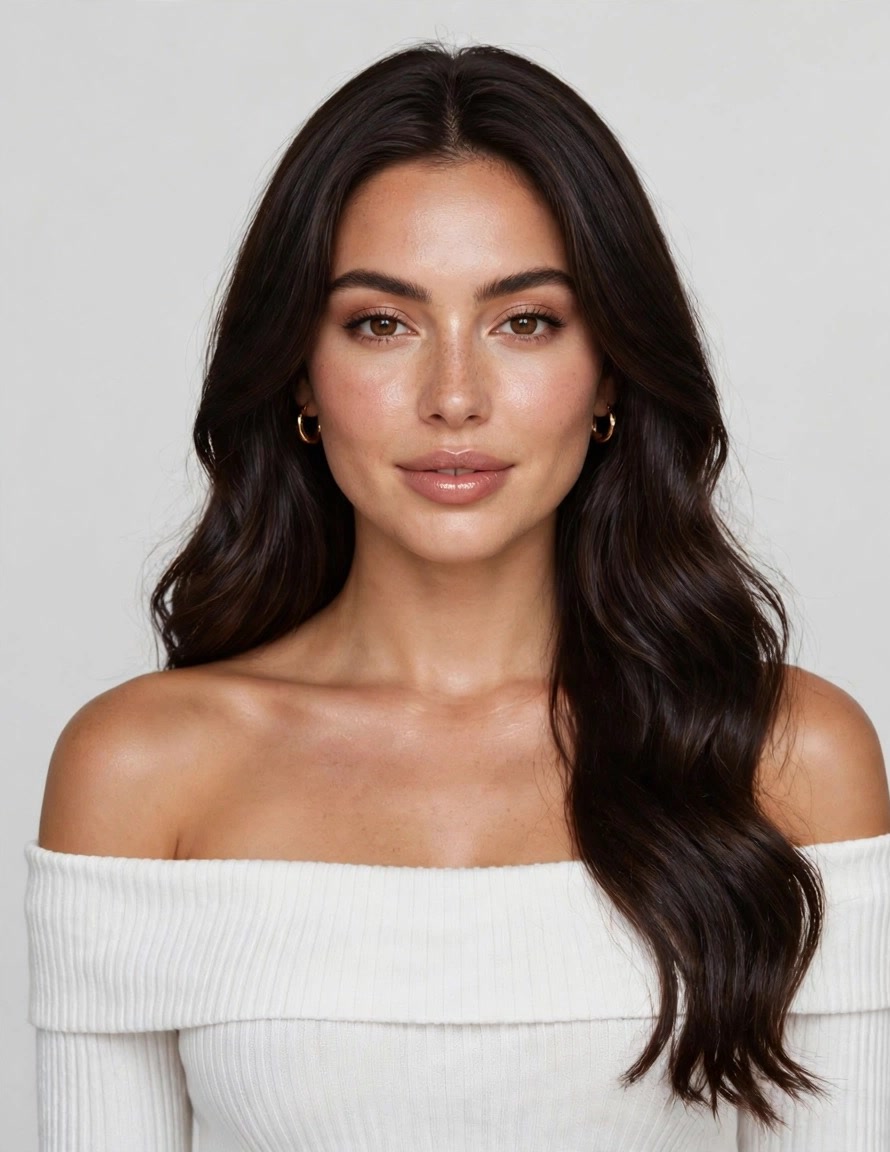
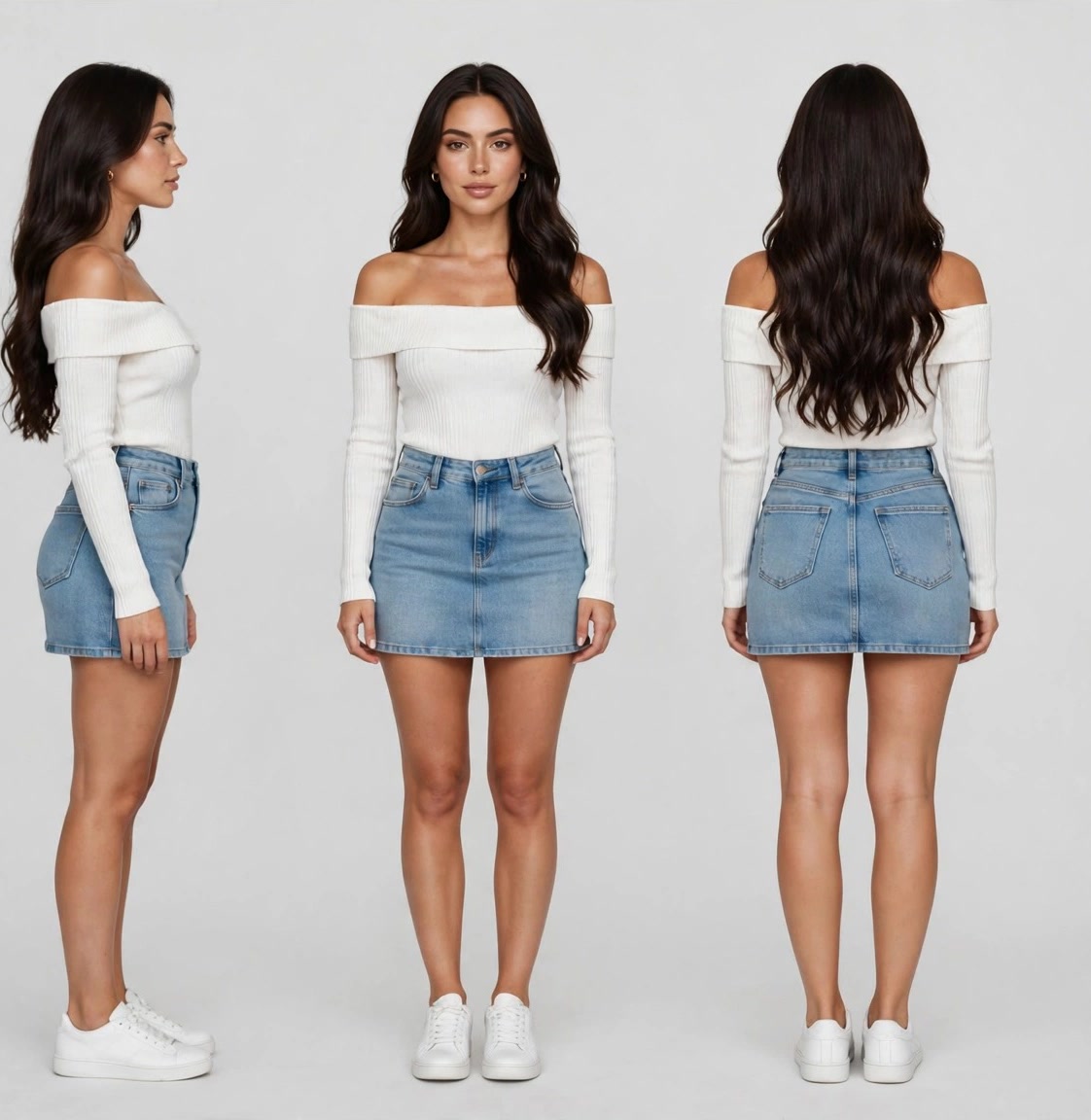
Reference images: image 1 is her headshot (face, features, hair, makeup); image 2 is a front / side / back three-view of the same woman in a light summer outfit (outfit, accessories, shoes, body). Keep exactly this face, hair and outfit in every frame. She is a 25-year-old woman with a polished Instagram look.

Outdoor café date. Scene: a sunny café terrace on a quiet European-style street, a small round marble table with two cappuccinos and a croissant, a striped awning, potted flowers, soft morning sun.
Camera: the viewer's point of view sitting across the small table, very close to her, eye level.
0.0–1.5 s: she rests her chin on her interlaced fingers, watching the lens with a slow half-smile.
1.5–3.0 s: she reaches across, takes the viewer's cappuccino instead of her own and sips it, eyes on the lens over the cup.
3.0–4.5 s: she wipes a little milk foam from her lip with her thumb and laughs.
4.5–6.0 s: she says, teasing: "Mine's better." and slides her own cup toward the camera.
6.0–8.0 s: she leans in close to the lens on her elbows, her bare shoulders catching the sun, lightly bites her lower lip and holds eye contact.
8.0–10.0 s: she leans back, tucks her hair behind her ear and gives one playful wink.
Lighting: soft warm morning sun, gentle highlights on her hair and shoulders.
Flirt cues (natural and playful, never explicit): long lingering eye contact with the lens, a slow half-smile, lightly biting her lower lip once, glancing down and then back up through her lashes, leaning in close to the lens as if sharing a secret, at most one playful wink. She is clearly enjoying the viewer's company.

Audio: light French café jazz and soft street ambience; her line is clear, natural American English; no other voices, no laugh track.
Style: realistic Instagram Reel shot on an iPhone, vertical 9:16, warm natural colors, crisp focus on her face, gentle handheld motion, one continuous take.
Avoid: changing her face or outfit, cleavage, lingerie, swimwear, see-through fabric, kissing, touching her own body suggestively, extra fingers, warped hands, strangers staring at the camera, on-screen text, subtitles, watermark.Sit with me.Imagens de referência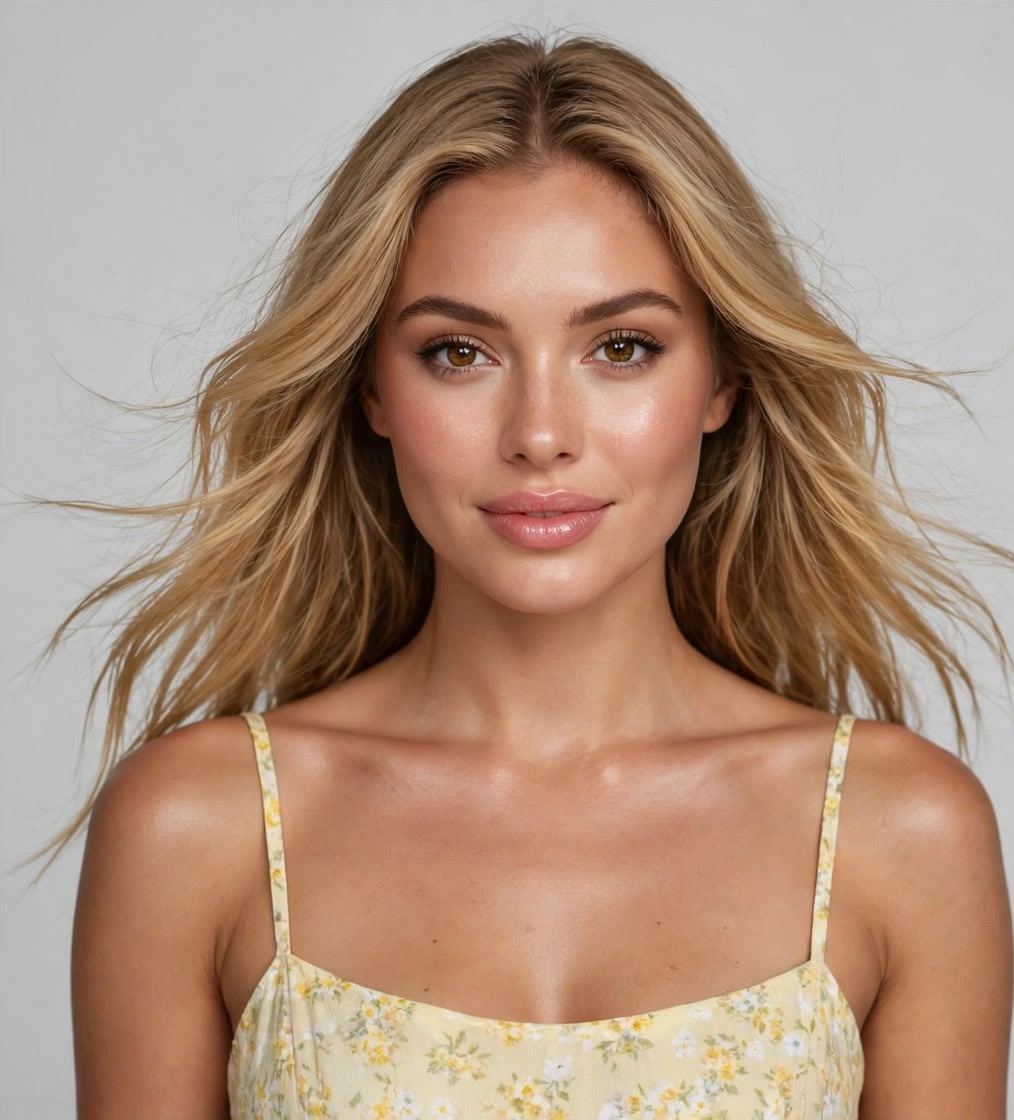
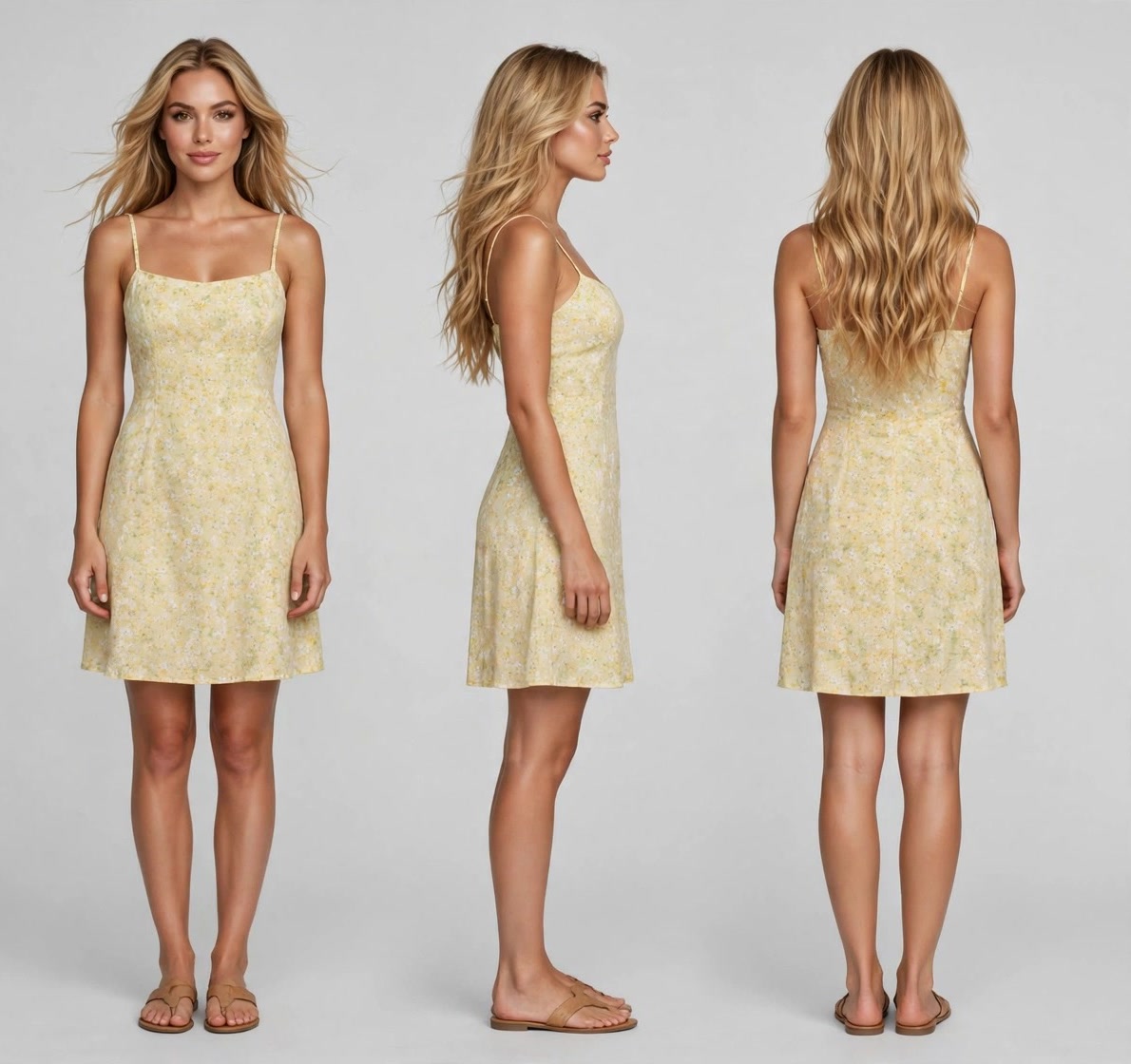
Reference images: image 1 is her headshot (face, features, hair, makeup); image 2 is a front / side / back three-view of the same woman in a light summer outfit (outfit, accessories, shoes, body). Keep exactly this face, hair and outfit in every frame. She is a 25-year-old woman with a polished Instagram look.

Sunset pier. Scene: a wooden pier over calm water at sunset, golden light, a pink and orange sky, a gentle breeze.
Camera: the viewer walking up to her and then sitting down right beside her.
0.0–2.0 s: she sits on the edge of the pier, legs dangling over the water, sandals beside her, the breeze lifting her hair and the hem of her sundress.
2.0–3.5 s: she hears the viewer, looks back over her shoulder and her face breaks into a soft smile.
3.5–5.0 s: she pats the boards right next to her and says: "Sit with me."
5.0–7.0 s: the camera lowers to sit beside her, very close; she turns her face to the lens, sunset light on her skin, and lets her gaze linger.
7.0–8.5 s: she leans her shoulder lightly toward the camera, looks down at the water, then back up through her lashes.
8.5–10.0 s: she rests her chin on her hand and smiles at the lens as the sun dips behind her.
Lighting: golden backlight, soft lens flare, warm glowing skin.
Flirt cues (natural and playful, never explicit): long lingering eye contact with the lens, a slow half-smile, lightly biting her lower lip once, glancing down and then back up through her lashes, leaning in close to the lens as if sharing a secret, at most one playful wink. She is clearly enjoying the viewer's company.

Audio: dreamy acoustic indie music with soft water and wind; her line is clear, natural American English; no other voices, no laugh track.
Style: realistic Instagram Reel shot on an iPhone, vertical 9:16, warm natural colors, crisp focus on her face, gentle handheld motion, one continuous take.
Avoid: changing her face or outfit, cleavage, lingerie, swimwear, see-through fabric, kissing, touching her own body suggestively, extra fingers, warped hands, strangers staring at the camera, on-screen text, subtitles, watermark.This part reminds me of you.Imagens de referência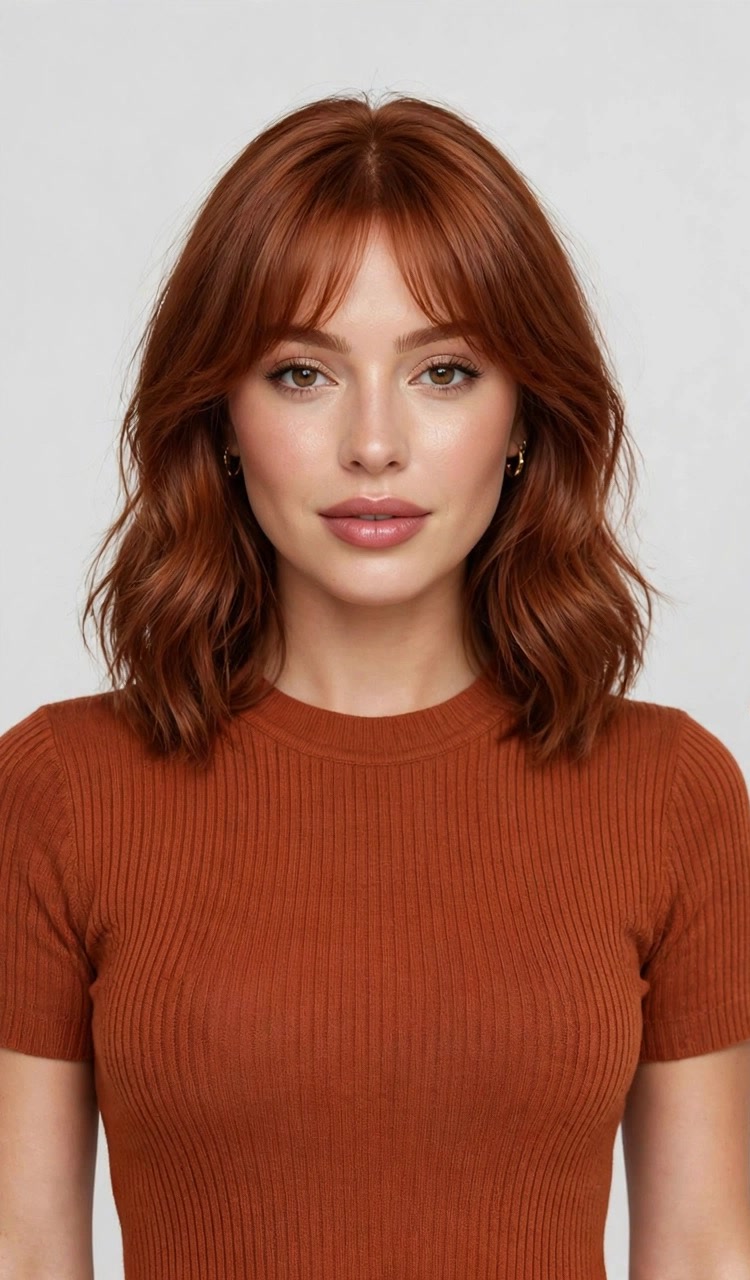
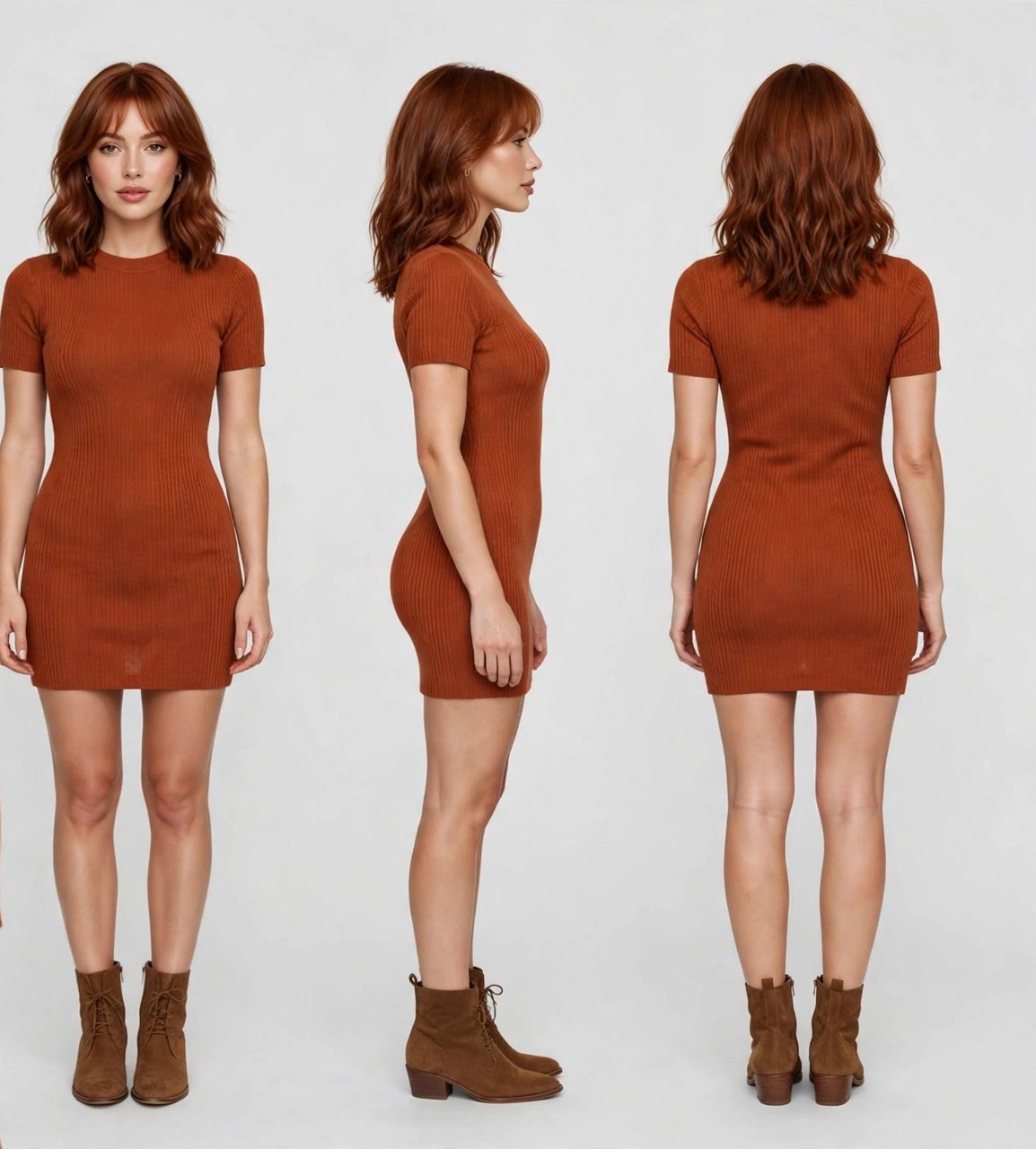
Reference images: image 1 is her headshot (face, features, hair, makeup); image 2 is a front / side / back three-view of the same woman in a light summer outfit (outfit, accessories, shoes, body). Keep exactly this face, hair and outfit in every frame. She is a 25-year-old woman with a polished Instagram look.

Bookstore reading nook. Scene: a cozy window seat in an independent bookstore, cushions, stacks of books, warm lamp light mixed with late-afternoon sun.
Camera: the viewer sitting down next to her on the window seat, close.
0.0–1.5 s: she sits curled up on the window seat reading an open book, a strand of hair falling across her face.
1.5–3.0 s: she glances up over the top of the book at the lens, then back down, hiding a smile.
3.0–5.0 s: she lowers the book and says softly: "This part reminds me of you."
5.0–7.0 s: she shifts closer and holds the open book toward the camera, her face close to the lens.
7.0–8.5 s: she watches the viewer's reaction, lightly bites her lower lip and laughs quietly.
8.5–10.0 s: she closes the book against her chest, tilts her head and holds eye contact with a soft smile.
Book pages and covers stay plain, with no readable text.
Lighting: warm amber lamps, soft window light on her face.
Flirt cues (natural and playful, never explicit): long lingering eye contact with the lens, a slow half-smile, lightly biting her lower lip once, glancing down and then back up through her lashes, leaning in close to the lens as if sharing a secret, at most one playful wink. She is clearly enjoying the viewer's company.

Audio: soft piano and acoustic guitar music with a quiet bookstore ambience; her line is clear, natural American English; no other voices, no laugh track.
Style: realistic Instagram Reel shot on an iPhone, vertical 9:16, warm natural colors, crisp focus on her face, gentle handheld motion, one continuous take.
Avoid: changing her face or outfit, cleavage, lingerie, swimwear, see-through fabric, kissing, touching her own body suggestively, extra fingers, warped hands, strangers staring at the camera, on-screen text, subtitles, watermark.Just one bite.Imagens de referência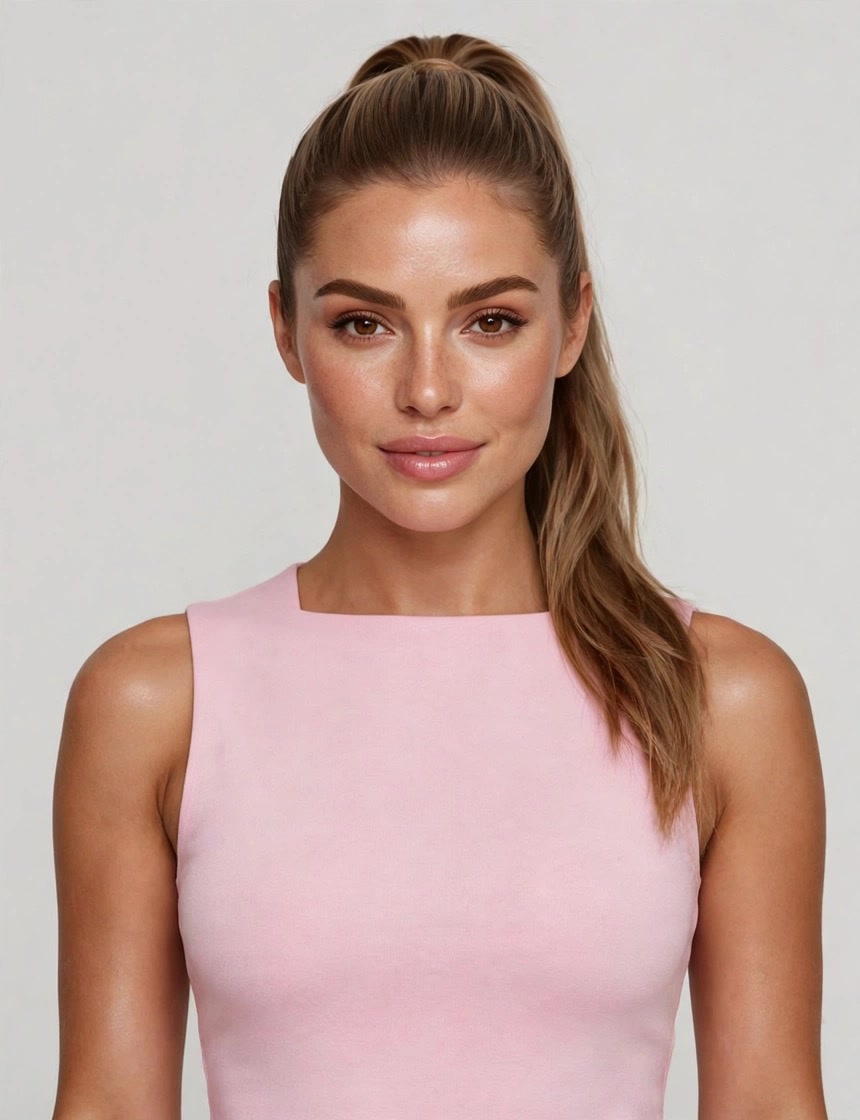
Reference images: image 1 is her headshot (face, features, hair, makeup); image 2 is a front / side / back three-view of the same woman in a light summer outfit (outfit, accessories, shoes, body). Keep exactly this face, hair and outfit in every frame. She is a 25-year-old woman with a polished Instagram look.

Ice cream on the promenade. Scene: a sunny seaside promenade in summer, pastel shopfronts, palm trees, people strolling far in the background.
Camera: the viewer walking beside her, then facing her.
0.0–1.5 s: she walks along holding a strawberry ice-cream cone and takes a small bite.
1.5–3.0 s: she notices the viewer watching and holds the cone out toward the camera, eyebrows raised.
3.0–4.5 s: as the camera leans in, she pulls it back with a playful laugh and says: "Just one bite."
4.5–6.5 s: she holds it out again, closer this time, watching the lens with a teasing half-smile.
6.5–8.5 s: she gets a tiny dot of ice cream on the tip of her nose, laughs and wipes it off.
8.5–10.0 s: she swings her ponytail, turns to keep walking and glances back at the lens with a wink.
Lighting: bright summer sun, warm tones, soft shadows.
Flirt cues (natural and playful, never explicit): long lingering eye contact with the lens, a slow half-smile, lightly biting her lower lip once, glancing down and then back up through her lashes, leaning in close to the lens as if sharing a secret, at most one playful wink. She is clearly enjoying the viewer's company.

Audio: upbeat summer pop music and light seaside ambience; her line is clear, natural American English; no other voices, no laugh track.
Style: realistic Instagram Reel shot on an iPhone, vertical 9:16, warm natural colors, crisp focus on her face, gentle handheld motion, one continuous take.
Avoid: changing her face or outfit, cleavage, lingerie, swimwear, see-through fabric, kissing, touching her own body suggestively, extra fingers, warped hands, strangers staring at the camera, on-screen text, subtitles, watermark.Open up.Imagens de referência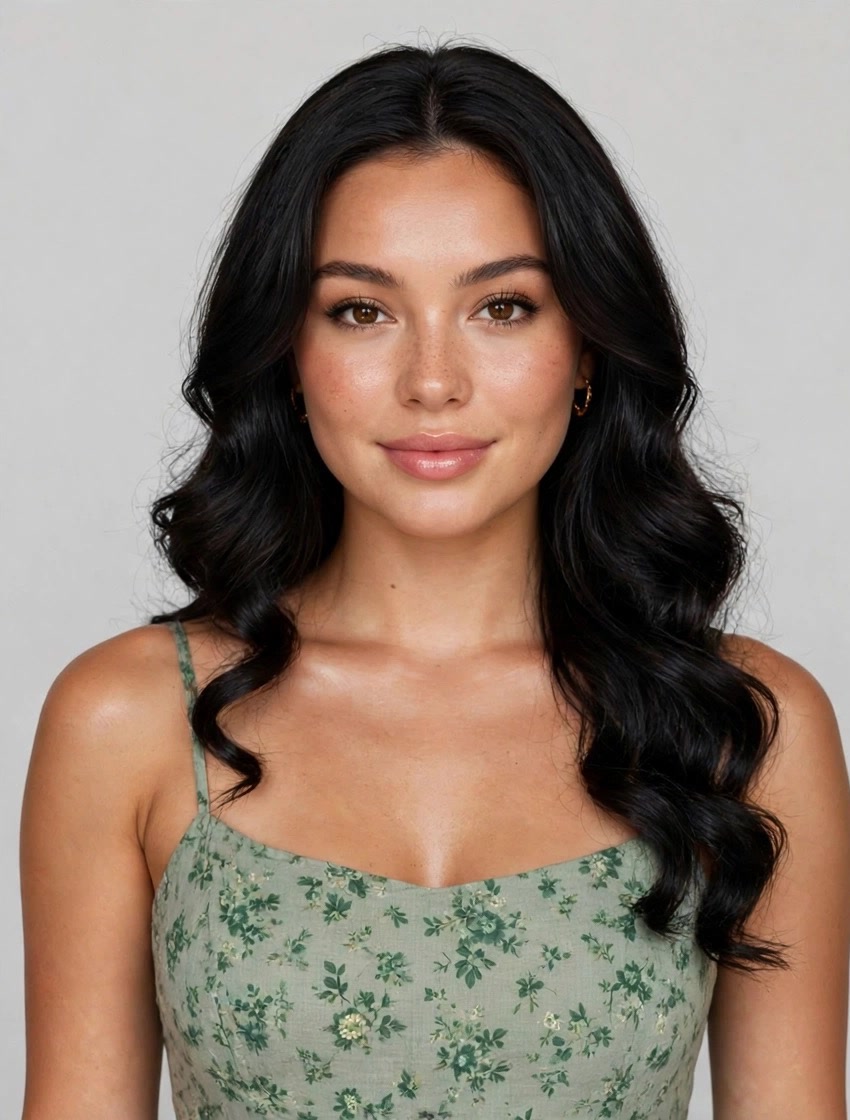
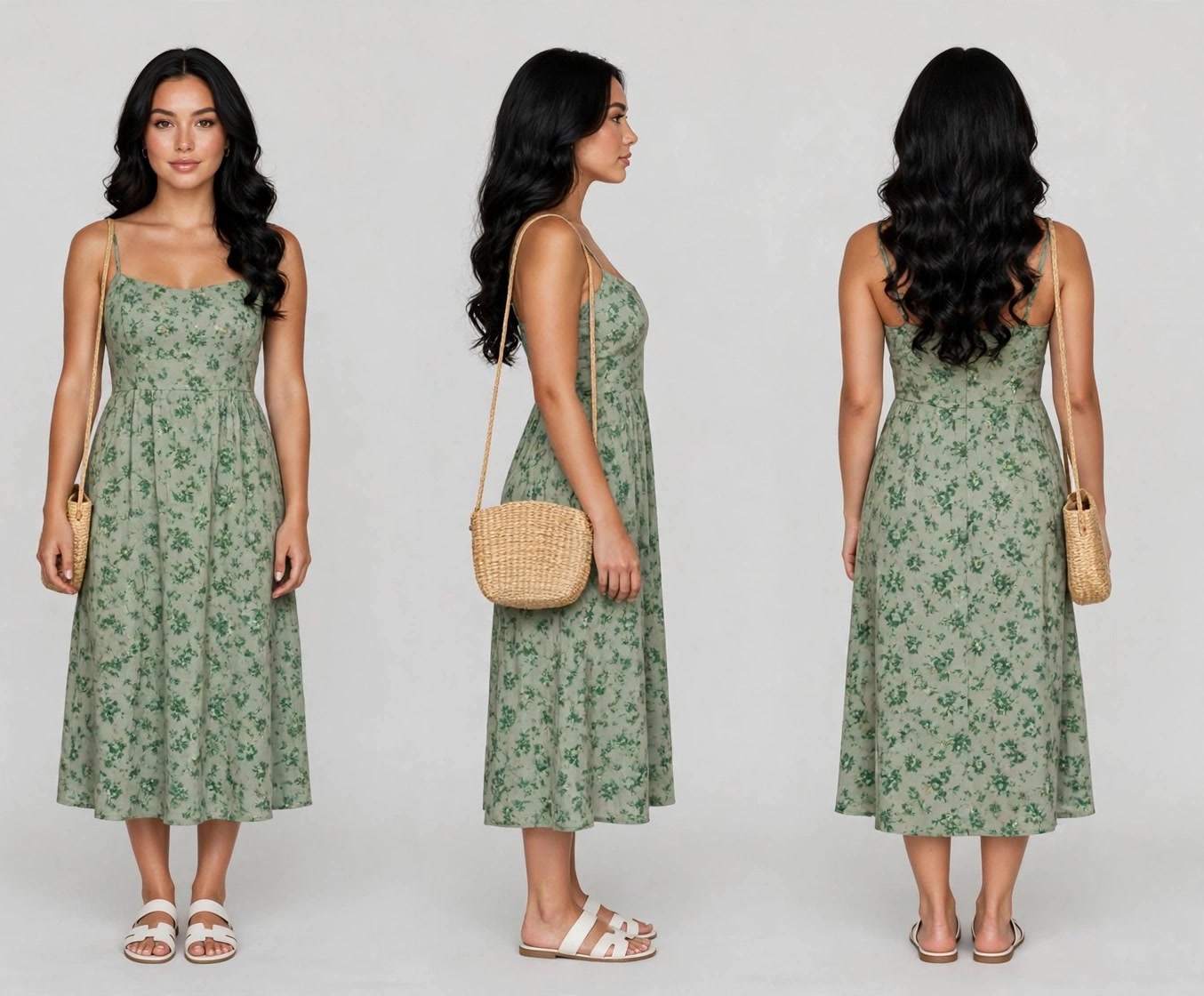
Reference images: image 1 is her headshot (face, features, hair, makeup); image 2 is a front / side / back three-view of the same woman in a light summer outfit (outfit, accessories, shoes, body). Keep exactly this face, hair and outfit in every frame. She is a 25-year-old woman with a polished Instagram look.

Park picnic. Scene: a summer picnic in a park, a checkered blanket on the grass under a big tree, a wicker basket, a bowl of strawberries, dappled golden sunlight.
Camera: the viewer lying on the blanket facing her, low angle.
0.0–2.0 s: she lies on her side propped on one elbow, her sundress spread over the blanket, twirling a daisy and smiling at the lens.
2.0–3.5 s: she picks a strawberry from the bowl and holds it toward the camera.
3.5–5.0 s: she says, playful: "Open up." and brings it close to the lens.
5.0–6.5 s: she pulls it back at the last second, laughs and takes a bite herself.
6.5–8.5 s: she tucks the daisy behind her ear, rests her cheek on her hand and holds eye contact with a slow smile.
8.5–10.0 s: she offers the other half of the strawberry to the camera again, eyes sparkling.
Lighting: dappled warm sunlight through leaves, soft golden glow.
Flirt cues (natural and playful, never explicit): long lingering eye contact with the lens, a slow half-smile, lightly biting her lower lip once, glancing down and then back up through her lashes, leaning in close to the lens as if sharing a secret, at most one playful wink. She is clearly enjoying the viewer's company.

Audio: gentle ukulele and acoustic music with birdsong; her line is clear, natural American English; no other voices, no laugh track.
Style: realistic Instagram Reel shot on an iPhone, vertical 9:16, warm natural colors, crisp focus on her face, gentle handheld motion, one continuous take.
Avoid: changing her face or outfit, cleavage, lingerie, swimwear, see-through fabric, kissing, touching her own body suggestively, extra fingers, warped hands, strangers staring at the camera, on-screen text, subtitles, watermark.Listen to this part.Imagens de referência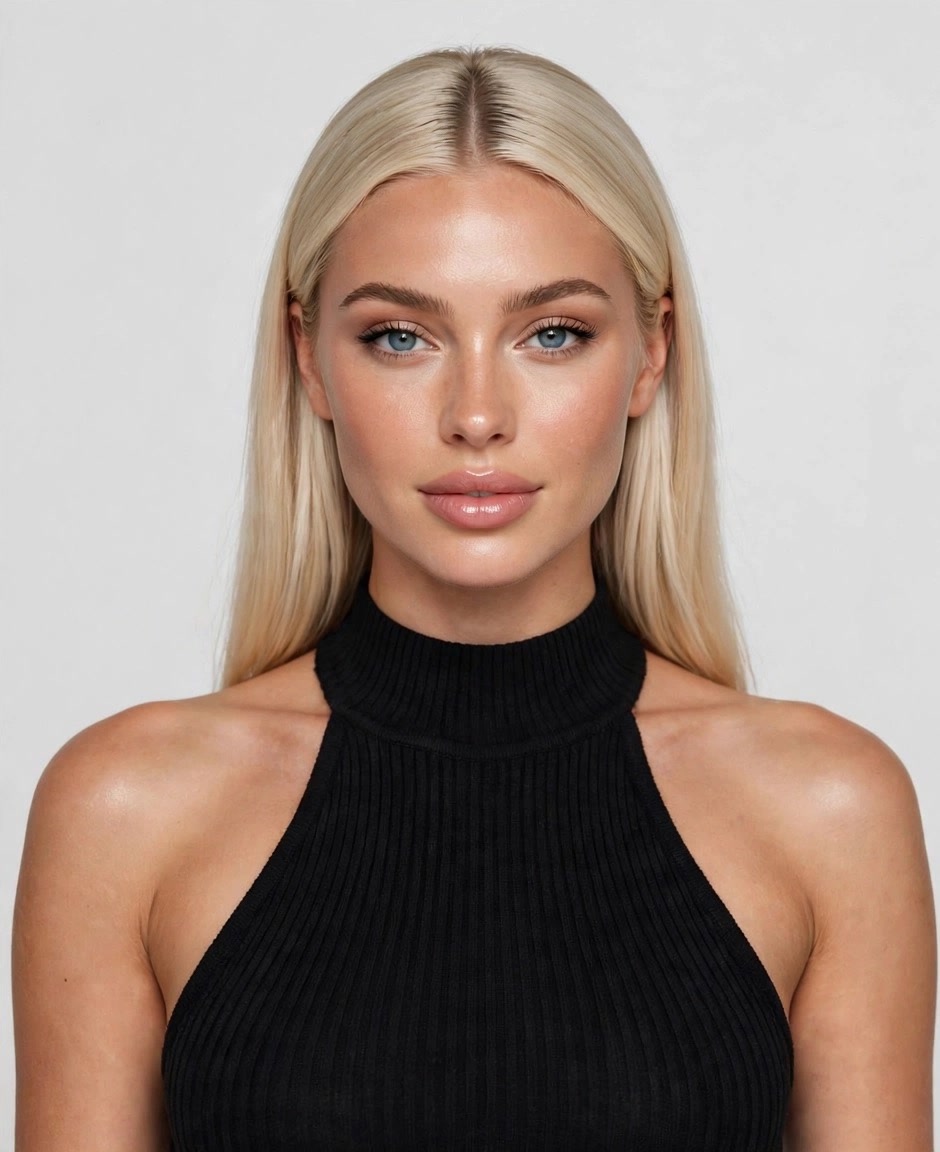
Reference images: image 1 is her headshot (face, features, hair, makeup); image 2 is a front / side / back three-view of the same woman in a light summer outfit (outfit, accessories, shoes, body). Keep exactly this face, hair and outfit in every frame. She is a 25-year-old woman with a polished Instagram look.

Record store listening booth. Scene: a vintage record store with a small wooden listening booth, shelves and crates of vinyl, a warm amber glow.
Camera: the viewer standing inside the small booth with her, very close.
0.0–1.5 s: she flips through records in a crate, pulls one out and smiles at it.
1.5–3.0 s: she puts on over-ear headphones, closes her eyes and sways slightly to the music.
3.0–4.5 s: she slides one ear cup off and holds it out toward the camera, saying: "Listen to this part."
4.5–6.5 s: she leans in very close to the lens as if sharing the headphones, her eyes looking up into the lens.
6.5–8.5 s: she mouths along to the chorus with a slow smile and lightly bites her lower lip.
8.5–10.0 s: she pulls back a little, laughs and gives the viewer a playful look over her shoulder.
Record sleeves stay plain, with no readable text.
Lighting: warm amber light, soft shadows, cozy vintage tones.
Flirt cues (natural and playful, never explicit): long lingering eye contact with the lens, a slow half-smile, lightly biting her lower lip once, glancing down and then back up through her lashes, leaning in close to the lens as if sharing a secret, at most one playful wink. She is clearly enjoying the viewer's company.

Audio: a warm retro soul song playing in the booth; her line is clear, natural American English; no other voices, no laugh track.
Style: realistic Instagram Reel shot on an iPhone, vertical 9:16, warm natural colors, crisp focus on her face, gentle handheld motion, one continuous take.
Avoid: changing her face or outfit, cleavage, lingerie, swimwear, see-through fabric, kissing, touching her own body suggestively, extra fingers, warped hands, strangers staring at the camera, on-screen text, subtitles, watermark.You actually came!Imagens de referência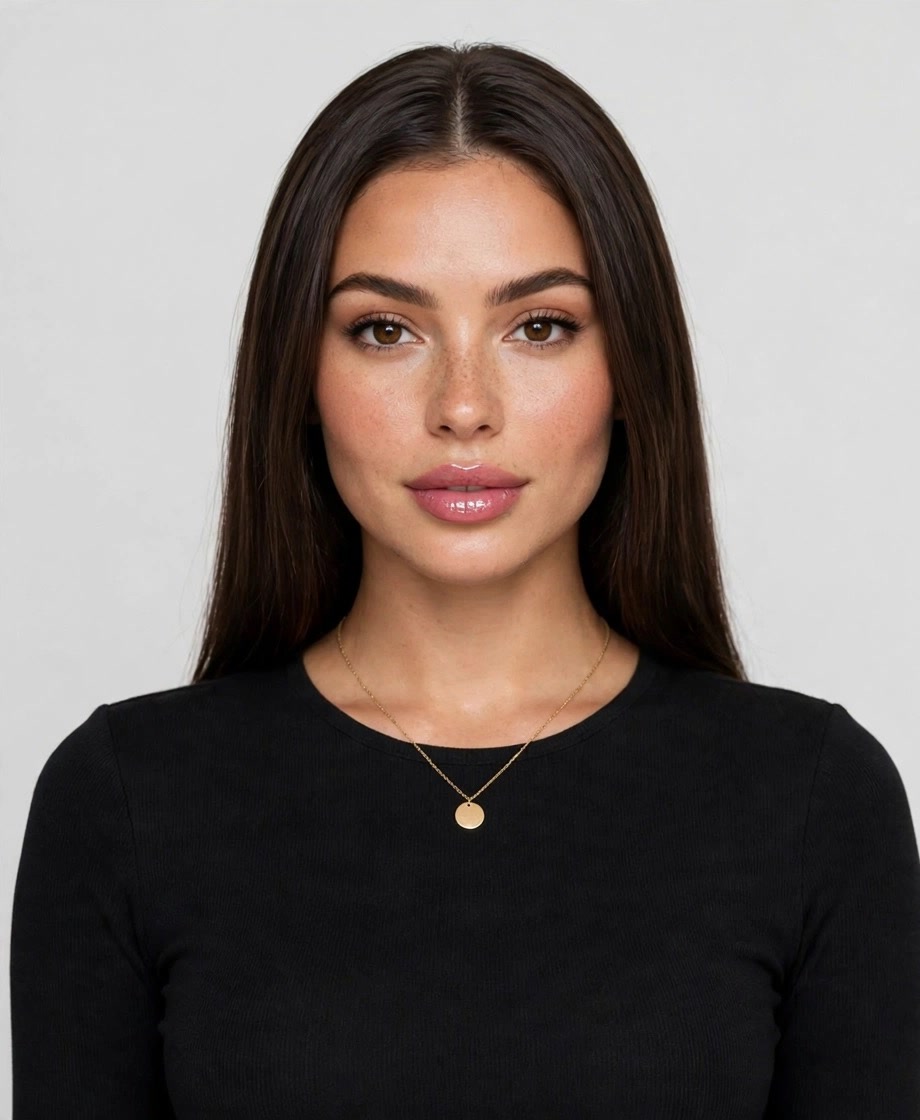
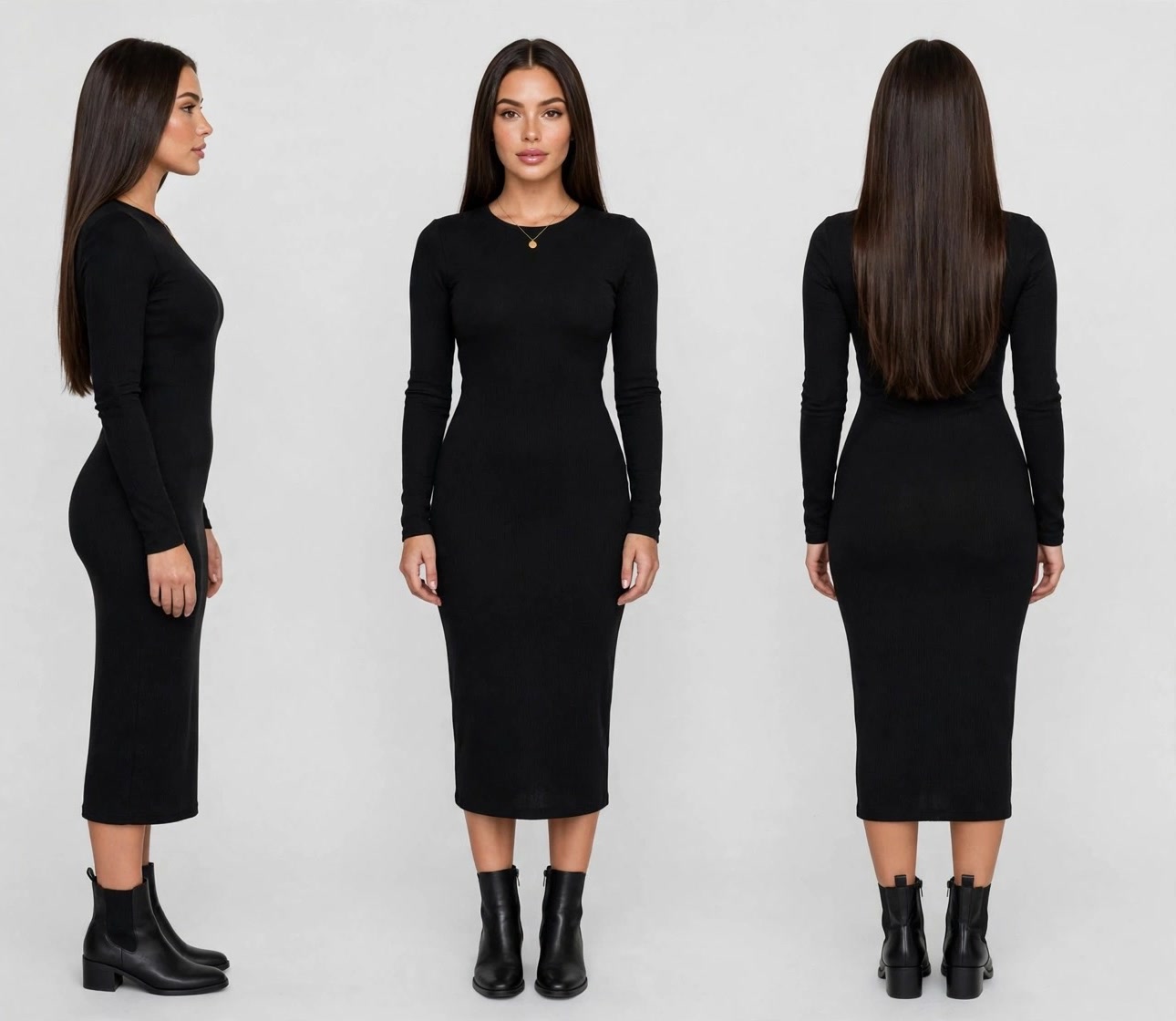
Reference images: image 1 is her headshot (face, features, hair, makeup); image 2 is a front / side / back three-view of the same woman (outfit, accessories, shoes, body). Keep exactly this face, hair and outfit in every frame. She is a 25-year-old woman with a polished Instagram look.

Rooftop at night. Scene: a rooftop bar above a city at night, warm string lights, the glowing skyline as soft bokeh behind her, a glass railing, small candles on a high table.
Camera: the viewer walking up to her at the railing, one continuous take.
0.0–1.5 s: she leans on the railing half turned away, looking out at the city lights, holding a glass of sparkling water with lime.
1.5–3.0 s: she turns her head toward the lens and her face lights up with a surprised smile.
3.0–5.0 s: she says: "You actually came!" and raises her glass toward the camera as if to clink.
5.0–7.0 s: she sweeps her hair over one shoulder, laughs softly and gives a small playful shrug.
7.0–8.5 s: she makes a small "come here" gesture with two fingers and tilts her head toward the view beside her.
8.5–10.0 s: she turns back toward the skyline but keeps looking at the lens over her shoulder, smiling.
Mood: elegant, playful, warm, confident.
Lighting: warm string lights on her face, cool city bokeh behind, a soft natural night look, no harsh flash.

Audio: chill lo-fi house music and soft city ambience; her line is clear, natural American English; no other voices, no laugh track.
Style: realistic Instagram Reel shot on an iPhone, vertical 9:16, natural colors, crisp focus on her face, gentle handheld motion.
Avoid: changing her face or outfit, revealing or low-cut clothing, see-through fabric, extra fingers, warped hands, strangers staring at the camera, on-screen text, subtitles, watermark.Okay, your turn to pick the song.Imagens de referência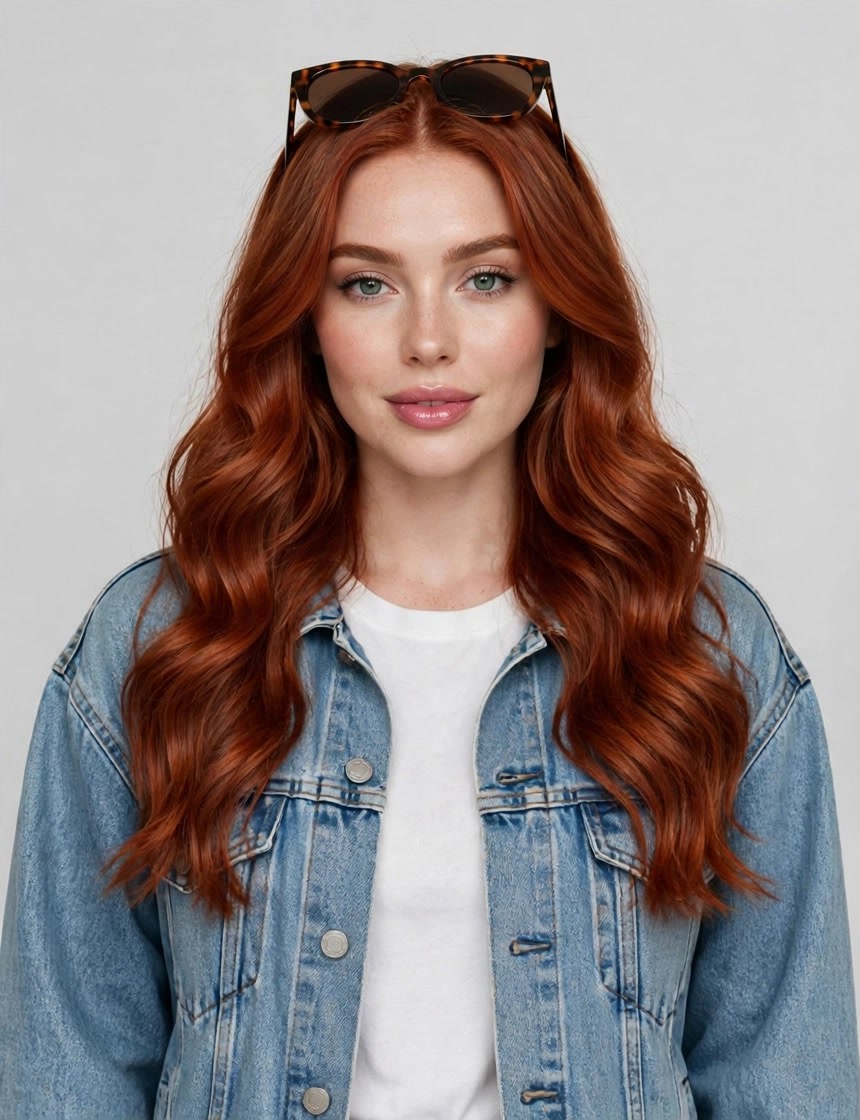
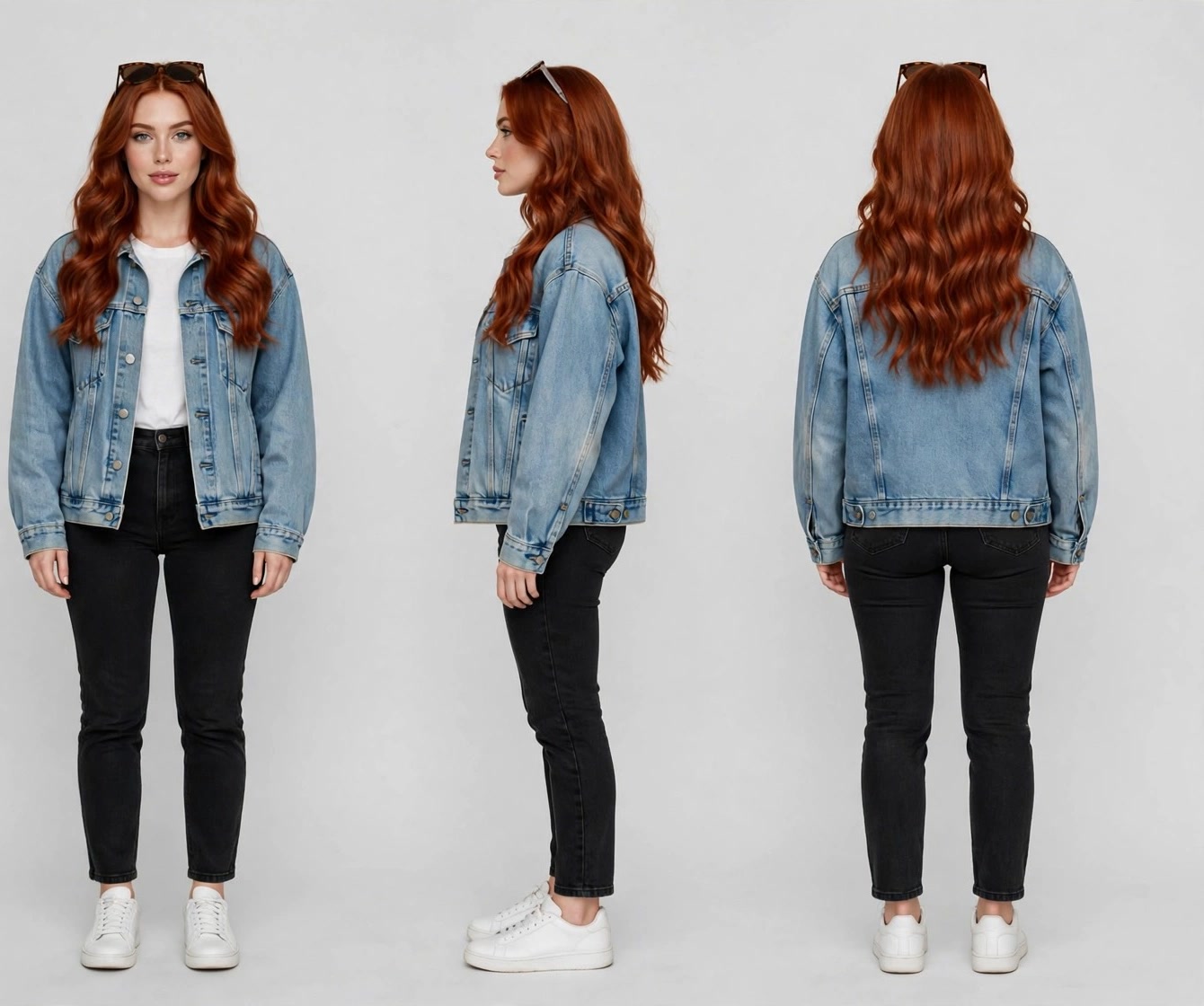
Reference images: image 1 is her headshot (face, features, hair, makeup); image 2 is a front / side / back three-view of the same woman (outfit, accessories, shoes, body). Keep exactly this face, hair and outfit in every frame. She is a 25-year-old woman with a polished Instagram look.

Road trip stop. Scene: inside a parked car at a sunny beach parking lot, engine off, she sits in the passenger seat, the ocean and palm trees visible through the windshield, sunlight across the dashboard.
Camera: the viewer's point of view from the driver's seat, angled toward her, one continuous take.
0.0–2.0 s: she sings along to the song on the radio with her eyes closed, moving her shoulders to the beat, sunglasses on.
2.0–3.5 s: she pulls her sunglasses down her nose with one finger and looks over them into the lens with a teasing smile.
3.5–5.5 s: she says: "Okay, your turn to pick the song." and hands the phone toward the camera.
5.5–7.5 s: she holds out a paper bag of fries toward the camera, offering one, eyebrows raised.
7.5–9.0 s: she rests her elbow on the open window, the breeze catching her hair, glances at the ocean, then back at the lens.
9.0–10.0 s: she pushes the sunglasses up into her hair and gives the camera a warm, easy smile.
Mood: fun, relaxed, playful, best-road-trip-ever energy.
Lighting: bright natural sunlight, warm tones, soft reflections on the glass.

Audio: upbeat summer pop music from the car speakers; her line is clear, natural American English; no other voices, no laugh track.
Style: realistic Instagram Reel shot on an iPhone, vertical 9:16, natural colors, crisp focus on her face, gentle handheld motion.
Avoid: changing her face or outfit, revealing or low-cut clothing, see-through fabric, extra fingers, warped hands, strangers staring at the camera, on-screen text, subtitles, watermark.Get under here, you're soaked!Imagens de referência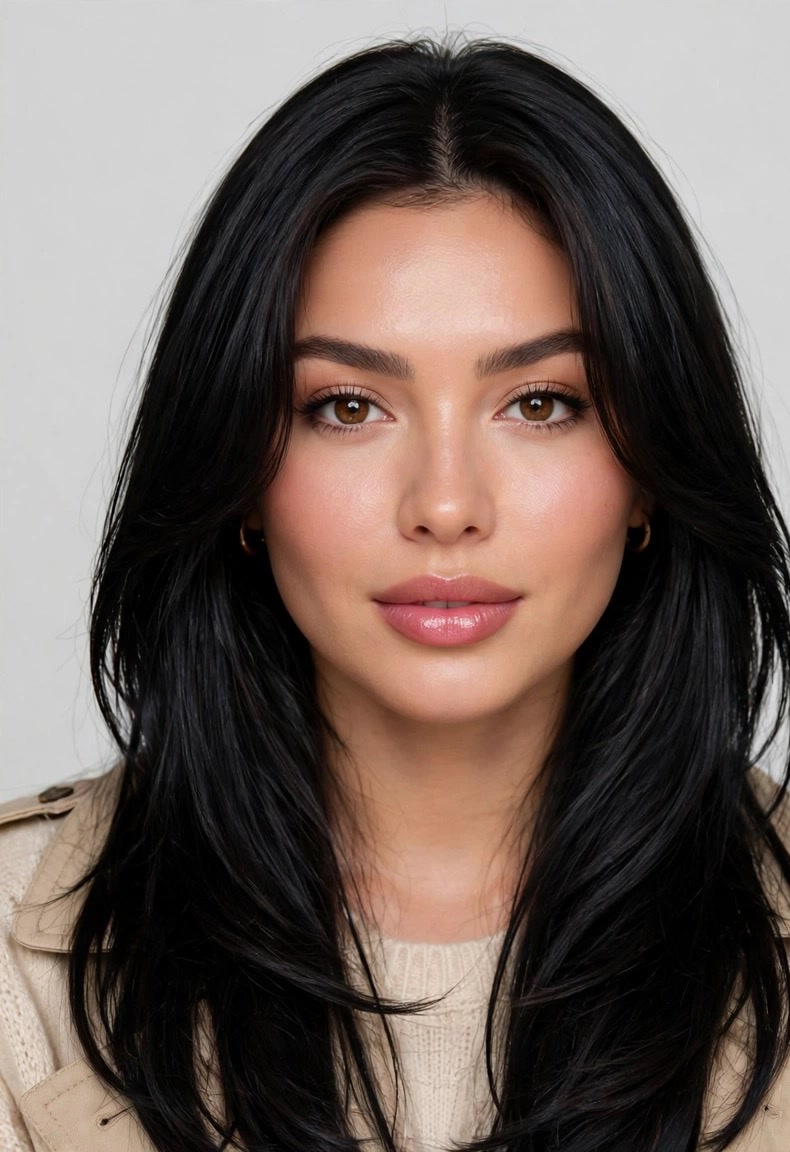
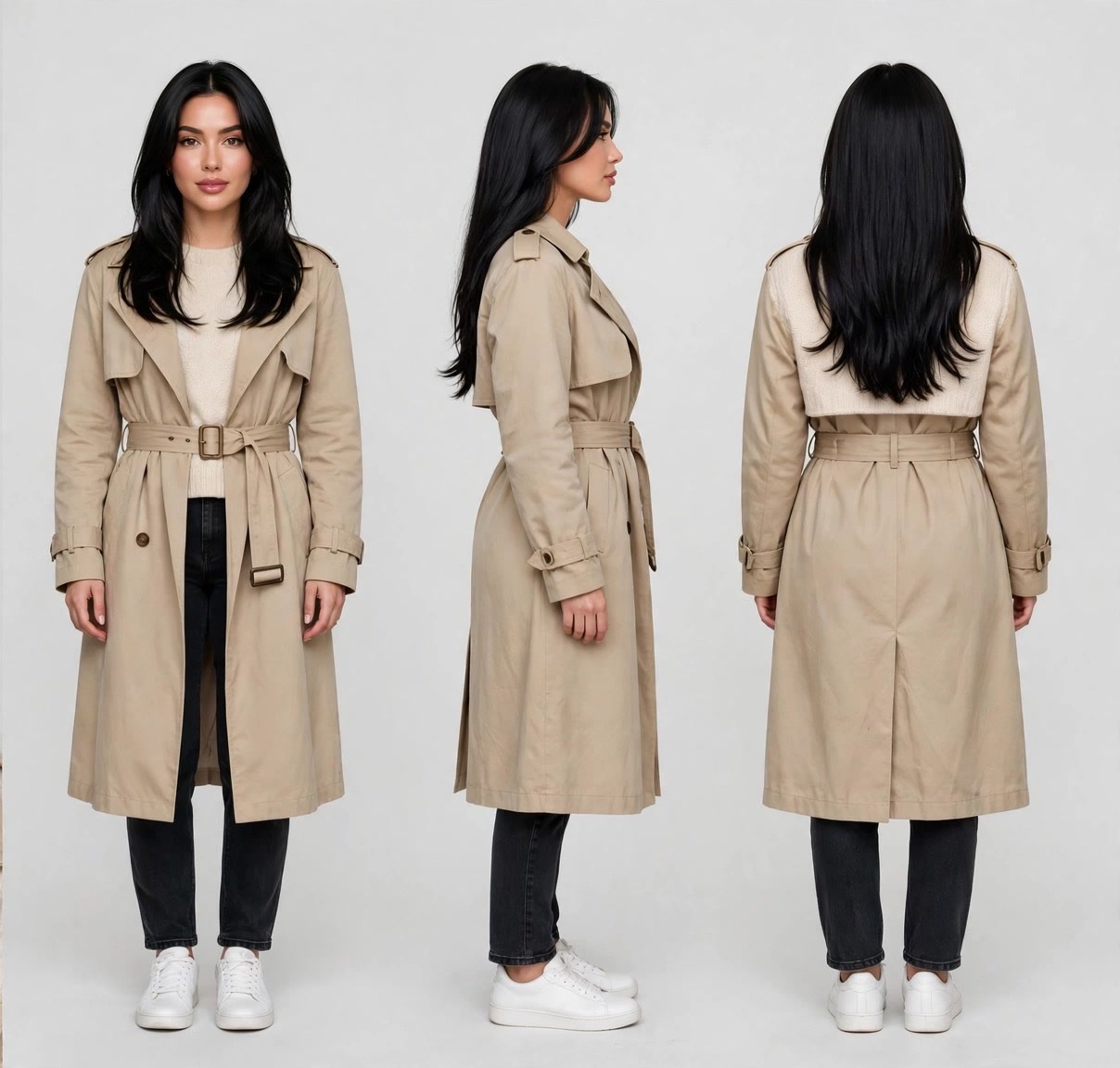
Reference images: image 1 is her headshot (face, features, hair, makeup); image 2 is a front / side / back three-view of the same woman (outfit, accessories, shoes, body). Keep exactly this face, hair and outfit in every frame. She is a 25-year-old woman with a polished Instagram look.

Rainy evening. Scene: a city sidewalk at dusk in light rain, wet pavement reflecting neon shop signs and street lights, people with umbrellas blurred in the background.
Camera: the viewer standing in the rain without an umbrella, one continuous take.
0.0–1.5 s: she walks toward the camera under a clear umbrella, raindrops on the canopy.
1.5–3.0 s: she notices the viewer getting wet, her eyes widen and she laughs.
3.0–5.0 s: she steps close and tilts the umbrella over the camera so the canopy fills the top of the frame, saying: "Get under here, you're soaked!"
5.0–7.0 s: under the umbrella, close to the lens, she shakes the rain off her hand and smiles, her face lit by the neon glow.
7.0–8.5 s: she nods toward the street as if to say "walk with me", eyebrows raised.
8.5–10.0 s: she turns slightly to start walking, still looking back at the lens with a warm smile, the umbrella over both of them.
Mood: romantic, caring, playful, cinematic.
Lighting: neon reflections, soft street lights, cool blue and warm pink tones, sparkling rain.

Audio: soft rain sounds and a gentle R&B instrumental; her line is clear, natural American English; no other voices, no laugh track.
Style: realistic Instagram Reel shot on an iPhone, vertical 9:16, natural colors, crisp focus on her face, gentle handheld motion.
Avoid: changing her face or outfit, revealing or low-cut clothing, see-through fabric, extra fingers, warped hands, strangers staring at the camera, on-screen text, subtitles, watermark.Look, isn't this spatula so handy?Imagens de referência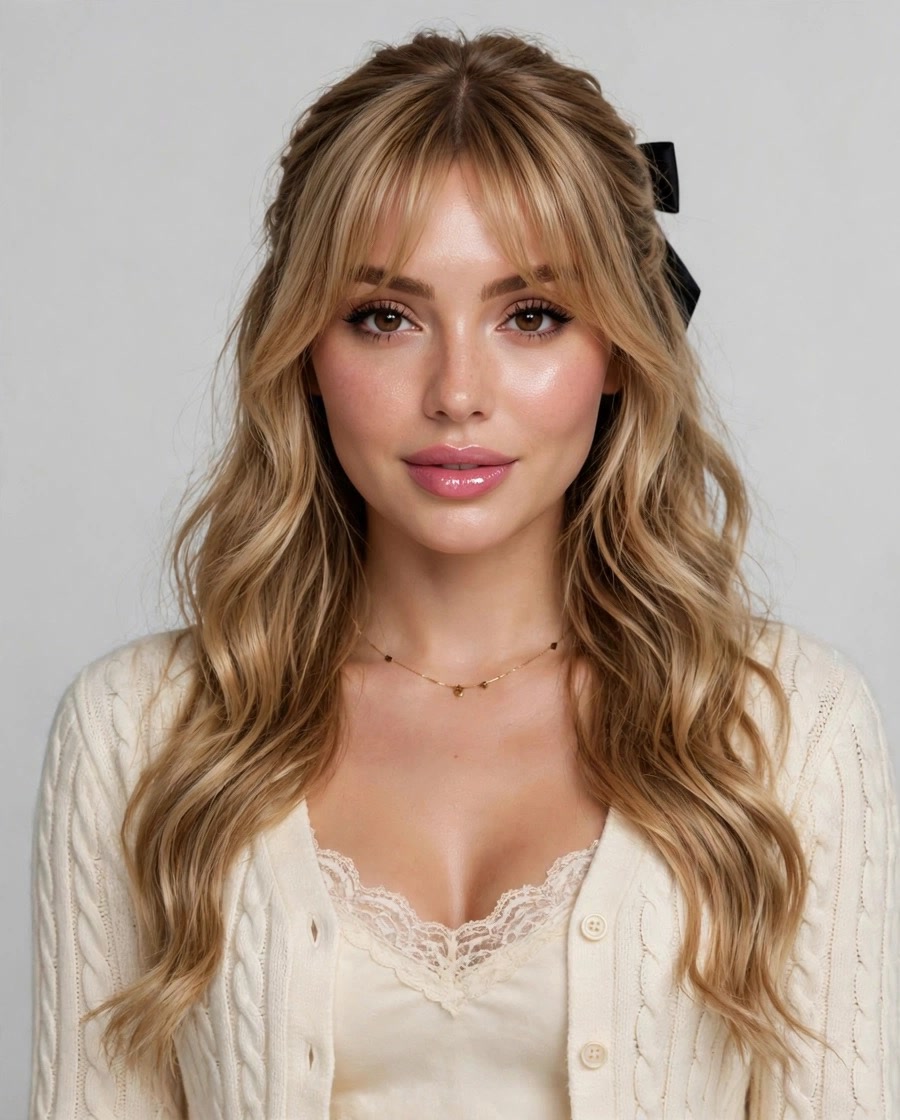
 Prompt adaptado de @beizhi606
参考图说明:参考图1是人物大头照(脸、五官、发型、发色、妆容都以它为准),参考图2是同一个人的三视图(服装、配饰、鞋子、身材都以它为准)。人物是 25 岁的欧美女性,Instagram 博主风格的精致妆容。下文里「原视频里」的发型、发色和穿搭描述一律忽略,以参考图为准。

中文提示词(10.00秒)
人物:
脸部: 人物的长相、五官、发型、发色和妆容严格按照。
服装和身材: 人物的服装穿搭、配饰和身材比例严格按照。镜头2里人物背对镜头,背面的服装请参考三视图的背面。
一致性: 4个镜头里都是同一个人,脸和服装全程保持一致,切镜后不能变样;镜头2镜子里的倒影也必须是同一个人、同一套服装。

道具:
镜头1:一把黑色的厨房食物夹。
镜头4:一把黑色的锅铲。

场景:
场景是一个居家厨房,以及厨房门口连着的客厅。

厨房: 墙面贴着白色大理石纹理的瓷砖,灶台是黑色的,上面放着一口黑色的炒锅,台面上摆着各种调料瓶、刀架和杂物。厨房门是白色的,墙顶挂着几个红色的小灯笼。
客厅: 浅木色的地板,门背后挂着一面全身镜,地上有一只黑猫。

光线:
室内自然日光,光线柔和均匀,色调是偏冷的白灰色,干净通透。

分镜
镜头1|0.00–3.27秒|广角近景,拿着食物夹对镜头互动

机位: 手机离人物很近,略微俯拍,用广角镜头,画面是人物的脸和上半身,背景是厨房的瓷砖墙、白色的门和灶台上的黑色炒锅。
0.00–0.60秒: 人物低着头,眼睛往下看,带着一点浅笑;画面左侧的那只手拿着黑色食物夹,放在画面左下角。
0.60–1.00秒: 人物抬起头看向镜头,镜头稍微往前凑近一点。
1.00–1.60秒: 人物看着镜头,嘴角轻轻扬起,食物夹移到画面左侧边缘。
1.60–2.00秒: 人物把食物夹朝镜头伸过来,夹头出现在画面左侧前景里,有虚焦。
2.00–2.60秒: 人物用食物夹在镜头前一开一合地"夹"了几下,眼睛微微眯起,露出俏皮的笑。
2.60–3.27秒: 食物夹收回到画面左侧,人物看着镜头微笑。在3.27秒硬切。

镜头2|3.27–4.70秒|全身镜前,背对镜头再回头

机位: 镜头在人物身后偏右的位置,平视,画面是中景。画面左半部分是全身镜里人物的正面倒影,右半部分是人物本人的背面。客厅的木地板上能看到一只黑猫。
3.27–4.00秒: 人物背对镜头,面朝全身镜站着,一只手叉腰,另一只手轻轻扶着镜子的边缘;镜子里的倒影看着她自己。
4.00–4.20秒: 人物的头从肩膀上方转过来,回头看向镜头。
4.20–4.70秒: 人物回头直视镜头,表情平静;镜子里的倒影转成侧脸。在4.70秒硬切。

镜头3|4.70–5.50秒|高角度俯拍,在灶台边站着

机位: 镜头放在厨房的高处角落,从上往下俯拍人物的全身,用广角镜头,画面里能看到黑色灶台、炒锅、调料瓶和白色的门。
4.70–5.50秒: 人物站在灶台旁边,双手背在身后,抬头看着镜头微笑,身体轻轻晃一下。在5.50秒硬切。

镜头4|5.50–10.00秒|拿着锅铲,近景表情变化

机位: 手机离人物比较近,略微俯拍,用广角镜头,画面是人物的胸口以上。背景里有白色的门、门把手、大理石瓷砖墙、黑色炒锅,墙顶挂着红色小灯笼。
5.50–5.90秒: 人物画面左侧的那只手拿着黑色锅铲,举到肩膀的高度,锅铲头朝上。她看着镜头,开口用英文说出台词「Look, isn't this spatula so handy?」,带着笑。
5.90–6.30秒: 人物的眼睛看向画面一侧,嘴唇嘟起来。
6.30–6.90秒: 人物低头,眼睛往下看,嘴唇抿着。
6.90–7.30秒: 人物抬眼看向镜头,眉头微微皱起,嘴巴轻轻嘟着。
7.30–8.40秒(补充): 人物保持皱眉嘟嘴看着镜头,拿着锅铲的手在空中朝镜头轻轻点两下。
8.40–9.30秒(补充): 人物的眉头慢慢松开,嘴角忍不住往上扬。
9.30–10.00秒(补充): 人物看着镜头露出笑容,锅铲还举在肩膀旁边,定格收尾。从低头到抬头、举锅铲的动作要连贯流畅地过渡,不得跳帧或姿势瞬移。

风格:
风格是抖音/小红书的居家vlog短视频,手机广角原相机的质感,加了美颜和磨皮,肤色白皙通透。自然日光,冷白色调,写实,高清,表情生动自然。

音频:
全程是好听的轻快配乐(尤克里里、手风琴风格的明亮纯音乐),3.27秒、4.70秒、5.50秒的三次切镜都卡在节拍上。镜头4里人物开口用英文说出台词「Look, isn't this spatula so handy?」,人声是自然的美式英语,清晰自然,配乐压低、不盖过人声。除这句台词外,全程不得出现任何其他人声、怪叫、笑声或其他奇怪的声音。

参数:
16:9横屏,10.00秒,30fps,写实,4个镜头。

负面提示词: 换脸、服装变化、切镜后人物变样、镜子倒影和本人不一致、倒影变成别人、五官变形、手指畸形、食物夹或锅铲变形、多余手臂、广角导致的严重畸变、画面闪烁、低清、水印、字幕、跳帧、动作瞬移、姿势突变、奇怪的人声、怪叫、无故笑声Look, isn't this spatula so handy?Imagens de referência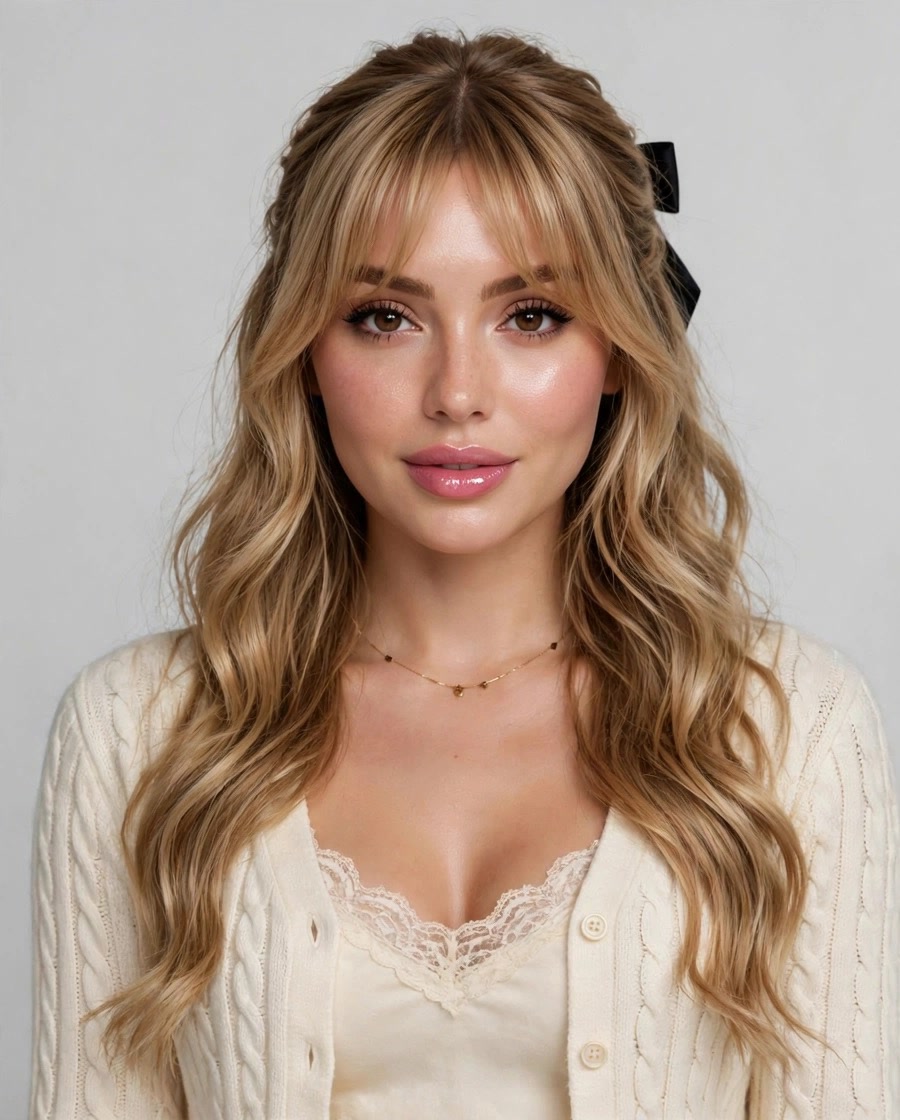
 Prompt adaptado de @beizhi606
参考图说明:参考图1是人物大头照(脸、五官、发型、发色、妆容都以它为准),参考图2是同一个人的三视图(服装、配饰、鞋子、身材都以它为准)。人物是 25 岁的欧美女性,Instagram 博主风格的精致妆容。下文里「原视频里」的发型、发色和穿搭描述一律忽略,以参考图为准。

中文提示词(10.00秒)
人物:
脸部: 人物的长相、五官、发型、发色和妆容严格按照。
服装和身材: 人物的服装穿搭、配饰和身材比例严格按照。镜头2里人物背对镜头,背面的服装请参考三视图的背面。
一致性: 4个镜头里都是同一个人,脸和服装全程保持一致,切镜后不能变样;镜头2镜子里的倒影也必须是同一个人、同一套服装。

道具:
镜头1:一把黑色的厨房食物夹。
镜头4:一把黑色的锅铲。

场景:
场景是一个居家厨房,以及厨房门口连着的客厅。

厨房: 墙面贴着白色大理石纹理的瓷砖,灶台是黑色的,上面放着一口黑色的炒锅,台面上摆着各种调料瓶、刀架和杂物。厨房门是白色的,墙顶挂着几个红色的小灯笼。
客厅: 浅木色的地板,门背后挂着一面全身镜,地上有一只黑猫。

光线:
室内自然日光,光线柔和均匀,色调是偏冷的白灰色,干净通透。

分镜
镜头1|0.00–3.27秒|广角近景,拿着食物夹对镜头互动

机位: 手机离人物很近,略微俯拍,用广角镜头,画面是人物的脸和上半身,背景是厨房的瓷砖墙、白色的门和灶台上的黑色炒锅。
0.00–0.60秒: 人物低着头,眼睛往下看,带着一点浅笑;画面左侧的那只手拿着黑色食物夹,放在画面左下角。
0.60–1.00秒: 人物抬起头看向镜头,镜头稍微往前凑近一点。
1.00–1.60秒: 人物看着镜头,嘴角轻轻扬起,食物夹移到画面左侧边缘。
1.60–2.00秒: 人物把食物夹朝镜头伸过来,夹头出现在画面左侧前景里,有虚焦。
2.00–2.60秒: 人物用食物夹在镜头前一开一合地"夹"了几下,眼睛微微眯起,露出俏皮的笑。
2.60–3.27秒: 食物夹收回到画面左侧,人物看着镜头微笑。在3.27秒硬切。

镜头2|3.27–4.70秒|全身镜前,背对镜头再回头

机位: 镜头在人物身后偏右的位置,平视,画面是中景。画面左半部分是全身镜里人物的正面倒影,右半部分是人物本人的背面。客厅的木地板上能看到一只黑猫。
3.27–4.00秒: 人物背对镜头,面朝全身镜站着,一只手叉腰,另一只手轻轻扶着镜子的边缘;镜子里的倒影看着她自己。
4.00–4.20秒: 人物的头从肩膀上方转过来,回头看向镜头。
4.20–4.70秒: 人物回头直视镜头,表情平静;镜子里的倒影转成侧脸。在4.70秒硬切。

镜头3|4.70–5.50秒|高角度俯拍,在灶台边站着

机位: 镜头放在厨房的高处角落,从上往下俯拍人物的全身,用广角镜头,画面里能看到黑色灶台、炒锅、调料瓶和白色的门。
4.70–5.50秒: 人物站在灶台旁边,双手背在身后,抬头看着镜头微笑,身体轻轻晃一下。在5.50秒硬切。

镜头4|5.50–10.00秒|拿着锅铲,近景表情变化

机位: 手机离人物比较近,略微俯拍,用广角镜头,画面是人物的胸口以上。背景里有白色的门、门把手、大理石瓷砖墙、黑色炒锅,墙顶挂着红色小灯笼。
5.50–5.90秒: 人物画面左侧的那只手拿着黑色锅铲,举到肩膀的高度,锅铲头朝上。她看着镜头,开口用英文说出台词「Look, isn't this spatula so handy?」,带着笑。
5.90–6.30秒: 人物的眼睛看向画面一侧,嘴唇嘟起来。
6.30–6.90秒: 人物低头,眼睛往下看,嘴唇抿着。
6.90–7.30秒: 人物抬眼看向镜头,眉头微微皱起,嘴巴轻轻嘟着。
7.30–8.40秒(补充): 人物保持皱眉嘟嘴看着镜头,拿着锅铲的手在空中朝镜头轻轻点两下。
8.40–9.30秒(补充): 人物的眉头慢慢松开,嘴角忍不住往上扬。
9.30–10.00秒(补充): 人物看着镜头露出笑容,锅铲还举在肩膀旁边,定格收尾。从低头到抬头、举锅铲的动作要连贯流畅地过渡,不得跳帧或姿势瞬移。

风格:
风格是抖音/小红书的居家vlog短视频,手机广角原相机的质感,加了美颜和磨皮,肤色白皙通透。自然日光,冷白色调,写实,高清,表情生动自然。

音频:
全程是好听的轻快配乐(尤克里里、手风琴风格的明亮纯音乐),3.27秒、4.70秒、5.50秒的三次切镜都卡在节拍上。镜头4里人物开口用英文说出台词「Look, isn't this spatula so handy?」,人声是自然的美式英语,清晰自然,配乐压低、不盖过人声。除这句台词外,全程不得出现任何其他人声、怪叫、笑声或其他奇怪的声音。

参数:
16:9横屏,10.00秒,30fps,写实,4个镜头。

负面提示词: 换脸、服装变化、切镜后人物变样、镜子倒影和本人不一致、倒影变成别人、五官变形、手指畸形、食物夹或锅铲变形、多余手臂、广角导致的严重畸变、画面闪烁、低清、水印、字幕、跳帧、动作瞬移、姿势突变、奇怪的人声、怪叫、无故笑声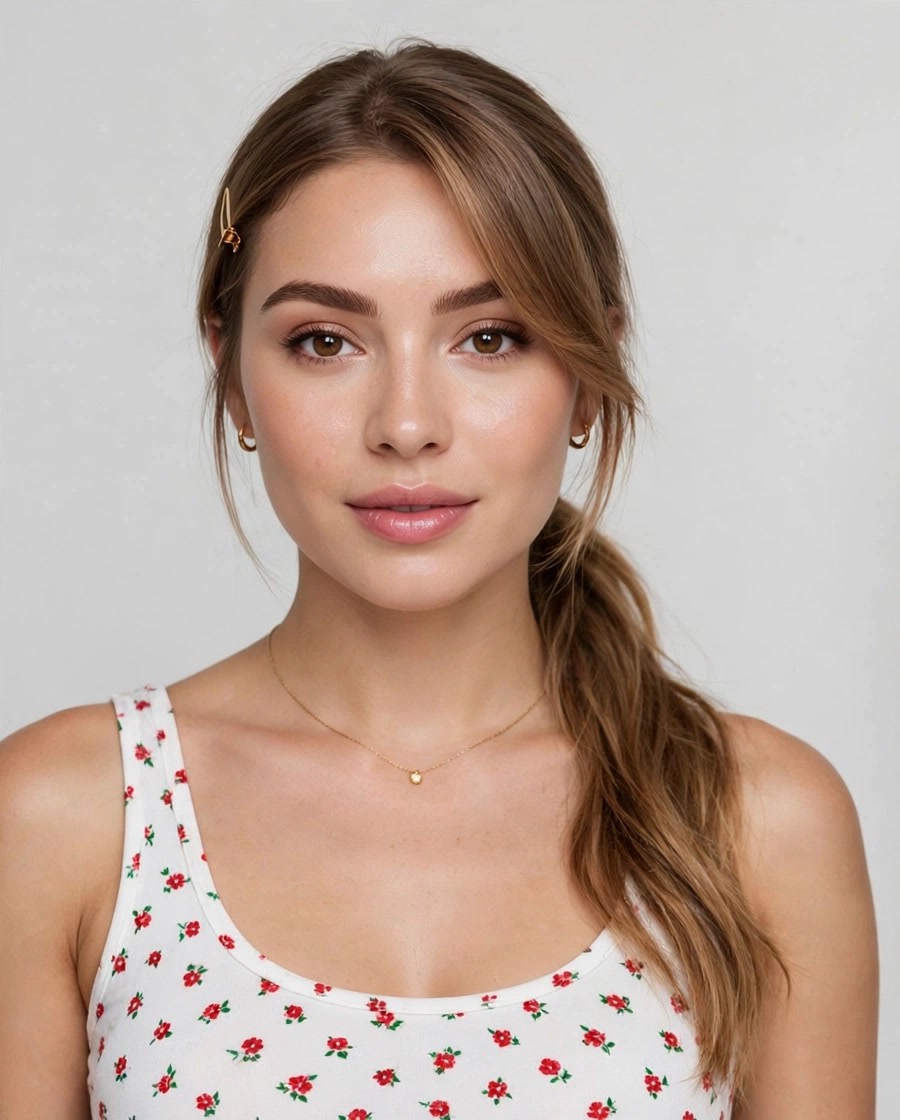
 Prompt adaptado de @beizhi606
参考图说明:参考图1是人物大头照(脸、五官、发型、发色、妆容都以它为准),参考图2是同一个人的三视图(服装、配饰、鞋子、身材都以它为准)。人物是 25 岁的欧美女性,Instagram 博主风格的精致妆容。下文里「原视频里」的发型、发色和穿搭描述一律忽略,以参考图为准。

中文提示词(10.00秒)
·脸部:完全按【参考图1 大头照】,五官、脸型、发型、发色都以大头照为准,全程保持同一张脸。原视频里是黑色长发,低马尾搭在右肩前面,有侧分刘海,左侧别一个小发夹。
·服装和身材:完全按【参考图2 三视图】,包括服装款式、颜色、配饰和身材比例。以下是原视频的穿搭,只在没有参考时备用:
·白色背心,上面有红色小碎花印花:
·浅蓝色牛仔短裤:
·右手腕戴红色串珠手链,脖子上有金色细项链。
·一致性:全程人物的脸和服装都不能变。
场景

• 老式居民楼的楼道和阳台,人物站在楼上一层的水泥栏杆后面,栏杆是一根根竖着的方形水泥柱,表面斑驳。
• 背景是灰色水泥墙,墙上有几根电线横着穿过。
• 机位在楼下一层,画面最下方前景是一根黄色金属扶手。
• 中段镜头拉开一点时,能稍微看到上方一层水泥栏杆阳台的下沿和电线即可,不要拉成远景。

光线:阴天的自然光,光线柔和均匀,偏灰调,低饱和,写实。

机位(本版重点):手持拍摄,从楼下往上仰拍,竖屏。前半段是近距离中近景,人物上半身占画面主体;约 4.6 秒开始只轻轻往后拉一次,拉到中景(人物腰部以上、头部约占画面高度三分之一)就立刻停住,之后一直保持这个距离固定拍到结尾,不再继续拉远、不往下拉成远景,人物不能变小。全程只有轻微手持晃动。

分镜
• 0.00–0.40:镜头从下往上快速甩,画面先是模糊的黄色扶手和水泥栏杆,有动态模糊,随即稳定成近距离中近景。
• 0.40–0.60:人物站在栏杆后面,上半身往前探出栏杆,左手扶着栏杆顶部,右手从栏杆之间向下伸出,掌心朝下,手指张开,伸向镜头。
• 0.60–1.60:保持向下伸手的姿势,头往右歪,微笑着看向镜头,马尾垂在右肩前。
• 1.60–2.80:头慢慢回正,继续微笑看镜头,右手还向下伸着,手指轻轻动了一下。
• 2.80–3.60:头又往左歪,眼睛半眯,嘴角上扬,身体随着节奏轻轻晃动。
• 3.60–4.60:头回到正面,看着镜头,右手保持向下伸出,镜头不动。
• 4.60–6.50:镜头只轻轻往后拉一次,拉到中景就停:人物稍微变小一点,上方一层阳台下沿和电线稍微进画,黄色扶手仍在画面下方;人物保持伸手姿势看着镜头。
• 6.50–7.50:镜头停住不动,保持这个中景距离,人物保持向下伸手、微笑看镜头。
• 7.50–8.80:镜头仍固定在这个距离。人物慢慢把右手收回到栏杆上,双手扶着栏杆,头微微歪着。
• 8.80–10.00:人物保持双手扶栏杆、身体往前探的姿势,头抬着、微笑看着镜头直到结束,不要把头伏到手臂或栏杆上;镜头保持距离不再拉动。

风格:写实真人质感,手机竖屏随手拍的感觉,阴天的灰调,低饱和,有轻微手持晃动。

字幕:不要在生成时让模型写任何字幕文字(字幕后期再加)。

音频:保留背景音乐,镜头拉开的时候对准音乐节拍。

参数:10.00 秒,9:16 竖屏,720×1280,30fps。

负面提示词:一直拉远、持续变焦拉远、远景、人物变得很小、换脸、五官变形、脸显老、发型改变、服装颜色或款式变化、手链消失或戴错手、多出手指、手部畸形、伸出的手臂过长、肢体扭曲、栏杆穿过身体、建筑结构错乱、画面闪烁、乱码文字、水印。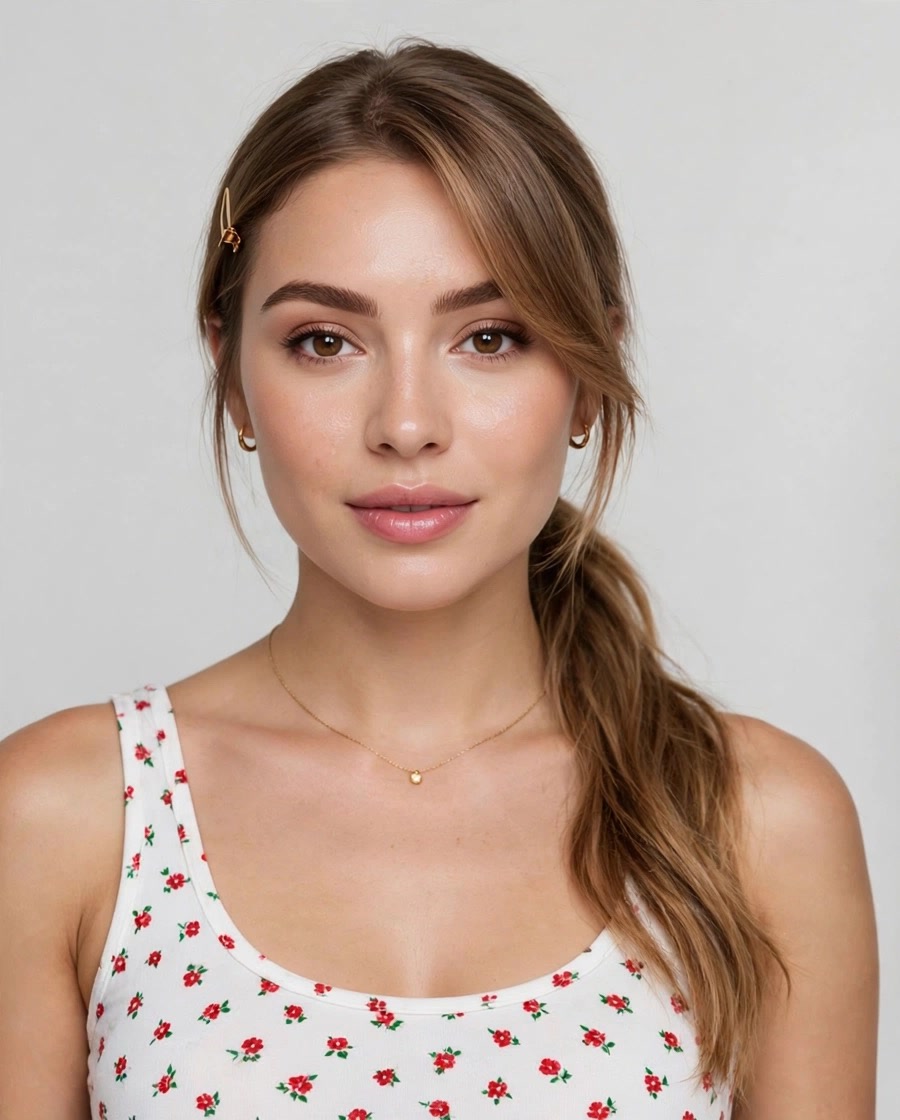
 Prompt adaptado de @beizhi606
参考图说明:参考图1是人物大头照(脸、五官、发型、发色、妆容都以它为准),参考图2是同一个人的三视图(服装、配饰、鞋子、身材都以它为准)。人物是 25 岁的欧美女性,Instagram 博主风格的精致妆容。下文里「原视频里」的发型、发色和穿搭描述一律忽略,以参考图为准。

中文提示词(10.00秒)
·脸部:完全按【参考图1 大头照】,五官、脸型、发型、发色都以大头照为准,全程保持同一张脸。原视频里是黑色长发,低马尾搭在右肩前面,有侧分刘海,左侧别一个小发夹。
·服装和身材:完全按【参考图2 三视图】,包括服装款式、颜色、配饰和身材比例。以下是原视频的穿搭,只在没有参考时备用:
·白色背心,上面有红色小碎花印花:
·浅蓝色牛仔短裤:
·右手腕戴红色串珠手链,脖子上有金色细项链。
·一致性:全程人物的脸和服装都不能变。
场景

• 老式居民楼的楼道和阳台,人物站在楼上一层的水泥栏杆后面,栏杆是一根根竖着的方形水泥柱,表面斑驳。
• 背景是灰色水泥墙,墙上有几根电线横着穿过。
• 机位在楼下一层,画面最下方前景是一根黄色金属扶手。
• 中段镜头拉开一点时,能稍微看到上方一层水泥栏杆阳台的下沿和电线即可,不要拉成远景。

光线:阴天的自然光,光线柔和均匀,偏灰调,低饱和,写实。

机位(本版重点):手持拍摄,从楼下往上仰拍,竖屏。前半段是近距离中近景,人物上半身占画面主体;约 4.6 秒开始只轻轻往后拉一次,拉到中景(人物腰部以上、头部约占画面高度三分之一)就立刻停住,之后一直保持这个距离固定拍到结尾,不再继续拉远、不往下拉成远景,人物不能变小。全程只有轻微手持晃动。

分镜
• 0.00–0.40:镜头从下往上快速甩,画面先是模糊的黄色扶手和水泥栏杆,有动态模糊,随即稳定成近距离中近景。
• 0.40–0.60:人物站在栏杆后面,上半身往前探出栏杆,左手扶着栏杆顶部,右手从栏杆之间向下伸出,掌心朝下,手指张开,伸向镜头。
• 0.60–1.60:保持向下伸手的姿势,头往右歪,微笑着看向镜头,马尾垂在右肩前。
• 1.60–2.80:头慢慢回正,继续微笑看镜头,右手还向下伸着,手指轻轻动了一下。
• 2.80–3.60:头又往左歪,眼睛半眯,嘴角上扬,身体随着节奏轻轻晃动。
• 3.60–4.60:头回到正面,看着镜头,右手保持向下伸出,镜头不动。
• 4.60–6.50:镜头只轻轻往后拉一次,拉到中景就停:人物稍微变小一点,上方一层阳台下沿和电线稍微进画,黄色扶手仍在画面下方;人物保持伸手姿势看着镜头。
• 6.50–7.50:镜头停住不动,保持这个中景距离,人物保持向下伸手、微笑看镜头。
• 7.50–8.80:镜头仍固定在这个距离。人物慢慢把右手收回到栏杆上,双手扶着栏杆,头微微歪着。
• 8.80–10.00:人物保持双手扶栏杆、身体往前探的姿势,头抬着、微笑看着镜头直到结束,不要把头伏到手臂或栏杆上;镜头保持距离不再拉动。

风格:写实真人质感,手机竖屏随手拍的感觉,阴天的灰调,低饱和,有轻微手持晃动。

字幕:不要在生成时让模型写任何字幕文字(字幕后期再加)。

音频:保留背景音乐,镜头拉开的时候对准音乐节拍。

参数:10.00 秒,9:16 竖屏,720×1280,30fps。

负面提示词:一直拉远、持续变焦拉远、远景、人物变得很小、换脸、五官变形、脸显老、发型改变、服装颜色或款式变化、手链消失或戴错手、多出手指、手部畸形、伸出的手臂过长、肢体扭曲、栏杆穿过身体、建筑结构错乱、画面闪烁、乱码文字、水印。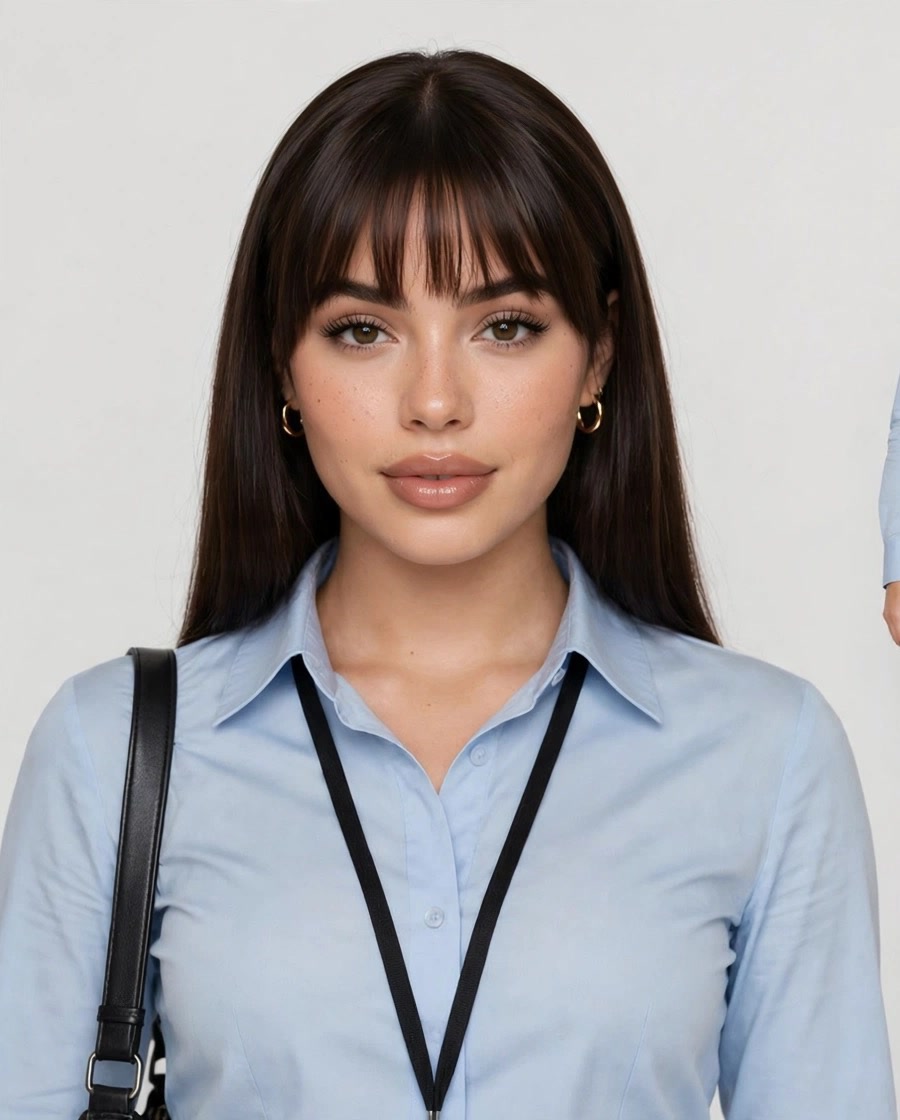
 Prompt adaptado de @beizhi606
参考图说明:参考图1是人物大头照(脸、五官、发型、发色、妆容都以它为准),参考图2是同一个人的三视图(服装、配饰、鞋子、身材都以它为准)。人物是 25 岁的欧美女性,Instagram 博主风格的精致妆容。下文里「原视频里」的发型、发色和穿搭描述一律忽略,以参考图为准。

中文提示词(10.00秒)
人物

• 脸部:完全按【参考图1 大头照】,五官、脸型、发型、发色都以大头照为准,每个镜头保持同一张脸。原视频里是黑棕色齐腰长直发、齐刘海。
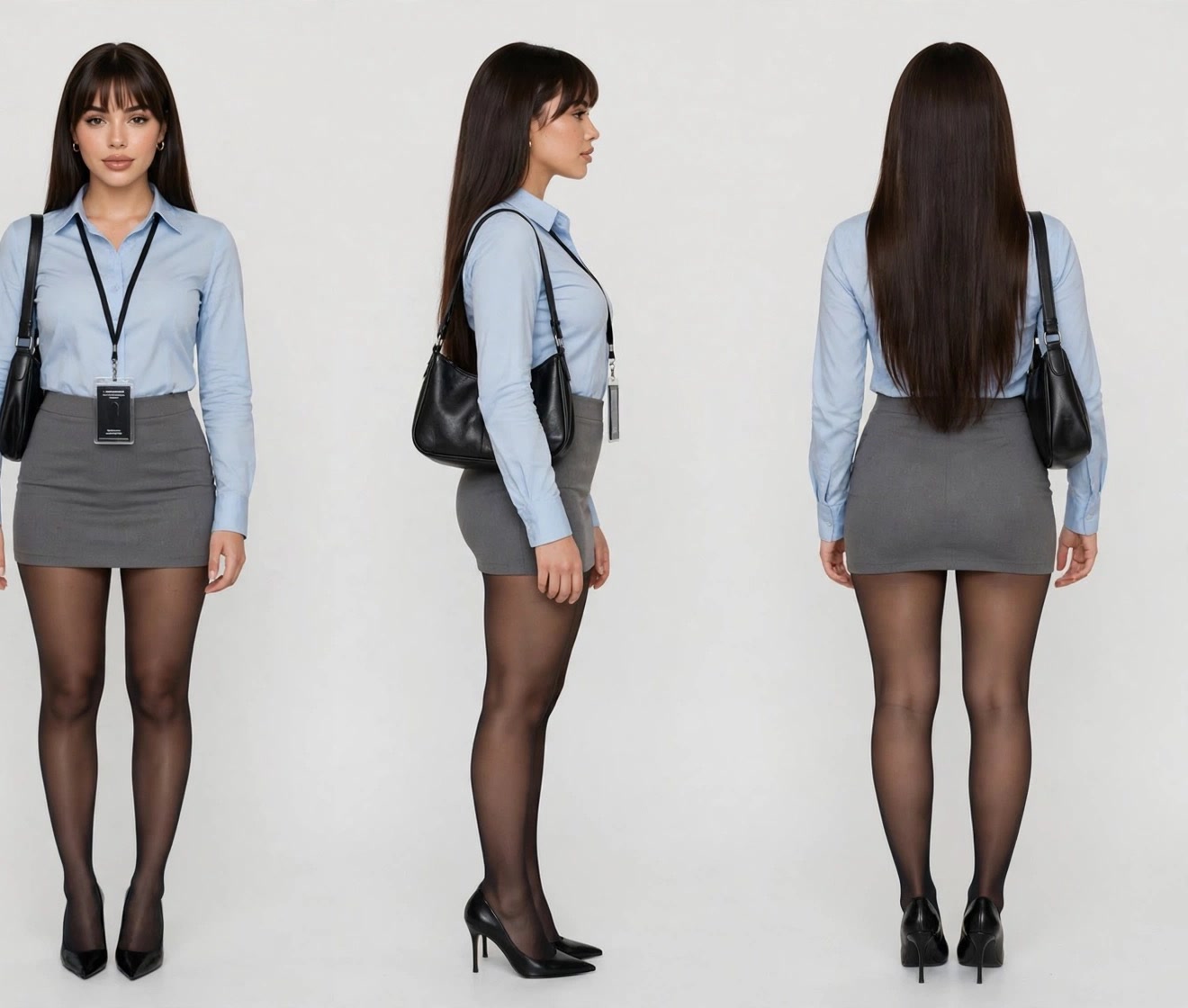
• 服装和身材:完全按【参考图2 三视图】,包括服装款式、颜色、配饰、鞋子和身材比例。原视频里的穿搭只作为没有参考时的备用:
• 浅蓝色长袖衬衫,扎进裙子里;
• 灰色包臀短裙;
• 黑色薄丝袜,黑色尖头细高跟鞋;
• 胸前挂黑色挂绳工牌;
• 黑色单肩包。

• 一致性:5 个镜头里人物的脸和服装不能变。

场景

• 地铁车厢里,白色车厢内壁,金属扶手竖杆。
• 车门边有黄黑警示条,门上有出口和安全标识。
• 车厢里有其他乘客:有的低头看手机,有的坐着,有的站着,有的放着红色行李箱和紫色袋子。乘客都是自然状态,不看镜头。

光线:地铁车厢顶部的白色日光灯,照明均匀明亮,偏冷白色调,写实。

机位:都是手机手持拍摄,平视或略低机位,竖屏。

分镜
镜头1|0.00–1.97秒|靠在车门边站着,旁边是看手机的乘客

• 机位:平视中全景,竖屏能拍到全身。画面左侧前景是一位穿蓝色T恤、低头看手机的男乘客,人物在画面中间偏右,背靠车门。
• 0.00–0.40:人物背靠车门,一条腿弯曲,脚掌向后抵在车门上。右手抬到颈侧摸着头发,看向镜头。
• 0.40–0.80:抬起的脚放回地面,变成双脚并拢站立,右手放下到胸前。
• 0.80–1.40:双手自然垂放,身体靠着车门,头微微低下。
• 1.40–1.97:右手抬到耳边,把头发往耳后拨,眼睛向下看。

镜头2|1.97–3.37秒|坐在座位上跷腿,侧脸看向左边

• 机位:略高的侧前方机位,中全景。人物在画面右侧,坐在地铁座椅上,左侧有一位戴眼镜、穿深色衣服的男乘客,低头看手机,旁边还站着一位乘客。
• 1.97–2.60:硬切进来。人物跷着二郎腿,黑色单肩包放在大腿上,双手放在包上,头转向画面左侧,侧脸朝镜头。
• 2.60–3.37:姿势不变,眼睛看着左前方,头发自然垂在背后,身体基本保持不动。

镜头3|3.37–5.33秒|手扶竖杆站着,拨头发

• 机位:正面平视中景,拍到大腿以上。人物站在车厢过道中间,左边是金属竖杆,背景是纵深的车厢和其他乘客。镜头缓慢往前推。
• 3.37–3.90:硬切进来。人物右手握着竖杆,左肩背着黑色包,看着镜头。
• 3.90–4.40:左手抬起来,把脸侧的头发往耳后拨。
• 4.40–5.33:左手停在耳边扶着头发,头微微向右歪,看着镜头,右手一直握着竖杆。

镜头4|5.33–7.27秒|背靠车厢隔板站着,手里拿奶茶

• 机位:平视全景,画面从车厢纵深方向拍过去。人物在画面右侧,背靠车门旁的白色隔板,左边是长长的车厢,里面有很多乘客和行李箱。
• 5.33–6.00:硬切进来。人物背靠隔板站着,双腿并拢,左手在胸前拿着一杯带吸管的奶茶,右手垂在身侧,黑色包放在脚边或挂在手臂上,看着镜头。
• 6.00–7.27:姿势基本不变,头微微转向车厢一侧,再转回来看着镜头,镜头有轻微的手持晃动。

镜头5|7.27–8.73秒|靠墙曲腿,拨头发后转头

• 机位:平视中全景,比镜头4离人物更近。人物还是靠着同一块白色隔板,左边背景是坐着的乘客和行李。
• 7.27–7.60:硬切进来。人物背靠隔板,一条腿弯曲,脚掌向后抵在隔板上。右手抬到头侧拨头发,左手拿着奶茶,头歪着看向镜头。
• 7.60–8.10:右手放下,叉在腰侧,还保持曲腿姿势。
• 8.10–8.73:抬起的脚放回地面,双腿并拢站直。头转向画面左侧,看向车厢里面,侧脸朝镜头。

(补充)镜头5延续|8.73–10.00

• 8.73–9.40:机位不变。人物保持站立,慢慢把头转回来看着镜头。
• 9.40–10.00:左手拿着奶茶放在胸前,右手自然垂下,身体轻轻靠着隔板,画面停在这个构图上直到结束。

风格:写实真人质感,手机竖屏随手拍的感觉,高清,自然生活场景,带轻微手持晃动。

音频:保留背景音乐,切镜点 1.97、3.37、5.33、7.27 秒对准音乐节拍。

参数:10.00 秒,9:16 竖屏,1080×1920,30fps。

负面提示词:换脸、五官变形、发型改变、服装颜色或款式变化、工牌消失、多出手指、肢体扭曲、腿部比例异常、路人看镜头、路人脸部畸形、画面闪烁、文字水印、背景变形、车厢结构错乱。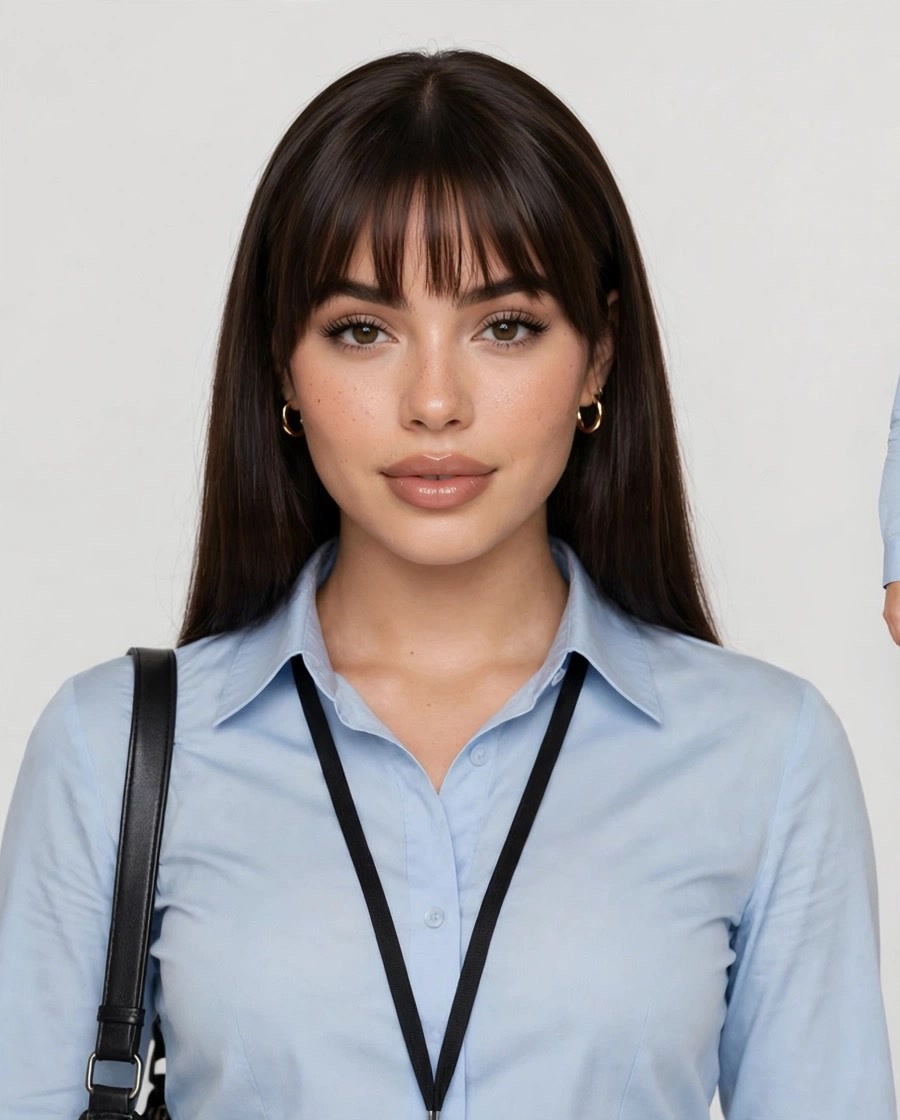
 Prompt adaptado de @beizhi606
参考图说明:参考图1是人物大头照(脸、五官、发型、发色、妆容都以它为准),参考图2是同一个人的三视图(服装、配饰、鞋子、身材都以它为准)。人物是 25 岁的欧美女性,Instagram 博主风格的精致妆容。下文里「原视频里」的发型、发色和穿搭描述一律忽略,以参考图为准。

中文提示词(10.00秒)
人物

• 脸部:完全按【参考图1 大头照】,五官、脸型、发型、发色都以大头照为准,每个镜头保持同一张脸。原视频里是黑棕色齐腰长直发、齐刘海。
• 服装和身材:完全按【参考图2 三视图】,包括服装款式、颜色、配饰、鞋子和身材比例。原视频里的穿搭只作为没有参考时的备用:
• 浅蓝色长袖衬衫,扎进裙子里;
• 灰色包臀短裙;
• 黑色薄丝袜,黑色尖头细高跟鞋;
• 胸前挂黑色挂绳工牌;
• 黑色单肩包。

• 一致性:5 个镜头里人物的脸和服装不能变。

场景

• 地铁车厢里,白色车厢内壁,金属扶手竖杆。
• 车门边有黄黑警示条,门上有出口和安全标识。
• 车厢里有其他乘客:有的低头看手机,有的坐着,有的站着,有的放着红色行李箱和紫色袋子。乘客都是自然状态,不看镜头。

光线:地铁车厢顶部的白色日光灯,照明均匀明亮,偏冷白色调,写实。

机位:都是手机手持拍摄,平视或略低机位,竖屏。

分镜
镜头1|0.00–1.97秒|靠在车门边站着,旁边是看手机的乘客

• 机位:平视中全景,竖屏能拍到全身。画面左侧前景是一位穿蓝色T恤、低头看手机的男乘客,人物在画面中间偏右,背靠车门。
• 0.00–0.40:人物背靠车门,一条腿弯曲,脚掌向后抵在车门上。右手抬到颈侧摸着头发,看向镜头。
• 0.40–0.80:抬起的脚放回地面,变成双脚并拢站立,右手放下到胸前。
• 0.80–1.40:双手自然垂放,身体靠着车门,头微微低下。
• 1.40–1.97:右手抬到耳边,把头发往耳后拨,眼睛向下看。

镜头2|1.97–3.37秒|坐在座位上跷腿,侧脸看向左边

• 机位:略高的侧前方机位,中全景。人物在画面右侧,坐在地铁座椅上,左侧有一位戴眼镜、穿深色衣服的男乘客,低头看手机,旁边还站着一位乘客。
• 1.97–2.60:硬切进来。人物跷着二郎腿,黑色单肩包放在大腿上,双手放在包上,头转向画面左侧,侧脸朝镜头。
• 2.60–3.37:姿势不变,眼睛看着左前方,头发自然垂在背后,身体基本保持不动。

镜头3|3.37–5.33秒|手扶竖杆站着,拨头发

• 机位:正面平视中景,拍到大腿以上。人物站在车厢过道中间,左边是金属竖杆,背景是纵深的车厢和其他乘客。镜头缓慢往前推。
• 3.37–3.90:硬切进来。人物右手握着竖杆,左肩背着黑色包,看着镜头。
• 3.90–4.40:左手抬起来,把脸侧的头发往耳后拨。
• 4.40–5.33:左手停在耳边扶着头发,头微微向右歪,看着镜头,右手一直握着竖杆。

镜头4|5.33–7.27秒|背靠车厢隔板站着,手里拿奶茶

• 机位:平视全景,画面从车厢纵深方向拍过去。人物在画面右侧,背靠车门旁的白色隔板,左边是长长的车厢,里面有很多乘客和行李箱。
• 5.33–6.00:硬切进来。人物背靠隔板站着,双腿并拢,左手在胸前拿着一杯带吸管的奶茶,右手垂在身侧,黑色包放在脚边或挂在手臂上,看着镜头。
• 6.00–7.27:姿势基本不变,头微微转向车厢一侧,再转回来看着镜头,镜头有轻微的手持晃动。

镜头5|7.27–8.73秒|靠墙曲腿,拨头发后转头

• 机位:平视中全景,比镜头4离人物更近。人物还是靠着同一块白色隔板,左边背景是坐着的乘客和行李。
• 7.27–7.60:硬切进来。人物背靠隔板,一条腿弯曲,脚掌向后抵在隔板上。右手抬到头侧拨头发,左手拿着奶茶,头歪着看向镜头。
• 7.60–8.10:右手放下,叉在腰侧,还保持曲腿姿势。
• 8.10–8.73:抬起的脚放回地面,双腿并拢站直。头转向画面左侧,看向车厢里面,侧脸朝镜头。

(补充)镜头5延续|8.73–10.00

• 8.73–9.40:机位不变。人物保持站立,慢慢把头转回来看着镜头。
• 9.40–10.00:左手拿着奶茶放在胸前,右手自然垂下,身体轻轻靠着隔板,画面停在这个构图上直到结束。

风格:写实真人质感,手机竖屏随手拍的感觉,高清,自然生活场景,带轻微手持晃动。

音频:保留背景音乐,切镜点 1.97、3.37、5.33、7.27 秒对准音乐节拍。

参数:10.00 秒,9:16 竖屏,1080×1920,30fps。

负面提示词:换脸、五官变形、发型改变、服装颜色或款式变化、工牌消失、多出手指、肢体扭曲、腿部比例异常、路人看镜头、路人脸部畸形、画面闪烁、文字水印、背景变形、车厢结构错乱。O que o Muse Video aceita e o que não aceita. Resoluções, proporções, durações e entradas não suportadas são recusadas com 400 antes de a tarefa ser criada, então nada é cobrado.
| Suportado | Não suportado | |
|---|---|---|
| Resolução | Só 720p (resolution: 720p, ou omita o campo) | 1080p, 2K, 4K, 480p |
| Proporção | 16:9 horizontal, 1280×720 (padrão); 9:16 vertical, 720×1280 | Quadrado 1:1, 4:3, 3:4, 21:9 e qualquer outra proporção |
| Duração | De 4 a 30 segundos inteiros; 5, 6, 8, 10, 15, 20, 25 e 30 s saem exatos, as outras durações sobem para o próximo desses valores | Menos de 4 s, mais de 30 s, frações como 8.5 |
| Imagens | Uma das duas: 1 primeiro quadro, ou até 4 imagens de referência que mantêm a mesma pessoa ou elemento (não as duas coisas); PNG, JPEG ou WebP, até 20 MB cada, URL pública ou base64 | Um primeiro quadro junto com imagens de referência, mais de 4 imagens de referência, um último quadro |
| Entrada de vídeo e áudio | Nenhuma: imagens são a única entrada de mídia | Vídeo de referência, edição ou extensão de vídeo, áudio para conduzir a animação ou sincronia labial com o seu próprio áudio |
| Som | Gerado pelo modelo junto com a imagem | Uma opção para desligar o som (generate_audio: false é recusado); o som não é garantido em todo clipe |
| Outros controles | Um prompt de até 4000 caracteres em qualquer idioma; descreva os movimentos de câmera no prompt | negative_prompt, seed (os resultados não são reproduzíveis), parâmetros de controle de câmera |
Como todo modelo de vídeo, o Muse Video não tem taxa de sucesso de 100%. Tarefas que falham não são cobradas.
Uma tarefa ainda pode falhar depois de aceita: o modelo pode recusar o conteúdo, a geração pode esbarrar num erro temporário, ou um clipe pronto que não corresponde à orientação ou à duração pedidas é descartado. Uma tarefa que falha termina no estado failed com o motivo em failMsg, e a cobrança é devolvida.
Os nossos dois pedidos de teste no lançamento devolveram um clipe, mas são pouquíssimos para prometer uma taxa de sucesso, por isso ainda não publicamos nenhuma. Planeje o seu fluxo contando com falhas ocasionais: tente de novo nos erros temporários, reescreva os prompts recusados e não presuma que o clipe vai chegar na primeira tentativa.
O modelo pode recusar um prompt ou uma imagem de entrada. Repetir a mesma requisição raramente adianta; reescreva o prompt ou troque a imagem.
Uma geração pode falhar por motivos que não têm a ver com a sua requisição. Repetir a mesma requisição um pouco depois costuma funcionar.
Um clipe pronto com a orientação errada ou mais curto do que o pedido é descartado em vez de entregue. Repita a requisição.
A Meta descreve o som gerado junto com a imagem, mas um dos nossos dois clipes de teste veio sem som. Se você precisa de áudio, verifique se cada MP4 tem faixa de áudio.
$0.037 por segundo solicitado. Primeiro quadro ou imagens de referência não custam nada a mais; tarefas que falham não são cobradas.
| Você pede | Clipe que recebe | Preço |
|---|---|---|
| 4 s | 5 s | $0.148 |
| 5 s (padrão) | 5 s | $0.185 |
| 6 s | 6 s | $0.222 |
| 7 s | 8 s | $0.259 |
| 8 s | 8 s | $0.296 |
| 10 s | 10 s | $0.37 |
| 15 s | 15 s | $0.555 |
| 20 s | 20 s | $0.74 |
| 25 s | 25 s | $0.925 |
| 30 s (máximo) | 30 s | $1.11 |
Clipes de até 10 segundos costumam levar de um a dois minutos, e os de 15 a 30 segundos, de três a sete; nossos pedidos de teste de 4 segundos levaram cerca de um minuto e meio. Clipes com mais de 10 segundos trocam de plano por volta dos 10 e dos 20 segundos.
Uma pessoa filmada de perto com a câmera frontal, uma sequência de gestos pequenos, luz quente e baixa e música, como no exemplo acima.
Envie até quatro fotos da mesma pessoa em images e descreva uma cena nova. Num teste, quatro fotos de uma mulher jovem e um prompt de praia ao pôr do sol deram em 88 segundos um clipe 9:16 de 5,0 segundos com som: o mesmo rosto e o mesmo cabelo, roupa parecida e até o V com os dedos e o riso atrás da mão, tirados das fotos. Ele começava na praia, não numa das fotos. É um único teste, não uma garantia.
Clipes 9:16 para feeds de vídeos curtos ou 16:9 para páginas e anúncios, de 5 a 30 segundos em 720p.
Uma foto de produto, uma ilustração ou uma fotografia como primeiro quadro, com o movimento descrito no prompt.
O Muse Video só gera 720p em 16:9 ou 9:16. Se você precisa de mais resolução ou de outros formatos, escolha outro modelo de vídeo no APIMODELS.
As imagens entram como primeiro quadro ou como referências, e só: sem último quadro, sem vídeo de referência e sem sincronia labial com o seu próprio áudio.
Algumas requisições falham e alguns clipes chegam sem som. Se um clipe que não chega quebra o seu produto, adicione novas tentativas e verificações antes de depender dele.
Muse Video é uma API de geração de vídeo da Meta. O Muse Video é o modelo de vídeo da Meta Superintelligence Labs. No APIMODELS ele é um único id de modelo, muse-video, no endpoint unificado de vídeo: envie só um prompt para texto para vídeo, acrescente uma imagem de primeiro quadro e o clipe começa a partir dessa imagem, ou acrescente até quatro imagens de referência e o modelo mantém a mesma pessoa ou o mesmo objeto sem começar por elas. A requisição é enxuta. prompt é obrigatório (até 4000 caracteres, em qualquer idioma). duration define a duração em segundos inteiros de 4 a 30 (o campo seconds no estilo OpenAI também funciona); sem ele, você recebe 5 segundos. aspect_ratio escolhe 16:9 horizontal (o padrão, 1280×720) ou 9:16 vertical (720×1280); size 1280x720 ou 720x1280 faz o mesmo. A saída é sempre 720p: não há opção 1080p nem quadrada, e pedir uma delas retorna 400 antes de qualquer tarefa ser criada. Para imagem para vídeo, envie o primeiro quadro em image_url (first_frame_url, image e input_reference também funcionam), de preferência na mesma orientação do clipe; para imagens de referência, envie até quatro em images (image_urls e reference_image_urls também funcionam). Cada imagem é uma URL pública ou um data URI em base64, em PNG, JPEG ou WebP. É um ou outro: primeiro quadro junto com imagens de referência, mais de quatro imagens de referência, último quadro, vídeo ou áudio de referência, negative_prompt, seed e desligar o som são recusados com 400. As durações vêm em degraus. Pedidos de 5, 6, 8, 10, 15, 20, 25 ou 30 segundos voltam exatamente com essa duração; qualquer outro número inteiro é arredondado para cima até o próximo degrau (4 → 5 s, 7 → 8 s, 11 → 15 s), então um clipe nunca é mais curto do que o que você pagou. O vídeo é um MP4 H.264 a 24 fps, e a Meta descreve o Muse Video como um modelo que gera o som junto com a imagem. No nosso teste com imagens de referência, quatro fotos de uma mesma mulher geraram um clipe de 5 segundos na praia em que ela manteve o rosto e o cabelo; o modelo não começou por nenhuma das fotos. Ele roda como tarefa assíncrona: crie a tarefa e depois consulte o status ou receba um callback. Clipes de até 10 segundos costumam levar de um a dois minutos; de 15 a 30 segundos, de três a sete. Nem toda requisição dá certo: o modelo pode recusar o conteúdo, uma geração pode esbarrar em um erro temporário e um clipe com orientação ou duração erradas é descartado; uma tarefa com falha não é cobrada. O preço é $0.037 por segundo solicitado: 5 s $0.185, 10 s $0.37, 30 s $1.11. Pela plataforma APIMODELS, você acessa este modelo por uma API unificada com preços transparentes de pagamento por uso. Preço atual: per second: $0.037, 5s (default): $0.185, 8s: $0.296, 10s: $0.37, 15s: $0.555, 20s: $0.74, 30s (maximum): $1.11.
Gere rapidamente vídeos promocionais da marca para campanhas e redes sociais.
Crie vídeos curtos atraentes para TikTok, Instagram e YouTube.
Gere demonstrações de recursos e tutoriais para melhorar a conversão.
Produza explicações de cursos, divulgação e vídeos de treinamento a baixo custo.
O Muse Video está disponível pela APIMODELS a: per second: $0.037, 5s (default): $0.185, 8s: $0.296, 10s: $0.37, 15s: $0.555, 20s: $0.74, 30s (maximum): $1.11. A cobrança é por uso — você paga apenas pelo que gera.
Cadastre-se na APIMODELS, obtenha sua chave de API e chame nosso endpoint unificado. Oferecemos documentação detalhada com exemplos em cURL, Python e Node.js.
A APIMODELS oferece o mesmo modelo Muse Video pela nossa plataforma de agregação. Fornecemos uma interface de API unificada, então você não precisa de contas separadas por provedor: uma única chave para acessar todos os modelos.
O Muse Video é o modelo de vídeo da Meta Superintelligence Labs. Ele transforma um prompt de texto em um clipe 720p de 4 a 30 segundos, horizontal 16:9 ou vertical 9:16; você pode acrescentar uma imagem de primeiro quadro para o clipe começar a partir dela, ou até quatro imagens de referência para manter a mesma pessoa ou o mesmo objeto. A Meta o descreve como um modelo que gera o som junto com a imagem. No apimodels.app, o modelo Muse Video da Meta está disponível como um único id de modelo, muse-video, em POST /v1/video/generations. Gerações com falha não são cobradas, e o preço é $0.037 por segundo solicitado.
Todas as limitações do Muse Video: só 720p (sem 1080p, 2K, 4K ou 480p); só horizontal 16:9 em 1280×720 ou vertical 9:16 em 720×1280 (sem formato quadrado, 4:3, 21:9 ou qualquer outra proporção); de 4 a 30 segundos inteiros, exatos em 5, 6, 8, 10, 15, 20, 25 e 30 s, as outras durações arredondam para cima, sem frações; imagens: ou um primeiro quadro ou até quatro imagens de referência que mantêm a mesma pessoa ou o mesmo objeto, nunca os dois juntos, cada uma em PNG, JPEG ou WebP de até 20 MB (sem último quadro e sem mais de quatro referências); sem entrada de vídeo ou de áudio, sem sincronia labial com o seu próprio áudio e sem edição ou extensão de vídeo; a Meta descreve o modelo como capaz de gerar som, mas o som não é garantido em todo clipe e não pode ser desligado; sem negative_prompt, sem seed e sem parâmetros de controle de câmera (descreva os movimentos de câmera no prompt); prompts de até 4000 caracteres. Entradas não suportadas, como outra resolução ou proporção, um primeiro quadro junto com imagens de referência, mais de quatro imagens de referência, um último quadro, entrada de vídeo ou áudio, negative_prompt, seed ou generate_audio: false, são recusadas com 400 antes de a tarefa ser criada. Mesmo dentro desses limites, nem todo pedido dá certo: o modelo pode recusar o conteúdo ou esbarrar em um erro temporário, e uma tarefa com falha não é cobrada.
Pode. Um único id de modelo, muse-video, tem três modos de entrada, e o modo depende do que você envia. Só o prompt é texto para vídeo. Uma imagem de primeiro quadro faz o clipe começar a partir dela: envie em image_url (first_frame_url, image e input_reference também funcionam). De uma a quatro imagens de referência mantêm a mesma pessoa, objeto ou estilo sem que o clipe comece em nenhuma delas, o que serve bem para um personagem recorrente: envie como array em images (image_urls e reference_image_urls também funcionam). Qualquer array conta como imagens de referência, então image_urls com um único item é uma imagem de referência, não um primeiro quadro. Use um primeiro quadro ou imagens de referência, não os dois: enviar ambos, ou mais de quatro referências, retorna 400 antes de a tarefa ser criada. Cada imagem vai como URL pública ou data URI em base64, em PNG, JPEG ou WebP, com até 20 MB. O primeiro quadro funciona melhor na mesma orientação do clipe: horizontal para 16:9 e vertical para 9:16. Último quadro (last_frame_url), vídeo de referência e entrada de áudio não são suportados. Os três modos custam o mesmo.
As imagens de referência dizem ao modelo quem ou o que deve aparecer; elas não viram quadros do vídeo. Envie em images de uma a quatro imagens da mesma pessoa ou do mesmo objeto, descreva a nova cena no prompt e faça referência a elas, por exemplo "a mesma jovem das imagens de referência". Testamos isso uma vez, em 30 de outubro de 2026: enviamos quatro fotos de uma mesma jovem (deitada num travesseiro, sorrindo, fazendo o V com os dedos e rindo com a mão na boca) com o prompt "The same young woman from the reference images walks barefoot along a beach at sunset, smiling back at the camera, handheld vertical shot", 4 segundos em 9:16. Em 88 segundos voltou um clipe de 5.0 segundos em 720×1280 com faixa de áudio. O clipe não começou em nenhuma das referências: abriu direto na praia. A jovem manteve o rosto, o cabelo e um estilo de roupa parecido (a regata de alcinha cor creme das referências virou um vestido branco estilo camisola), o modelo reaproveitou gestos das referências (o V e a risada com a mão na boca) e alternou vários planos dentro dos 5 segundos: closes, um plano aberto e um de costas. É um único teste, não uma garantia de semelhança nem de como o clipe é montado. Se o clipe precisa começar numa imagem exata, use um primeiro quadro. Imagens de referência não custam nada a mais: o pedido de 4 segundos foi cobrado exatamente como um texto para vídeo de 4 segundos.
De 4 a 30 segundos, em segundos inteiros, com duration (o campo seconds no estilo OpenAI também funciona); sem ele, você recebe 5 segundos. A duração de saída vem em degraus: pedidos de 5, 6, 8, 10, 15, 20, 25 ou 30 segundos voltam exatamente com essa duração, e qualquer outro número inteiro é arredondado para cima até o próximo degrau: 4 → 5 s, 7 → 8 s, 9 → 10 s, 11–14 → 15 s, 16–19 → 20 s, 21–24 → 25 s e 26–29 → 30 s. Um clipe nunca é mais curto do que o que você pagou. Se precisar de uma duração exata, peça um dos degraus. Valores fracionados ou fora de 4–30 retornam 400 antes de a tarefa ser criada.
Só 720p, em dois formatos: horizontal 16:9 em 1280×720, o padrão, e vertical 9:16 em 720×1280. Escolha com aspect_ratio em 16:9 ou 9:16, ou com size 1280x720 ou 720x1280; resolution é opcional e só aceita 720p. Não há formato quadrado, outras proporções nem 1080p: pedir um deles retorna 400 antes de a tarefa ser criada, em vez de entregar outro tamanho em silêncio. Cada clipe é um MP4 H.264 a 24 fps.
A Meta descreve o Muse Video como um modelo que gera o som junto com a imagem. Nos nossos próprios testes de lançamento, em 30 de outubro de 2026, dois pedidos de 4 segundos voltaram como dois clipes de 5.0 segundos: o horizontal veio com uma faixa de áudio AAC e o vertical veio sem som. Então, se o seu fluxo precisa de som, verifique se cada MP4 tem faixa de áudio (o ffprobe mostra) e tenha uma alternativa, como adicionar música ou uma narração, para os clipes que chegarem sem ela. O som não pode ser desligado: generate_audio: false retorna 400 ("muse-video cannot turn sound off: the model decides whether a clip has sound"), e generate_audio: true é aceito, mas não garante que haja som.
Clipes de até 10 segundos costumam levar de um a dois minutos, e clipes de 15 a 30 segundos, de três a sete minutos; nossos pedidos de teste de 4 segundos terminaram em cerca de 1.5 minuto. A chamada é assíncrona: criar a tarefa devolve um taskId na hora, e depois você consulta GET /v1/video/generations?task_id= a cada 10 a 15 segundos ou passa callback_url e espera o nosso POST.
$0.037 por segundo solicitado, cobrado sobre a duração que você envia: 4 segundos $0.148, 5 segundos (o padrão) $0.185, 6 segundos $0.222, 8 segundos $0.296, 10 segundos $0.37, 15 segundos $0.555, 20 segundos $0.74, 25 segundos $0.925 e 30 segundos $1.11. Uma duração entre dois degraus é cobrada pelos segundos que você pediu: 7 segundos custam $0.259 e voltam como um clipe de 8 segundos. O primeiro quadro e as imagens de referência não custam nada a mais, então os três modos têm o mesmo preço, e a proporção também não muda o valor. Gerações com falha não são cobradas.
Nem todo pedido ao Muse Video dá certo. Uma geração pode falhar por três motivos: o modelo recusa o conteúdo, a geração esbarra em um erro temporário, ou o clipe pronto vem com a orientação errada ou mais curto do que o pedido e é descartado. Uma tarefa com falha termina no estado failed com o motivo em failMsg, e você não é cobrado. Ainda não publicamos uma taxa de sucesso: os nossos dois pedidos de teste no lançamento devolveram um clipe, mas dois testes são poucos demais para prometer qualquer número. Repita os erros temporários, reescreva um prompt recusado e não monte um fluxo que conte com a primeira tentativa sempre dando certo. Pedidos que o Muse Video não consegue atender nem chegam a virar tarefa: prompt ausente ou com mais de 4000 caracteres, duration que não seja um número inteiro de 4 a 30, resolution diferente de 720p, proporção diferente de 16:9 ou 9:16, primeiro quadro junto com imagens de referência, mais de quatro imagens de referência, último quadro, entrada de vídeo ou áudio, negative_prompt, seed ou generate_audio: false retornam 400 com uma mensagem de erro clara antes de a tarefa ser criada. As imagens são verificadas durante a execução: se uma delas não for PNG, JPEG ou WebP ou passar de 20 MB, a tarefa falha com o motivo, por exemplo "first-frame image must be PNG, JPEG or WebP" ou "reference image 2 must be PNG, JPEG or WebP", também sem cobrança.
Diga qual é o sujeito, como ele se move e como a câmera se move, por exemplo: "um gato laranja se espreguiça no parapeito da janela, a luz do sol entra, a câmera se aproxima devagar". O prompt aceita até 4000 caracteres em qualquer idioma. Clipes com mais de 10 segundos trocam de plano por volta dos 10 e dos 20 segundos, então vale escrever um prompt longo por trechos: "nos primeiros 10 segundos …, depois …". Para imagem para vídeo, use um primeiro quadro na mesma orientação do clipe e deixe o prompt contar o que acontece em seguida. Com imagens de referência, chame o sujeito de "a mesma pessoa das imagens de referência" e descreva a nova cena, já que o clipe não vai começar em nenhuma delas.
Crie uma conta no apimodels.app e gere uma API key no console; uma única key e um único saldo em dólares servem para todos os modelos. Depois envie: curl -X POST https://api.apimodels.app/v1/video/generations -H "Authorization: Bearer YOUR_API_KEY" -H "Content-Type: application/json" -d '{"model": "muse-video", "prompt": "um gato laranja se espreguiça no parapeito da janela, a luz do sol entra, a câmera se aproxima devagar", "duration": 5, "aspect_ratio": "16:9"}'. Acrescente "image_url" para começar do seu próprio primeiro quadro, ou "images" com até quatro imagens de referência para manter a mesma pessoa ou o mesmo objeto. A resposta traz um taskId: consulte GET /v1/video/generations?task_id= a cada 10 a 15 segundos até state ser completed, ou passe callback_url, e baixe o MP4 de resultUrls em até 30 dias.
Não totalmente. Contas novas elegíveis recebem $0.10 de crédito de teste, mas o pedido mais curto do Muse Video, 4 segundos, custa $0.148, então um primeiro teste precisa de uma recarga; as recargas começam em $10. A cobrança é por uso, sem assinatura. O playground desta página mostra o preço antes de você clicar em Generate, e gerações com falha não são cobradas.
Na APIMODELS, o Muse Video roda junto com mais de 60 modelos usando uma única chave de API e um único saldo, então escolher é questão de adequação, não de dependência. Ele suporta Text to Video, Image to Video (First Frame), Up to 4 Reference Images, 720p · 16:9 / 9:16, 4–30s · Exact at 5/6/8/10/15/20/25/30s, Sound with the Picture, Failed Generations Not Charged, $0.037/s e você pode avaliá-lo em preço e capacidade frente a outros modelos de geração de vídeo, trocando ao alterar uma única string com o nome do modelo — sem nova conta ou integração. Veja todas as opções de geração de vídeo com preços ao vivo em apimodels.app/models.
O Muse Video suporta: Text to Video, Image to Video (First Frame), Up to 4 Reference Images, 720p · 16:9 / 9:16, 4–30s · Exact at 5/6/8/10/15/20/25/30s, Sound with the Picture, Failed Generations Not Charged, $0.037/s. Consulte a documentação da APIMODELS para todos os parâmetros e exemplos de chamada.
Sim. A APIMODELS expõe o Muse Video por uma única API unificada e uma só chave, sem contas separadas por provedor e sem precisar lidar com o acesso de rede regional de cada provedor.
Aceitamos Stripe (Visa, Mastercard e outros cartões internacionais) e Alipay. O saldo fica disponível imediatamente após o pagamento.
