APIMODELSAPIMODELS

21+ Claude Fable 5.2 Painting in Code Prompts

21+ prompts. 145 things people made with Claude Fable 5.2 in its first week, from Blender films and Three.js scenes to games, fight animations, music and paintings, each credited to its creator and linked to the original post, with the prompt where the creator published one. Fable 5.2 does not draw pixels: every piece here was rendered from code it wrote.

← All 145 Claude Fable 5.2 prompts

Last updated: · Claude Fable 5.2 API — pricing & playground · API docs

TL;DR

Claude Fable 5.2 (model id claude-fable-5-2, released by Anthropic on 9 November 2026) is a language model: it takes text and images and returns text, with a 1M-token context window and up to 128K output tokens. It does not render pixels or synthesise sound by itself. Every film, game, song and painting on this page came from code it wrote, such as Blender Python, Three.js and raw WebGL, Canvas, Web Audio, numpy or LilyPond, which an agent like Claude Code ran, rendered and usually encoded with FFmpeg. Many of the best-known results started from one or two sentences, but the runs behind them were long: the pelican film wrote about 4,800 lines of Python in a session of about 1.1M output tokens, and the FPS level ran for 8 hours at about $550 by its author's account. The 145 cases were posted on X between 4 and 11 November 2026; the few posted before 9 November are pre-release tests their authors labelled "Fable 5.5". 38 cases have the prompt as the creator published it (9 long briefs are excerpted, with our outline), 20 have only the creator's one-line request, and 87 were never published. On apimodels.app, Fable 5.2 costs $4.80 per 1M input tokens and $24 per 1M output tokens, against Anthropic's $8 / $40 list.

Source: Anthropic · Claude Fable 5.2 (the model vendor’s official site)

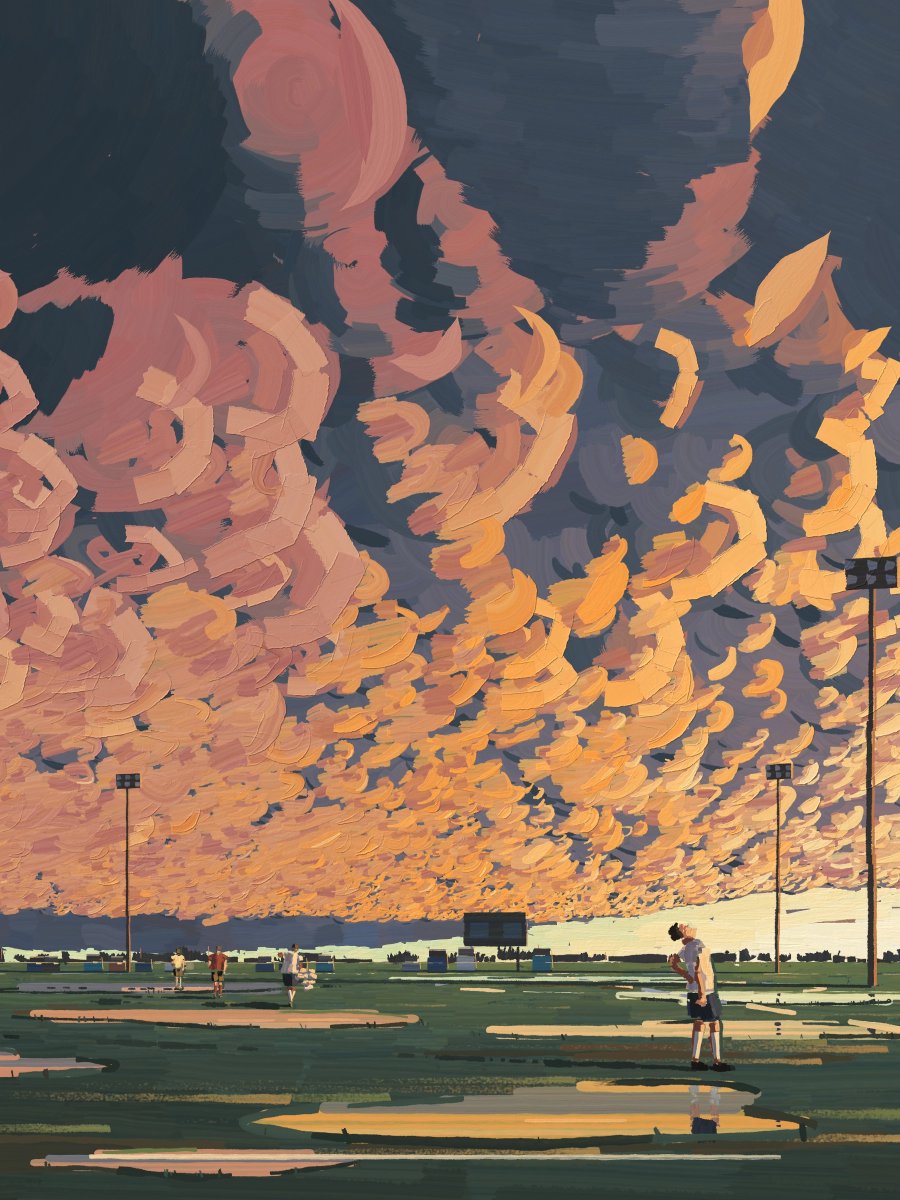
Photoreal oil painting in 700,000 strokes

Photoreal oil painting in 700,000 strokes

Summary

Only the creator's request is public, not a full prompt: "create a painting as indistinguishable as possible from a photograph"

What it is:
A realistic oil painting built from 700,000 strokes, aiming to be "as indistinguishable as possible from a photograph".
Clip:
1 image. About 546K views and 2,348 likes as of 11 November 2026.
Note:
The post only gives a summary of the request.
video by @jkeatnSource
Paintings made after first inventing a painter persona

Paintings made after first inventing a painter persona

Prompt not published

No prompt published. Before painting, the model first gives itself a painter persona, and each painting runs to 1,000–2,000 lines of code.

Clip:
4 images. About 436K views and 4,159 likes as of 11 November 2026.
Note:
The post describes the method but does not include the prompt text.
video by @jkeatnSource
Persona series: works by the painter Dermot Hale

Persona series: works by the painter Dermot Hale

Prompt not published

No prompt published. Part of the persona series: paintings made under the painter persona "Dermot Hale".

Clip:
4 images. About 52K views and 670 likes as of 11 November 2026.
video by @jkeatnSource
Persona series: the Tidewright paintings

Persona series: the Tidewright paintings

Prompt not published

No prompt published. Another entry in the persona series, this one painted under the persona "Tidewright".

Clip:
3 images. About 49K views and 456 likes as of 11 November 2026.
video by @jkeatnSource
Ocean wave oil painting in 710,989 strokes

Ocean wave oil painting in 710,989 strokes

Prompt not published

No prompt published. An oil painting of ocean waves made with 710,989 strokes.

Clip:
1 image. About 535 views and 12 likes as of 11 November 2026.
video by @hoppycatSource
Cheek to Cheek, a painting in 801,582 strokes

Cheek to Cheek, a painting in 801,582 strokes

Prompt not published

No prompt published. "Cheek to Cheek", a painting made with 801,582 strokes.

Clip:
1 image. About 376 views and 11 likes as of 11 November 2026.
video by @hoppycatSource
Hover to preview · click for sound

Masterpiece painted in an MS Paint clone with 11,066 strokes

Summary

Only the creator's request is public, not a full prompt: "make a masterpiece"

What it is:
Asked to "make a masterpiece", it painted 11,066 strokes inside an MS Paint clone.
Clip:
Video, 45 s. About 17K views and 218 likes as of 11 November 2026.
Note:
The post only gives a summary of the request.
video by @venturetwinsSource
Hover to preview · click for sound

Realistic oil portrait of Elon Musk, painted stroke by stroke

画一个马斯克,写实油画。然后有那种一笔一笔画上去的感觉。时长不限制

What it is:
A realistic oil painting of Elon Musk, shown being built up one stroke at a time.
Clip:
Video, 32 s. About 210 views and 1 like as of 11 November 2026.
by @DeaglePcSource
Hover to preview · click for sound

Oil painting of what being the model feels like

Prompt: I want you to create or find a tool you can use to generate an oil painting that allows you to take a video of you making each stroke. Then I want you to make a painting and video it of what it feels like to be you.

What it is:
It first built an oil painting tool that records a video of every stroke, then used it to paint "what it feels like to be you".
Clip:
Video, 30 s. About 900 views and 17 likes as of 11 November 2026.
Prompt source:
https://x.com/ZryMiller/status/2120327257193631939
by @ZryMillerSource
The most complex original painting it could make

The most complex original painting it could make

Create the most complex original painting you can. Like on the greatness of Leonardo Davinci

What it is:
The brief asked for "the most complex original painting you can", invoking "the greatness of Leonardo Davinci".
Clip:
1 image. About 4,511 views and 105 likes as of 11 November 2026.
Note:
The author confirmed in a reply that this is the full prompt.
Prompt source:
https://x.com/imjustnewatai/status/2120266557708202102
by @imjustnewataiSource
Hover to preview · click for sound

Painting by a fictional painter, Odile, in 6,300 Python strokes

Prompt not published

No prompt published. It wrote its own brush engine and invented a painter, Odile, a groundskeeper at a tennis club in 1978, then painted 6,300 strokes in Python.

Clip:
Video, 56 s. About 59 views and 0 likes as of 11 November 2026.
Hover to preview · click for sound

Karma told through the life of a seed in 13 paintings

Prompt not published

No prompt published. The life of a single seed is used to tell a story about karma: 13 paintings, roughly 210,000 strokes, 74 seconds.

Clip:
Video, 73 s. About 41 views and 0 likes as of 11 November 2026.
Hover to preview · click for sound

Oil painting of a Swiss lake scene

Prompt not published

No prompt published. An oil painting of a Swiss lake scene that took 1 hour 11 minutes and cost $22.62.

Clip:
Video, 59 s. About 1,019 views and 22 likes as of 11 November 2026.
video by @MrTacticalXSource
Hover to preview · click for sound

Fully autonomous painting engine in 2,101 lines of TypeScript

Prompt not published

No prompt published. A painting engine built fully autonomously: 2,101 lines of TypeScript supporting oil, watercolor, pencil, charcoal and pastel, used to make the piece 《有人醒着》 ("Someone Is Awake"). It is open source at github.com/SweetRetry/atelier.

Clip:
Video, 12 s. About 4 views and 0 likes as of 11 November 2026.
video by @SweetRetrySource
Hover to preview · click for sound

Mona Lisa recreated in pure JS code

Prompt not published

No prompt published. The Mona Lisa recreated in pure JS code (see also the 62,430-stroke version by @AnikaCodes, post 2120467261458911412).

Clip:
Video, 16 s. About 10K views and 168 likes as of 11 November 2026.
video by @chetasluaSource
Hover to preview · click for sound

Sam Altman portrait on a canvas that mixes paint realistically

Prompt not published

No prompt published. A portrait of Sam Altman painted on a digital canvas that simulates how real oil paint mixes, working from a reference image and taking screenshots to check its progress as it went.

Clip:
Video, 60 s. About 66K views and 390 likes as of 11 November 2026.
Hover to preview · click for sound

Code painting generated in a single pass

Prompt not published

No prompt published. A code-driven painting generated in a single pass (35 seconds).

Clip:
Video, 35 s. About 254K views and 635 likes as of 11 November 2026.
video by @devsvn2Source
Hover to preview · click for sound

Artwork with every brushstroke made by Fable 5.2

Prompt not published

No prompt published. A piece in which every single brushstroke was made by Fable 5.2.

Clip:
Video, 18 s + 1 image. About 1,264 views and 10 likes as of 11 November 2026.
video by @yuwen_lu_Source
Hover to preview · click for sound

Brushstroke animation of the model's own life story

Summary

Only the creator's request is public, not a full prompt: "animate its own life, from day 0 to now"

What it is:
Asked to "animate its own life, from day 0 to now", the model told its story as a painted animation, with every frame drawn stroke by stroke in JS.
Clip:
Video, 30 s. About 278 views and 5 likes as of 11 November 2026.
Note:
The post only gives a summary of the request.
video by @iumarmirzaSource
Hover to preview · click for sound

Pixel art in an Impressionist style

Prompt not published

No prompt published. Pixel art in an Impressionist style (60 seconds).

Clip:
Video, 60 s. About 63 views and 0 likes as of 11 November 2026.
video by @aimi_tenoSource
Hover to preview · click for sound

Bora Bora photo repainted in 311,905 strokes

Prompt not published

No prompt published. A photo of Bora Bora repainted with 311,905 strokes, ending up almost identical to the original. The post relays someone else's work rather than the poster's own.

Clip:
Video, 22 s. About 708 views and 5 likes as of 11 November 2026.
video by @sonuv_devSource

How to write great Claude Fable 5.2 prompts

  1. 1Say what done looks like, then let it take the time. The pelican prompt is three sentences, but it names the deliverable (a finished video file), the bar (believable anatomy, a drivetrain that works, real-world lighting) and gives explicit permission to work long: "Take the time it needs."
  2. 2Pin the design with numbers, not adjectives. The anime locomotive brief gives lengths in metres, a 120-frame transformation in five 24-frame stages and a 144 bpm music grid. The zombie eagle brief sets a triangle budget, texture sizes and a file-size limit. Numbers give the model something to check its own work against.
  3. 3Make every frame a function of time. For browser work, ask for one self-contained page that exposes window.renderAt(t), as the voxel Paris brief does, so a headless browser can capture any frame on demand at a steady frame rate. In Blender the equivalent is a script that sets every state per frame; the anime brief calls it a story clock.
  4. 4Make it check its own renders before the expensive one. The strongest briefs end with checks: render six key frames and review them (the zombie hand), test every frame for parts passing through each other or wheels slipping (the anime short), look at stills from both sides of every cut (the robot night market). Fable 5.2 reads images, so the review loop runs on stills.
  5. 5Put stops and a cost gate in front of anything paid. The robot night-market brief stops twice for approval; the zombie hand brief makes it quote the cloud GPU job, with expected and maximum credits, and wait for a yes. Reported spends on this page run from $5.75 of rented GPU time for a 4K Blender render to about $550 for an 8-hour game build.
  6. 6Give it a reason or a persona when the task is open. The most-liked painting post here had the model invent a painter persona before it painted, and another creator asked it to paint what it feels like to be the model. One-liners can travel too: "invent a new musical form" drew about 132K views.
  7. 7Choose the effort level on purpose. Creators here report medium (an open-source trailer), High (a lighthouse scene) and Extra High (a Bach chorale in LilyPond). On the API Fable 5.2 defaults to high effort; Claude Code and the Claude apps default to medium, per Anthropic's launch post. Raise it for long one-shot builds, keep medium for small fixes.

Prompt formula

Creative coding brief = the deliverable and its format (an MP4 at a set size and frame rate, or one self-contained page) + the design pinned in numbers (sizes, frame counts, tempo, budgets) + a build contract (renderAt(t) or a per-frame state, which renderer) + self-checks on stills before the final render + stops and a cost gate before anything paid + permission to take the time it needs

Example (our template, not a creator's prompt): Make a 20-second Blender shot at 1280x720 and 24 fps: a lighthouse on a rock at dusk, waves breaking, the beam sweeping through the spray, a slow push-in. Build everything in Python from an empty scene and compute every keyframe from the frame number. Render 4 preview frames at 25% size, look at them and list what is wrong before each change. Before the final render, tell me the seconds per frame and the total time, and wait for my OK. Deliver one H.264 MP4. Take the time it needs.

Frequently asked questions

Can Claude Fable 5.2 make a video, a song or a painting by itself?

Not directly. Fable 5.2 takes text and image input and returns text. Every piece on this page was rendered from code it wrote: Blender Python rendered by Blender, Three.js or WebGL pages captured by a headless browser, Web Audio or numpy for sound, canvas stroke engines for paintings, and FFmpeg to encode the result. In a chat window you get code or an HTML page you can open; to get an MP4 you need an agent that can run commands, such as Claude Code.

Did these really come from one prompt?

Some did. The FPS level, the pelican film and the browser Minecraft clone started from one or two sentences. But one prompt rarely means one quick reply: reported run times range from about 20 minutes to 8 hours, one open-world game was built over 7 days, and several creators added follow-up messages. Other cases ran on briefs of about 6,000 to 9,400 characters. Every card says whether the text is the creator's prompt, an excerpt of it, only their one-line request, or unpublished.

How much did these cost?

As the creators reported them: $7.48 and $8.43 for the two pixel-art switches, $21 for the Stonehenge scene, $22.62 for a Swiss lake painting, $34.96 for a 2,000-line Three.js short, and about $550 for the 8-hour FPS level. A 4K Blender render on 10 rented GPUs cost $5.75 in GPU time. This kind of work is output-heavy: the pelican run wrote about 1.1M output tokens, which is about $26 of output on apimodels.app at $24 per 1M, or about $44 at Anthropic's $40 list price.

What do I need installed to make one?

An agent that can run commands (Claude Code or similar) pointed at Fable 5.2; Node.js with Playwright and FFmpeg for anything rendered in a browser; Blender 5.x for the Blender cases, plus the Blender MCP add-on for the cases that used it. A GPU helps for Cycles, but EEVEE runs on a laptop: our own starter script renders 72 frames at 1280x720 in 77 seconds on an Apple M4. Music cases use Web Audio in the browser, numpy or LilyPond.

Which effort level should I use?

Fable 5.2 defaults to high effort on the API; Claude Code and the Claude apps default to medium. Raise it for long one-shot builds where a failed run costs more than the extra tokens, and keep medium for small fixes and iterations. Creators on this page used medium, High and Extra High.

How do I run Claude Fable 5.2 through apimodels.app?

Set ANTHROPIC_BASE_URL=https://api.apimodels.app, your apimodels.app key in ANTHROPIC_AUTH_TOKEN and ANTHROPIC_MODEL=claude-fable-5-2, and Claude Code runs on Fable 5.2; the same key works on /v1/messages and the OpenAI-compatible /v1/chat/completions. If the primary upstream errors, requests switch to a second channel automatically, and failed requests are not billed. It is billed per token: $4.80 per 1M input, $24 per 1M output and $0.12 per 1M cache reads, with no subscription.

Can I reuse these prompts and videos?

The works belong to their creators. Clips from X play straight from X's own servers, every card links to the original post, and we do not host or re-upload any of them. Published prompts are quoted with credit and a link: in full when short, excerpted when long, and never filled in when unpublished. Check the original post before using a prompt commercially. If you made one of these and want the card removed or the credit corrected, email us.

Run these prompts on apimodels.app

Claude Fable 5.2 is live here alongside 160+ other image, video, audio and language models — one API, one key, pay as you go, with $0.10 of trial credit on sign-up.

This library is open source on GitHub

The whole collection is on GitHub as Markdown and JSON: all 145 cases with credits and links to the original posts, our outlines of the long briefs, and two starter scripts we ran ourselves (Blender and Three.js). The videos and images stay with their creators and are linked, not re-hosted. Prompts up to 400 characters are quoted in full; longer ones are excerpted, and unpublished ones are left out. Our own write-ups, outlines and code are licensed CC BY 4.0. Open an issue to add a case or correct a credit.

View on GitHub

Other prompt libraries